If you’ve ever had blood drawn, received a diagnosis from a lab test, or wondered how doctors get the critical data they need to treat patients, then you’ve indirectly interacted with the world of Medical Laboratory Science (MLS). But how much do we really know about the professionals behind these essential—yet often unseen—healthcare roles?
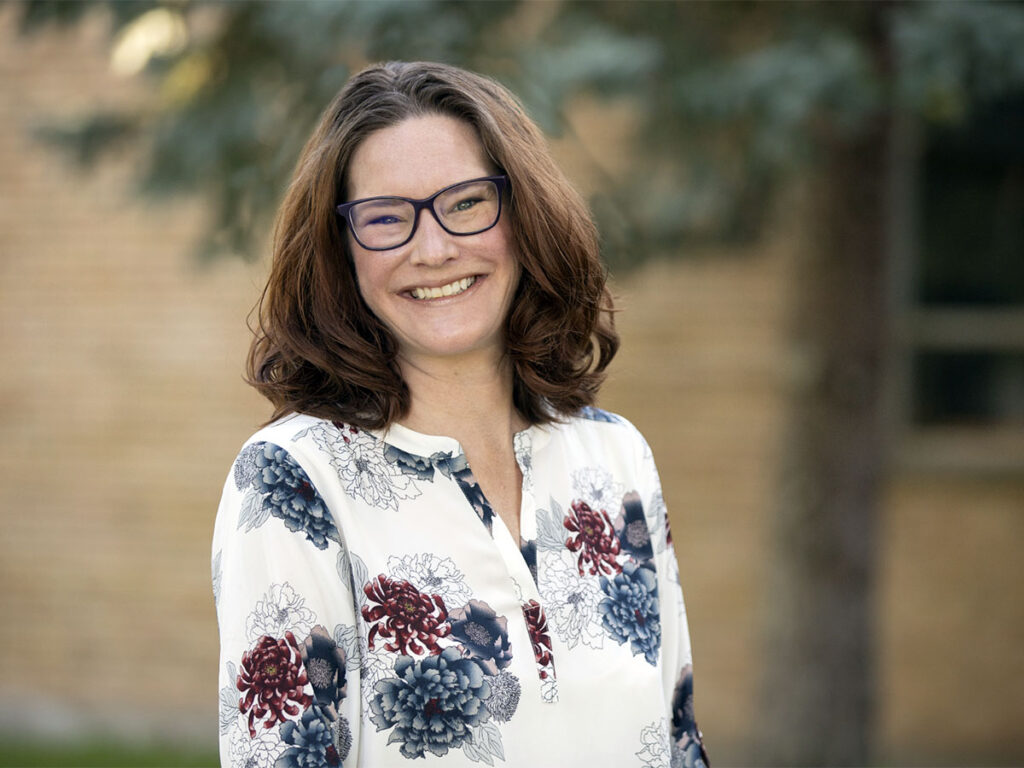
In this episode of STEAM Studio Spotlight, we had the privilege of sitting down with Jeanne M. Isabel, EdD, MLS, SH(ASCP)cm, a veteran in the field whose career spans decades, continents, and countless breakthroughs in laboratory medicine. From her early days as a medical technologist to her international work training lab professionals in countries like Eswatini (formerly Swaziland) and Belize, Dr. Isabel’s journey is a testament to the vital—and evolving—role of MLS in global healthcare.
The Hidden Backbone of Medicine
Most of us don’t think much about what happens after a doctor orders a lab test. But as Isabel explains, medical laboratory scientists are the detectives of healthcare, analyzing samples, troubleshooting complex instruments, and ensuring that results are accurate—because lives depend on it.
“We don’t always interact directly with patients,” she says, “but the work we do is foundational to diagnosis and treatment.” Whether it’s identifying infections, matching blood types for transfusions, or even detecting early signs of disease, MLS professionals operate behind the scenes to keep healthcare moving.
From Manual Tests to Robotics—And Why Human Expertise Still Matters
One of the most fascinating parts of our conversation was hearing how much the field has transformed. Isabel recalls a time when lab work was far more hands-on, with technicians meticulously performing tests by hand. Today, automation and robotics handle much of the routine work—but that doesn’t mean machines have replaced human judgment.
“We teach students not just how to run tests, but how to understand them,” she emphasizes. “If something goes wrong, they need to know why—not just push a button and hope for the best.”
And with the rise of artificial intelligence in diagnostics, Dr. Isabel remains confident that MLS professionals will always be essential. “AI might help interpret complex results, but someone still needs to validate those findings and ensure they make sense for the patient.”
A Career with Global Impact
Beyond the lab, Dr. Isabel’s work has taken her around the world—from training lab technicians in rural Africa to consulting on modern hospital systems in Namibia. She shares eye-opening stories about the differences in healthcare infrastructure and how resourcefulness often makes all the difference.
One standout moment? Teaching a lab tech in Swaziland how to draw blood for emergencies when floods cut off supply routes. Years later, she received a letter thanking her—proof that even small skills can have a lasting impact.
Why MLS Might Be the Perfect Career You’ve Never Considered
For students exploring healthcare careers, MLS offers something rare: a stable, high-demand job right out of undergrad. Unlike many medical fields that require advanced degrees, MLS professionals can enter the workforce after a bachelor’s program—with hands-on hospital training built into their education.
Professor Isabel also highlights the field’s flexibility. Graduates can work in hospitals, public health labs, research, or even sales for medical equipment companies. And for those who love problem-solving? “Every day is like piecing together a puzzle,” she says.
Isabel’s passion for MLS is contagious, and by the end of the conversation, you’ll see why this unsung profession is so critical to modern medicine.
Listen to the full episode now—and discover the science you never knew was shaping your health.
When we think about schools, we often imagine classrooms, textbooks and maybe the occasional science fair. But schools have quietly taken on another massive responsibility—student health. From nutrition programs to anti-drug campaigns, schools are expected to address nearly every aspect of children’s well-being. But is this the best approach? And what happens when well-intentioned policies miss the mark?
In this episode of the STEAM Studio Spotlight, we sit down with Carolyn Pluim, PhD, a researcher and professor who specializes in the sociology of education and school health policy. Her work asks tough but necessary questions: Are schools really the best place to solve public health challenges? Who benefits from these policies—and who gets left behind?
The Problem with “Doing Something”
One of the most striking points in our conversation was Professor Pluim’s critique of the common belief that doing something is always better than doing nothing when it comes to school health interventions.
“Maybe doing nothing is better than doing something,” she suggests.
It’s a provocative idea, but she backs it up with examples. Take the classic “Just Say No“ anti-drug campaigns—widely known to be ineffective yet still lingering in schools. Or obesity prevention programs that focus on personal responsibility rather than systemic issues like food access. When interventions don’t work—or worse, cause unintended harm—why do they persist?
Who Really Benefits from School Health Policies?
Pluim doesn’t just question whether schools should handle health—she asks how these policies come to be in the first place.
Did you know the National School Lunch Program was originally designed, in part, to help farmers sell surplus food? Or that terms like “food desert“ can obscure deeper injustices?
This isn’t just about semantics. The language we use shapes the solutions we pursue—and who gets blamed when those solutions fail.
A Call for Ethical, Democratic School Health
So, what’s the alternative? Professor Pluim isn’t arguing that schools should abandon health initiatives altogether. In fact, she points to powerful successes—like free meal programs that drastically reduced child poverty during the pandemic. But she urges a more critical, ethical approach:
Centering structural inequities over individual blame
Empowering teachers and students to question the messaging they receive
Advocating for policies that address root causes, not just symptoms
Perhaps most compelling is her belief that schools should foster critical thinkers, not passive consumers of health messages. “I’d rather have students questioning assumptions,” she says, “than just accepting everything they’re told.”
Why You Should Listen
This episode isn’t just for educators or policymakers—it’s for anyone who cares about how we shape the well-being of future generations. Professor Pluim’s insights challenge us to rethink the role of schools in health, the influence of corporate interests, and the way we frame problems in the first place.
What if the career path you’ve meticulously planned isn’t the one you’re meant to follow? Henna Muzaffar’s story is a testament to the beauty of life’s unexpected detours—and how embracing them can lead to profound impact.
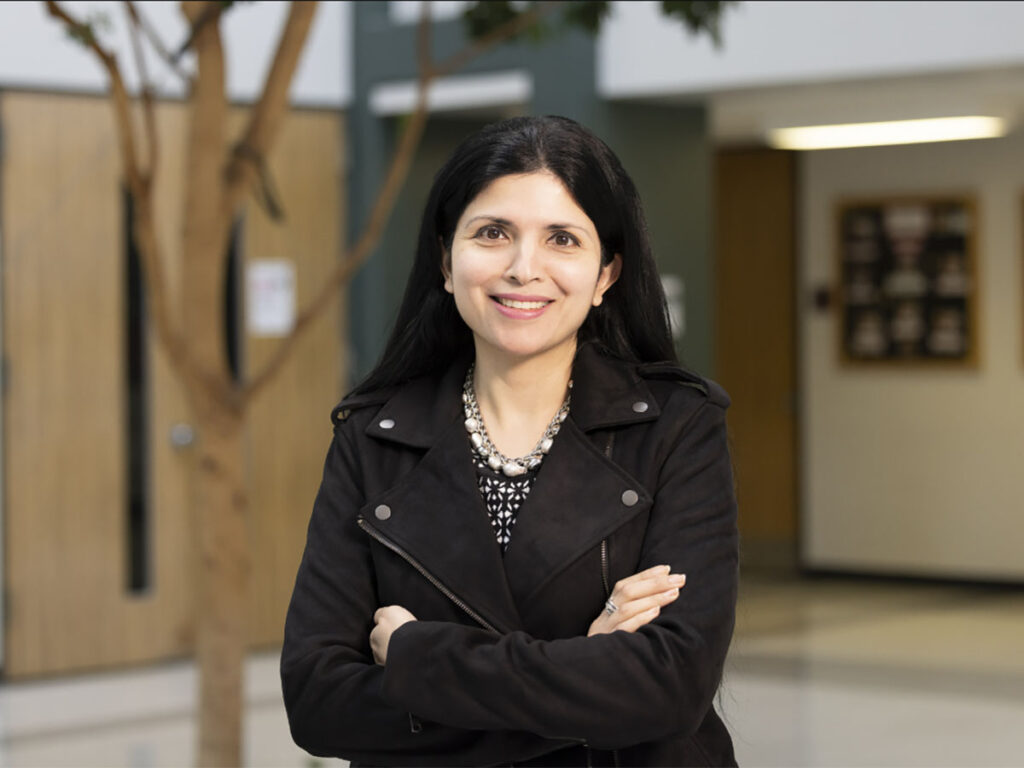
In this captivating episode of the STEAM Studio Spotlight Podcast, Henna Muzaffar, PhD—nutrition scientist, educator, and interim chair at Northern Illinois University—opens up about the twists and turns that shaped her remarkable career. What begins as a conversation about research and public health quickly unfolds into something deeper: a reflection on adaptability, the art of seizing opportunities, and why the “perfect plan” is often a myth.
The Accidental Academic
Professor Muzaffar never set out to become a researcher. Growing up in Pakistan, she was two years into medical school when life redirected her to the U.S., where she discovered a passion for nutrition’s transformative power. “Food as medicine” became her mantra—but even then, her journey defied expectations. A last-minute offer to pursue a master’s degree altered her trajectory. Later, proximity to a top-tier nutrition program at the University of Illinois compelled her to pivot again, this time toward a PhD.
Her message to students and professionals? Stay open. “What’s served me well,” she reflects, “is recognizing that sometimes the opportunity you didn’t know to ask for is the one that changes everything.”
Bridging Science and Community
Beyond the lab, Muzaffar’s work pulses with real-world urgency. She designs school-based programs to combat childhood obesity, equipping kids—and their families—with tools for lifelong health. But here’s the catch: sustainability. “Grants end,” she explains, “but health disparities don’t.” Her quest to make interventions stick reveals a thorny truth—one that challenges policymakers and educators alike.
And then there’s leadership. From steering academic departments to chairing national committees, Dr. Muzaffar thrives where science and service collide. “Leadership isn’t about titles,” she insists. “It’s about connecting people, amplifying impact, and staying curious.”
The Wisdom in the Pivot
Perhaps the most resonant moments come when Muzaffar discusses transitions—both professional and personal. As an empty nester with a milestone career year ahead, she’s candid about the questions she’s still asking herself. Her advice? “Do your best at every task, no matter how small. No effort is wasted.”
For listeners, this episode is more than a career snapshot; it’s a masterclass in resilience. Whether you’re a student paralyzed by “wrong choices,” a professional at a crossroads, or simply someone who craves a fresh perspective on health and leadership, Professor Muzaffar’s story will leave you with one irresistible takeaway: The detour might be the destination.
Listen to the full conversation on the STEAM Studio Spotlight Podcast—where science meets the human stories behind it. (And yes, you’ll finally get her answer to the question: What’s the one nutrition truth everyone should know?)
Have you ever stopped to think about how that bag of chips or tub of chicken salad actually made it to your kitchen? Most of us don’t—until suddenly, the grocery store shelves are empty, or a social media post makes us question what’s really in our food.
In this eye-opening Conversation From the STEAM Studio, we sit down with two experts who live and breathe the journey of food—from the fields where it’s grown to the factories where it’s transformed into the products we know and love. Rhodora Collins, an agricultural literacy coordinator, and Ashley Murcia, a food manufacturing storyteller, pull back the curtain on the incredible (and often overlooked) world of food production.
“There’s No Doritos Field” (And Other Truths About Your Food)
One of the biggest misconceptions? That food just appears in stores. Ashley loves blowing people’s minds with a simple truth: “That bag of Doritos had to be made somewhere. There’s no Doritos field out there.” It’s a lightbulb moment for kids and adults alike—realizing that every bite we take is the result of a vast, interconnected system of farming, science, engineering, and logistics.
Rhodora chimes in with her own favorite revelation: “Every single kernel of corn has its own silk. One silk, one kernel.” Even lifelong Midwesterners (yes, even those who grew up surrounded by cornfields) often gasp at that one (our hosts included!). But it’s not just fun trivia—it’s a gateway to understanding everything from crop science to why that sweet corn always seems to leave strands stuck in your teeth.
Lifting the Veil on Food Manufacturing
Both Rhodora and Ashley spend their careers “lifting the veil” on processes most of us never see. Ashley takes teachers and students behind the scenes at Suter Company, a 100-year-old food manufacturer, where they discover that food production isn’t just assembly lines—it’s a world of culinary innovation, engineering, and even marketing. “People drive by our building every day and have no idea what happens inside,” she says. “Then they see it, and suddenly, that tub of chicken salad feels like a miracle.”
Meanwhile, Rhodora’s work with Illinois Ag in the Classroom helps kids (and educators) connect the dots between farms and their plates. She laughs about the fifth-grader who insisted his accountant dad “didn’t work in agriculture”—until they realized his company processed McDonald’s hamburgers. “Agriculture isn’t just farmers in overalls,” she says. “It’s chemists, drone pilots, food scientists, and yes, even accountants.”
Why the Pandemic Changed How We See Food
Remember the empty shelves and odd shortages of 2020? The pandemic was a crash course in supply chains for all of us. Rhodora and Ashley dive into why something as simple as a milk carton shortage isn’t just about cows—it’s about packaging, school schedules, and global logistics. “People finally saw how fragile the system can be,” Ashley notes. “But also how adaptable it is.”
Ready to rethink your food?
Listen to the full episode wherever you get your podcasts—and prepare to never take a bite for granted again.
If you hear the word entrepreneur and immediately picture a Silicon Valley founder pitching investors on Shark Tank, you’re not alone—but you’re also missing the bigger picture. In this episode of the STEAM Studio Spotlight, we sat down with Becca Husar, a dynamic leader at Northern Illinois University’s College of Business, to unpack what an entrepreneurial mindset really means—and why it’s a game-changer, whether you’re an artist, educator, engineer, or just someone trying to navigate an unpredictable world.
It’s Not About Startups—It’s About Solving Problems
Becca’s work revolves around helping students and professionals develop what she calls the “entrepreneurial mindset”—a blend of creativity, empathy, and action-oriented thinking. But here’s the twist: you don’t have to launch a business to benefit from it.
“Can you identify problems or opportunities around you,” she asks, “and are you equipped to solve them?” That’s the core of it. Whether you’re a teacher redesigning lesson plans, a scientist pitching research, or a musician building a sustainable career, this mindset is about recognizing opportunities and acting on them—not just waiting for permission.
The Myth of the “Unicorn” Entrepreneur
We often glorify the Mark Zuckerbergs and Elon Musks of the world, but Becca points out that most of the economy runs on small businesses and everyday innovators—people who might not make headlines but who solve real problems in their communities. The key? Social entrepreneurship, or the idea that you can do well and do good.
Take Bombas socks, for example. They’re a for-profit company, but their “buy one, give one” model shows how businesses can thrive while making a difference. “You don’t have to sacrifice profit for purpose,” Becca explains. “It’s about building systems that are ethical, sustainable, and impactful.”
AI Won’t Replace Entrepreneurs—But It Will Change the Game
Of course, we had to ask: What about AI? If ChatGPT can draft business plans and brainstorm ideas, do we even need human entrepreneurs anymore? Becca’s answer is a resounding yes—with a caveat.
“AI is a tool, not a replacement,” she says. The danger? When people skip the empathy phase—the part where you actually talk to real humans—and let algorithms dictate solutions. “You can use AI to draft a pitch, but if you’re not out there understanding your stakeholders, your business won’t last.”
Why Failure Is Part of the Process (And Why That’s a Good Thing)
One of the most refreshing parts of our conversation was Becca’s take on failure. In a world obsessed with overnight success, she emphasizes that iteration is everything. The design thinking process—ask, research, prototype, test, repeat—isn’t just for products. It’s for careers, too.
“Most students think they need a 10-year plan,” she laughs. “But what if you focused on curiosity instead? Meet people, try things, and trust that you’ll adapt.” That’s the entrepreneurial mindset in action: being flexible enough to pivot when life (or the market) throws a curveball.
Final Thought: This Isn’t Just for Business Majors
Whether you’re a painter, a programmer, or a public-school teacher, Becca’s message is clear: Entrepreneurial thinking is for everyone. It’s about spotting opportunities, communicating your ideas, and—most importantly—daring to take the first step.
Listen now on Apple Podcasts, Spotify, or wherever you get your shows. And if you walk away with one thing, let it be this: You don’t need a startup to think like an entrepreneur. You just need to start.
If you’ve ever thought microbes were just invisible specks—too small to care about—Pallavi Singh, Ph.D. is here to change your mind. In this eye-opening episode of STEAM Studio Spotlight, the molecular microbiologist takes us on a journey through the unseen ecosystems that shape our health, our food, and even the environment. And yes, it involves a lot of poop!
The Tiny Architects of Our World
Singh doesn’t just study microbes—she sees them as brilliant survivalists. Take Shiga toxin-producing E. coli, for example. This gut bacterium doesn’t just cause infections—it fights its way through our body’s defenses, hijacks our systems, and even borrows deadly toxins from other bacteria like Shigella. “They’re like microscopic hackers,” she explains. But microbes aren’t just villains—they’re essential allies, helping digest food, train our immune systems, and even influence our moods through the gut-brain relationship.
Why Bison Poop Is a Big Deal
If you’ve ever seen a bison and thought, That’s one majestic creature, you’re not wrong—but Singh sees them as something more: ecosystem engineers. Their grazing, trampling, and (yes) pooping play a crucial role in restoring grasslands and cycling microbes through the environment. Her lab studies bison feces to understand how gut microbiomes affect animal health—and by extension, our food supply. (Fun fact: Bison jerky is rising in popularity because it’s leaner than beef. Who knew?)
The Antibiotic Crisis, Holistically
Here’s the scary part: The overuse of antibiotics isn’t just making infections harder to treat—it’s reshaping the microbial world in ways we can’t undo. Every time we take an unnecessary antibiotic, we’re not just wiping out harmful bacteria—we’re also killing off the good ones in our gut. And those antibiotics? They don’t just disappear. They end up in wastewater, rivers, and soil, where other bacteria evolve resistance. “We’re creating superbugs without even realizing it,” Dr. Singh warns.
What You Can Do (Yes, You!)
The good news? We’re not powerless. Simple actions—like finishing prescribed antibiotics (no early quitting!), never sharing meds, and properly disposing of unused pills—can slow the spread of resistance. As Singh puts it: “Microbes connect us all—humans, animals, the environment. If we want to stay healthy, we have to think bigger than just ourselves.”
Ready to Geek Out on Microbes?
This episode is a masterclass in why the tiniest life forms might be the most important. Whether you’re a science lover, a sustainability advocate, or just someone who’s curious about the weird world of gut bacteria, Singh’s passion is contagious. (Pun very much intended.)
If you’ve ever wondered who’s really making the decisions about your town’s parks, water quality, or renewable energy projects, the answer might surprise you. It’s not just federal agencies or state laws—it’s often the local governments you’ve never heard of, run by people you’ve never met.
In this fascinating episode of The STEAM Studio Spotlight, we sit down with Thomas Skuzinski, PhD, a professor and sustainability expert who studies how cities, counties, and even mosquito abatement districts (yes, those exist) work together—or sometimes don’t—to tackle environmental challenges.
The Hidden Power of Local Governments
Professor Skuzinski grew up in a small Michigan town where a single fallen tree could spark a bureaucratic standoff between multiple agencies. That experience shaped his career, leading him to study why some communities collaborate seamlessly on sustainability while others get stuck in endless red tape.
Did you know Illinois has over 9,000 local government entities? From park districts to forest preserves, these organizations control everything from land use to drinking water—yet most people couldn’t name a single official running them.
“If you love your town’s parks, you should know who’s responsible for them,” Skuzinski says. “Because if you don’t pay attention, things can change fast—for better or worse.”
Why Students Are the Key to Change
Beyond research, Professor Skuzinski works with NIU’s environmental studies program, where students don’t just learn in classrooms—they dive into internships, field research, and policy projects with real-world impact.
One student became the first from a non-R1 university to earn a Yale conservation scholarship. Another helped shape rural broadband policy. “These students aren’t waiting to graduate to make a difference,” he explains. “They’re impatient—in the best way.”
The Frustrations—And Surprising Wins—Of Collaboration
Ever heard of a Joint Action Water Agency? These little-known alliances between towns are quietly ensuring clean drinking water for millions. But not all teamwork goes smoothly. Skuzinski shares hilarious (and frustrating) stories of local governments pointing fingers over everything from flooding creeks to zoning disputes.
“It’s like a big family,” he laughs. “Beautiful when it works, chaotic when it doesn’t.”
What You Can Do
The good news? You don’t need a PhD to influence sustainability in your community. Skuzinski’s advice:
Show up to local meetings (even boring ones).
Ask questions about who controls what.
Vote in those low-turnout local elections—they matter more than you think.
Listen to the Full Episode
This conversation is packed with unexpected insights—from how Illinois became a “natural laboratory” for sustainability research to why Professor Skuzinski compares himself to a tamarack tree (hint: resilience and deep roots).
If you care about where you live (or just love a good underdog story about local heroes), you won’t want to miss this episode.
In a world that often feels like it’s moving at warp speed, taking a moment to pause and reconnect with ourselves can seem like a luxury—or even an impossible task. But what if the key to managing stress, boosting mental health, and rediscovering joy isn’t about adding more to our to-do lists, but rather about tapping into the simple, playful practices we’ve overlooked?
That’s exactly what we explore in this episode of STEAM Studio Spotlight with Sarah Moskal, NIU’s Interim Associate Director for Student Wellness. Sarah brings a refreshing perspective on well-being, blending mindfulness, curiosity, and even a little STEAM-inspired creativity to help us navigate the chaos of daily life.
Wellness Isn’t One-Size-Fits-All
Sarah starts by redefining what “wellness” really means—it’s not just about physical health or the absence of illness, but about nurturing all parts of ourselves: emotional, social, occupational, environmental, and even spiritual well-being. It’s about asking: Am I living in alignment with who I am? Do I feel safe and supported in my surroundings?
For students (and let’s be honest, all of us), the biggest hurdle is often time. “I don’t have time for self-care” is a common refrain, but Sarah challenges that notion. Wellness doesn’t have to mean hour-long meditation sessions or drastic lifestyle changes. It can be as simple as stealing “time confetti”—those tiny pockets of moments between meetings, classes, or chores—to do something that brings a little joy. Maybe it’s listening to a favorite song, doodling, or even (as our hosts discovered) sitting outside and identifying bird calls.
The STEAM Connection: Curiosity as a Gateway to Mindfulness
One of the most fascinating parts of the conversation is how Sarah bridges mindfulness and STEAM (Science, Technology, Engineering, Arts, and Math). Observing the world with curiosity—like a scientist noticing details or an engineer tinkering with solutions—can actually be a form of grounding. When we focus on sensory experiences (What do I see? Hear? Feel?), we pull ourselves out of spiraling thoughts and into the present moment.
Kristin shares a personal example: her evening ritual of identifying bird songs with her husband. What started as a casual hobby became a mindful practice, helping her decompress and reconnect with the present. Sarah calls this “tricking yourself into learning”—using play and exploration to build resilience without it feeling like a chore.
When Mindfulness Feels Out of Reach
Of course, none of this is a magic fix. Sarah is quick to acknowledge that for those dealing with anxiety, depression, or other mental health challenges, “just breathe” isn’t always enough. She emphasizes the importance of recognizing your own baseline and seeking support when needed—whether through NIU’s Counseling and Consultation Services (free for students!) or other professional resources.
And for the doom-scrollers among us (no judgment—Russ does it!) Sarah offers a gentle reframe: What if, instead of numbing out, we used even a fraction of that time to engage with something that truly replenishes us?
This episode isn’t just a pep talk about self-care. It’s a practical, relatable, and sometimes humorous look at how to weave wellness into the cracks of our busy lives. Whether you’re a student drowning in deadlines, a professional juggling a million tasks, or just someone looking for ways to feel a little more grounded, Sarah’s insights—and the team’s playful banter—will leave you with actionable takeaways and maybe even a new appreciation for the birds outside your window.
So, if you’ve ever felt like wellness is just another item on an impossible checklist, give this episode a listen. You might just find that the path to feeling better isn’t about doing more—but about rediscovering the sparkle in the small moments.
Listen to the Full Conversation
Listen to the full episode of STEAM Studio Spotlight. Find more episodes by searching “Northern Illinois University STEAM Studio” on major podcast platforms.
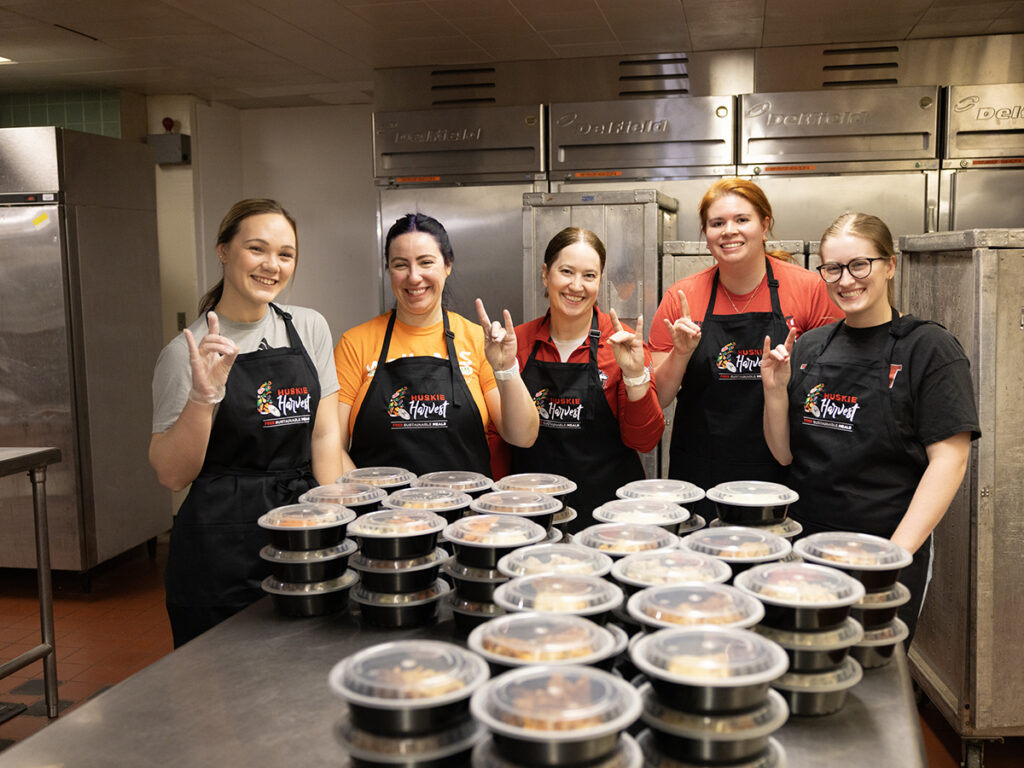
At Northern Illinois University, an innovative program is quietly transforming the way we think about food waste and student hunger. Huskie Harvest, a pioneering initiative led by Assistant Professor Nancy Prange and a dedicated team of Huskies, are recovering surplus food from campus events and dining halls and turning it into free, accessible meals for students in need.
In a recent episode of STEAM Studio Spotlight, we sat down with Prange and graduate assistants Maggie and Hanna to discuss how this program came to life, its remarkable impact, and its ambitious future.
Turning Surplus into Support
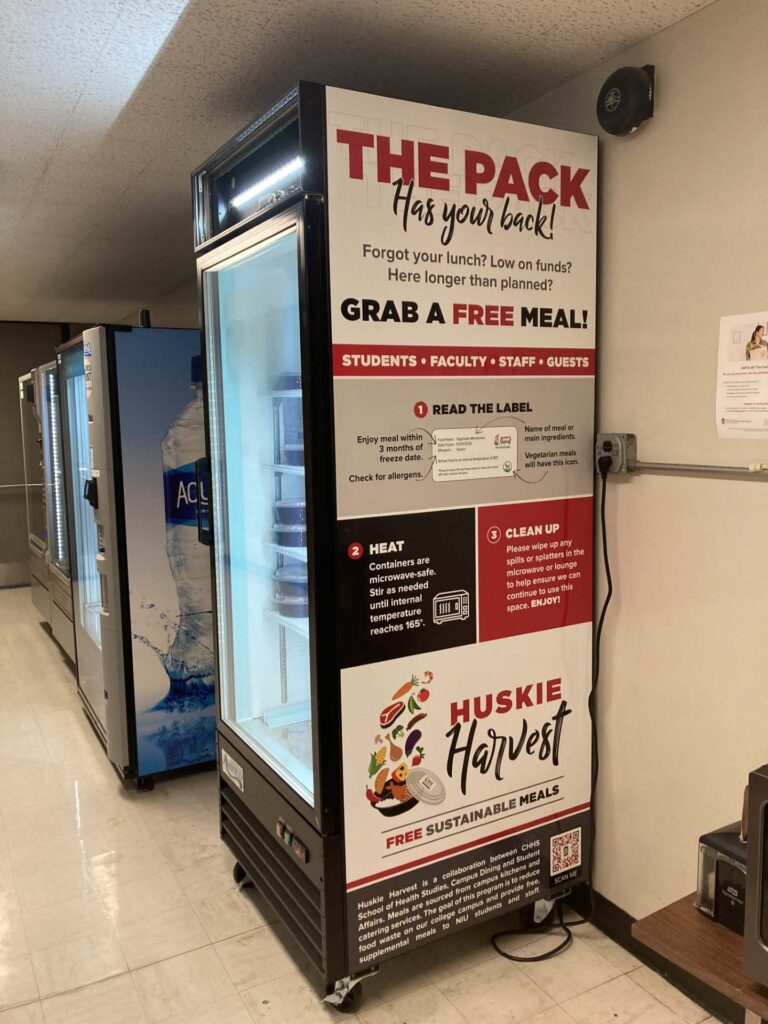
Huskie Harvest operates on a simple but powerful premise: instead of letting perfectly good food go to waste, it is repurposed into balanced, frozen meals that any student can take—no questions asked. The program collects leftovers from campus catering, dining halls, and community partners like Oak Crest Retirement Center, ensuring that excess food feeds people rather than landfills.
Key accomplishments so far:
Over 16,000 pounds of food recovered in just 18 months
More than 18,000 meals distributed to students
Freezer hubs across campus, including the Rec Center and Wirtz Hall, where meals are available to anyone
Dr. Prange described it as a “win-win,” reducing waste while directly addressing food insecurity among students.
Challenges and Unexpected Successes
Launching Huskie Harvest wasn’t without hurdles. Early on, the team faced logistical challenges, from convincing campus dining staff to participate to ensuring proper food labeling for allergens. There was also the question of whether students would actually use the program.
At first, uptake was slow. Prange recalled standing in the food pantry, trying to encourage students to take meals—only to have them politely (or awkwardly) decline. But persistence paid off. Word spread, and soon, the freezers were emptying almost as fast as they were stocked. Today, the Rec Center alone distributes over 100 meals daily.
One of the most surprising revelations? Just how much food was being saved. Maggie, who managed much of the day-to-day operations, described a particularly busy packaging session where the team processed 600 pounds of food in a single afternoon. “It’s eye-opening to realize how much would have been thrown away,” she said.
A Vision for Expansion
The team has ambitious goals for Huskie Harvest’s future. Current plans include:
Adding more freezers in high-traffic locations like the Fine Arts Building and the Law School
Expanding partnerships with local organizations to recover even more food
Serving as a model for other universities—so far, no other campus has replicated this exact approach
Dr. Prange envisions a future where NIU achieves zero food waste, and no student goes hungry. “This isn’t just about meals,” she said. “It’s about building a culture of sustainability and support.”
How to Get Involved
Huskie Harvest thrives on community support. Here’s how you can contribute:
This article only begins to explore the story of Huskie Harvest For deeper insights—including the team’s candid reflections on early challenges and their vision for the future—listen to the full episode of STEAM Studio Spotlight.
Find it by searching “Northern Illinois University STEAM Studio” on major podcast platforms.