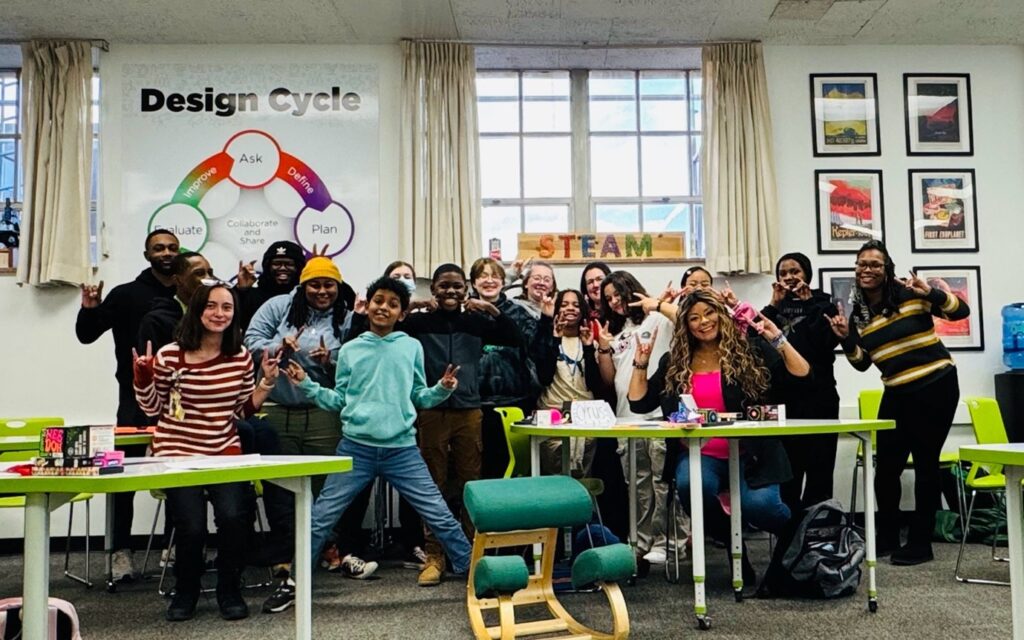
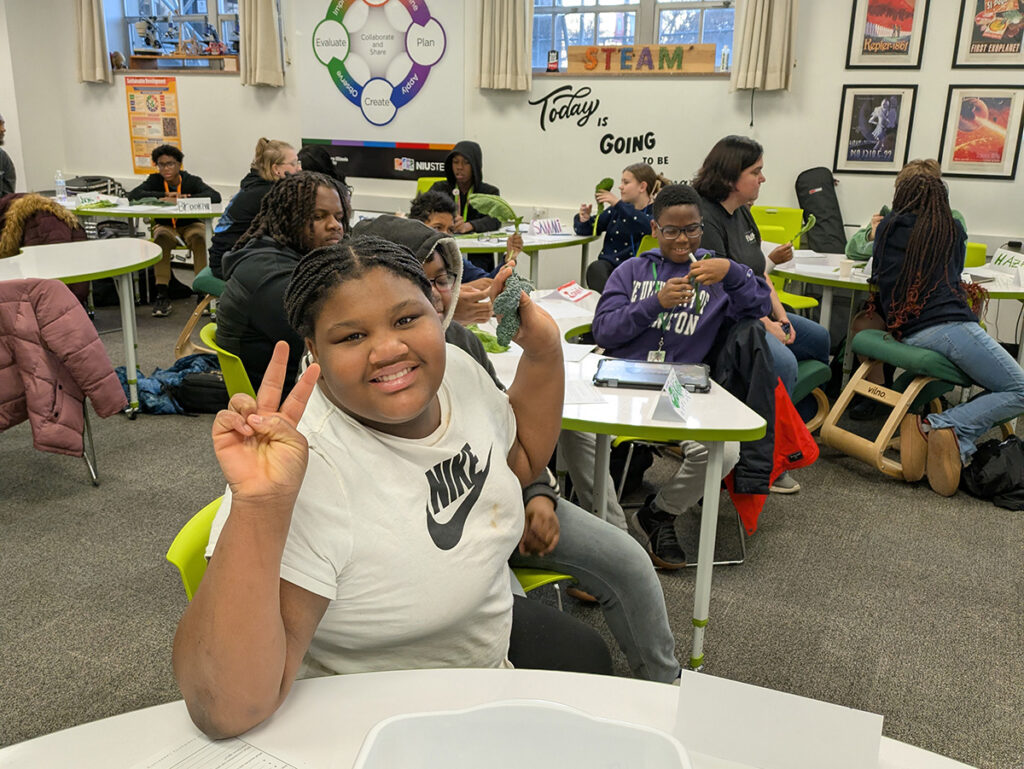
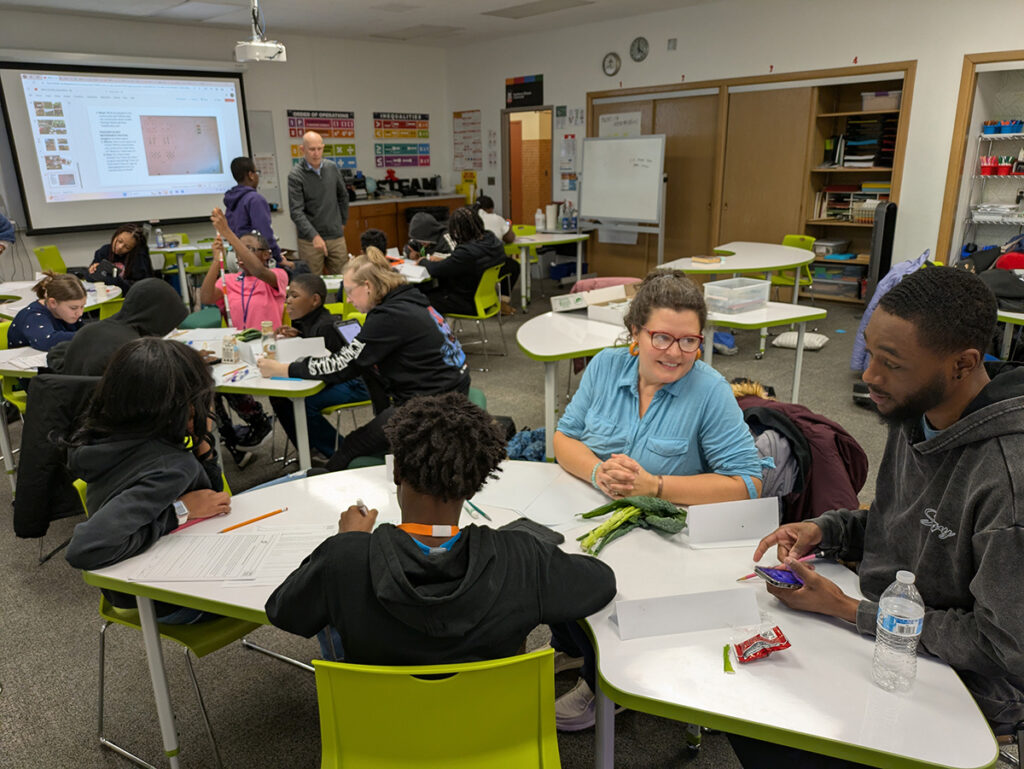
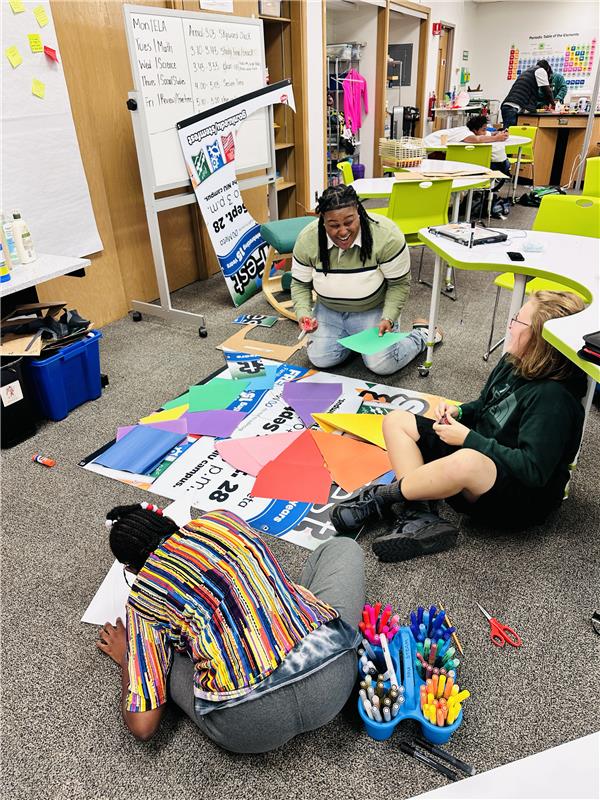
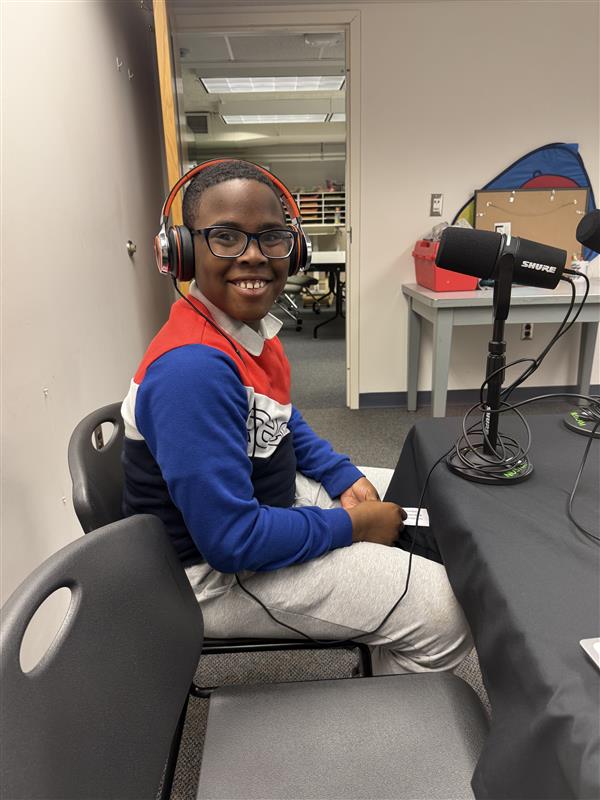
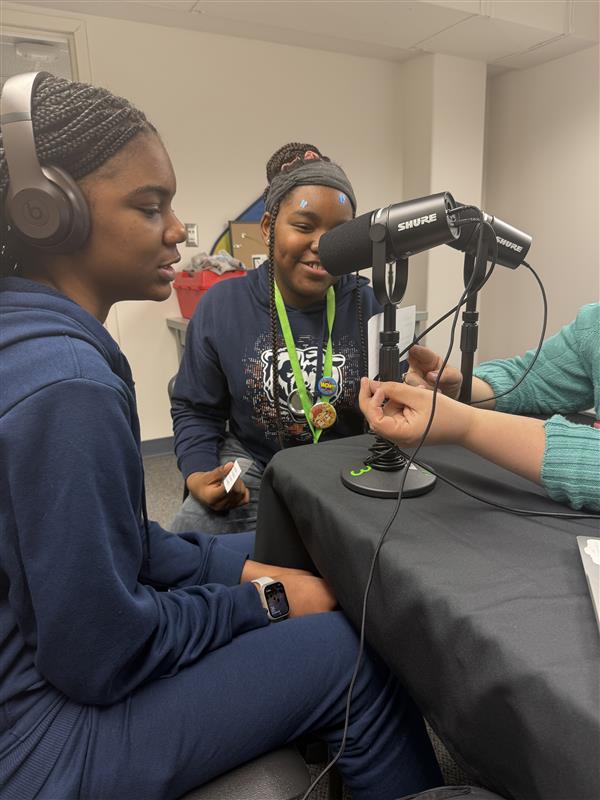
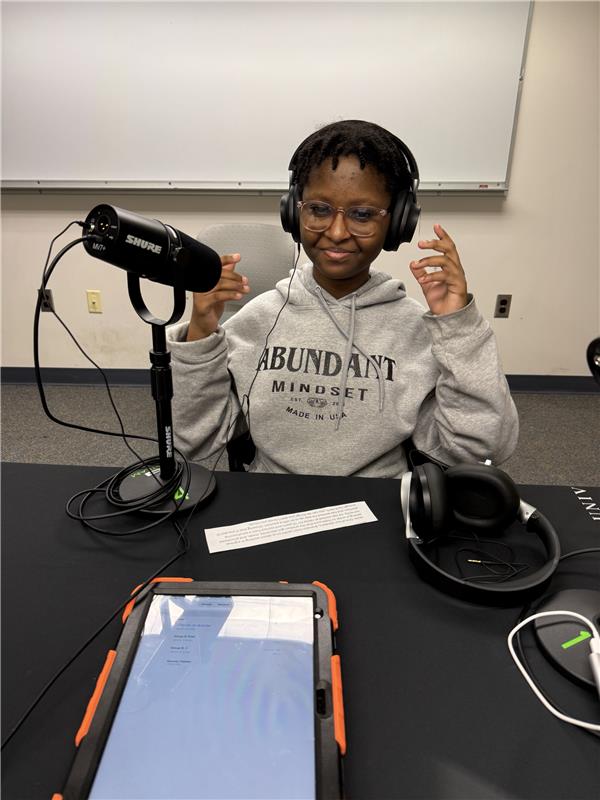
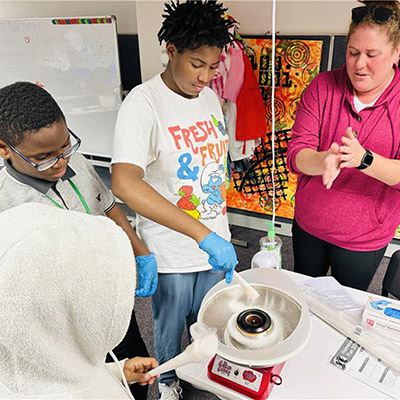
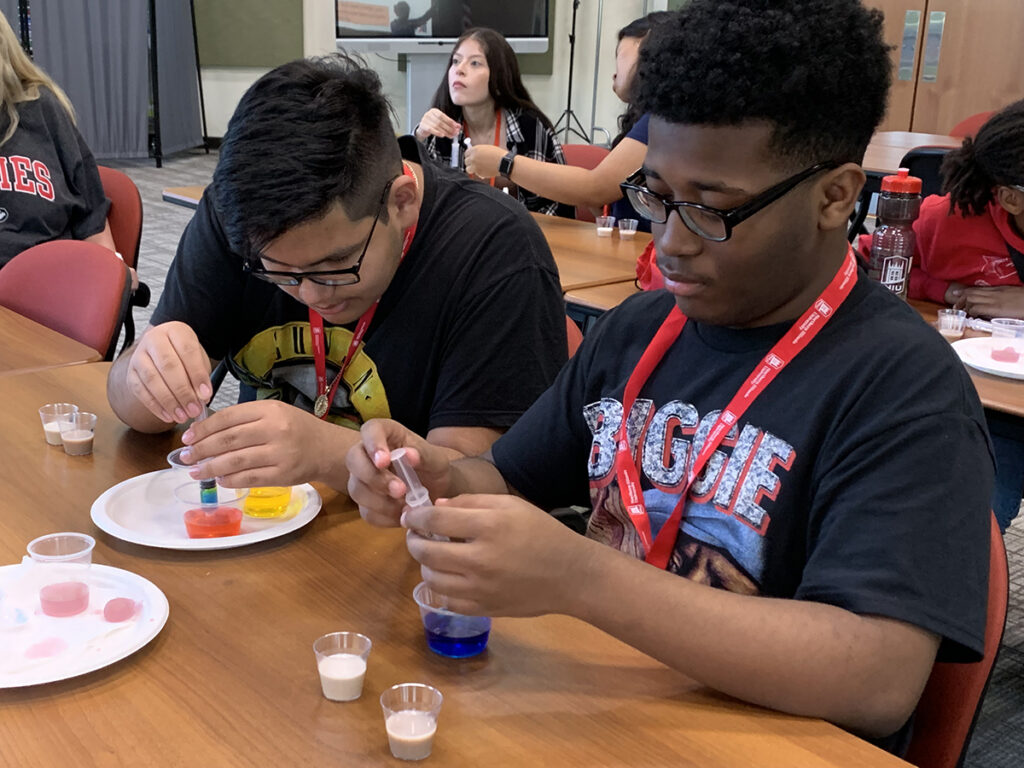
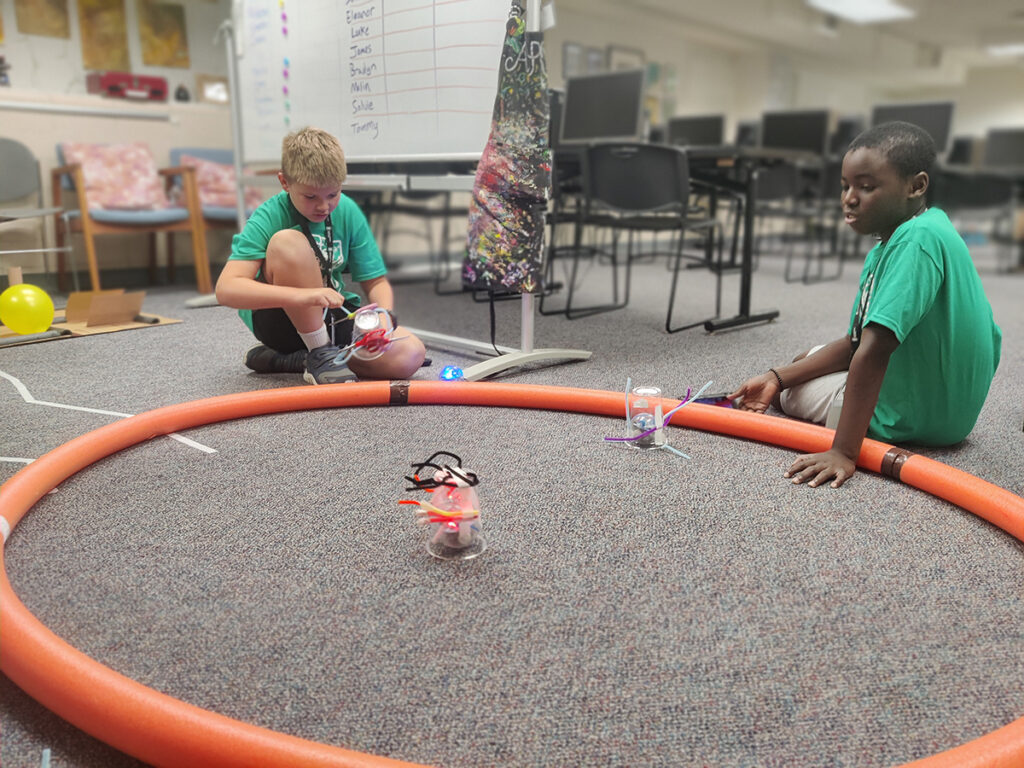
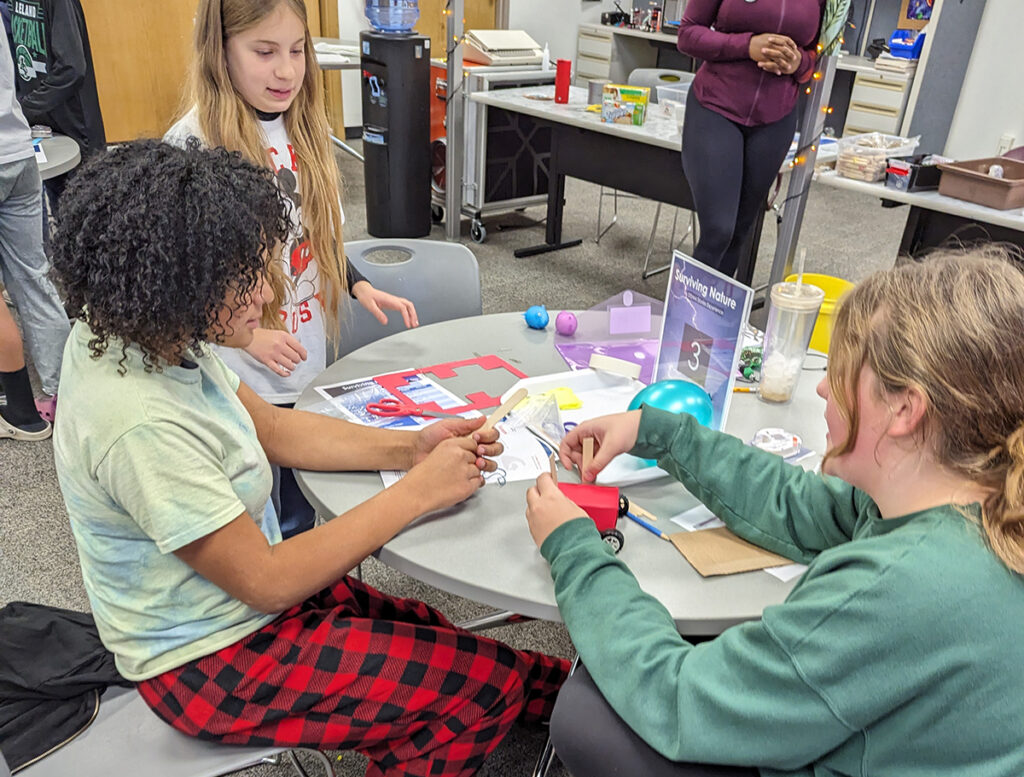
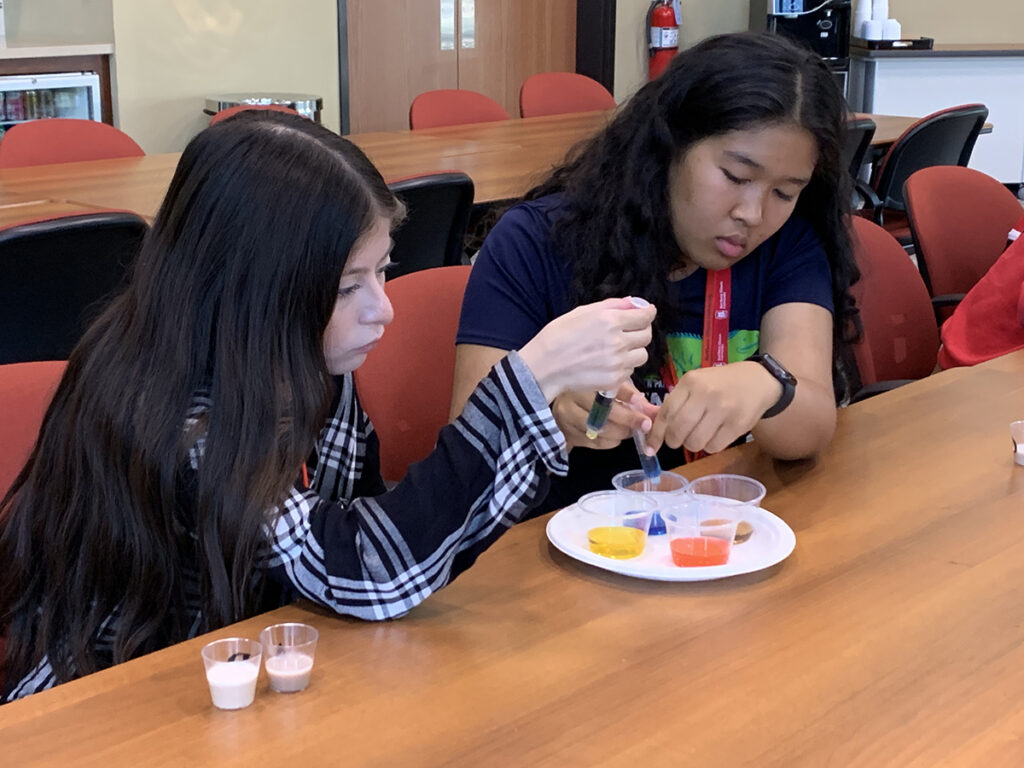
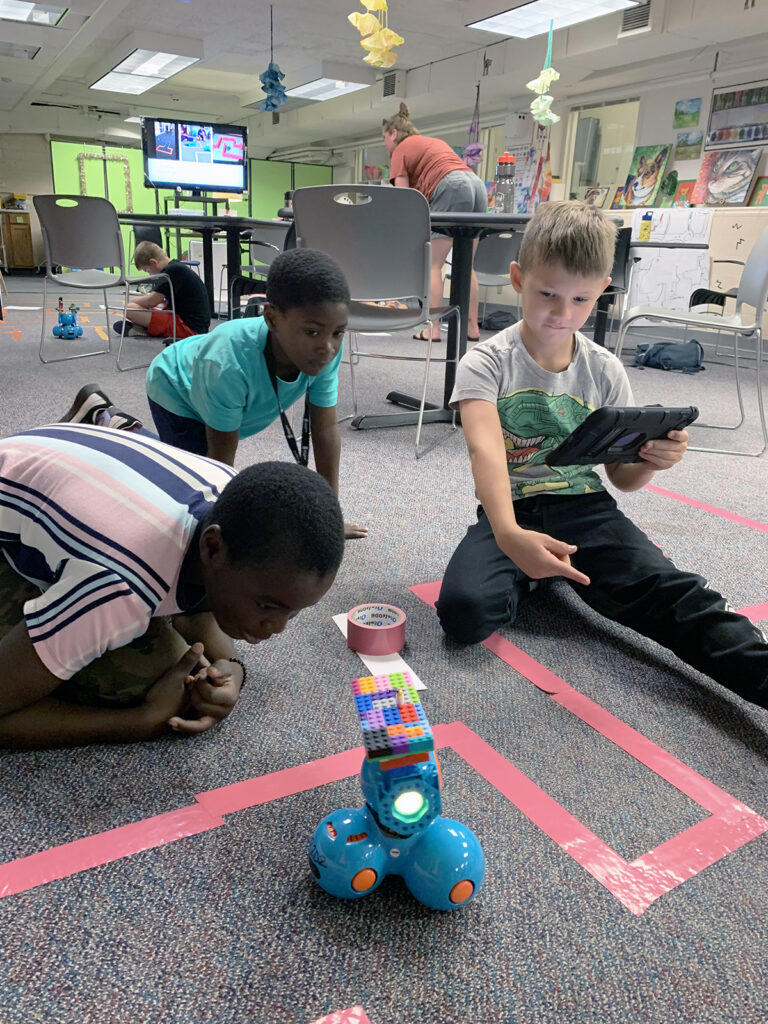
“Growth” is our 2025 word of the year for NIU STEAM – and our Barb City STEAM Team afterschool program epitomizes growth! We sat down with NIU STEAM Educators Jasmine Carey and Chrissy Swartz to learn more about the program and hear about the personal and academic growth students have shown this year.
Can you start by introducing us to the Barb City STEAM Team and STEAM Studio afterschool programs?
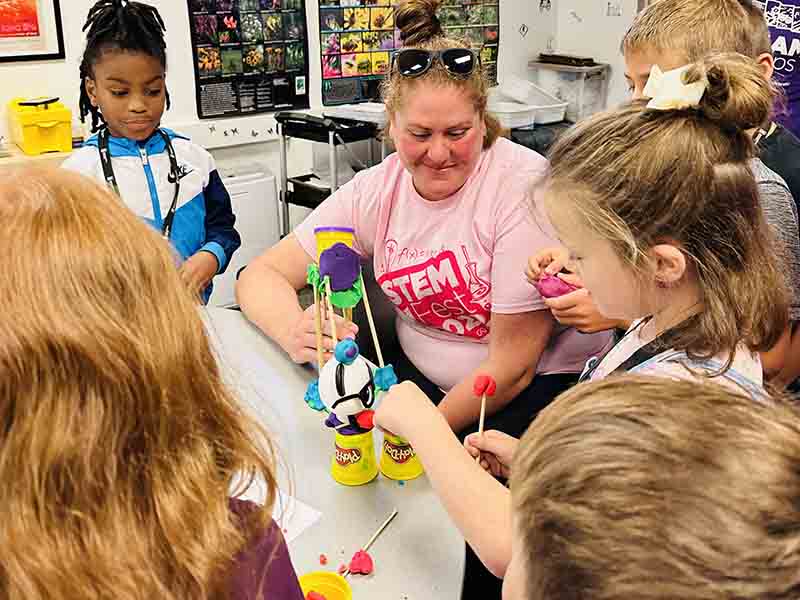
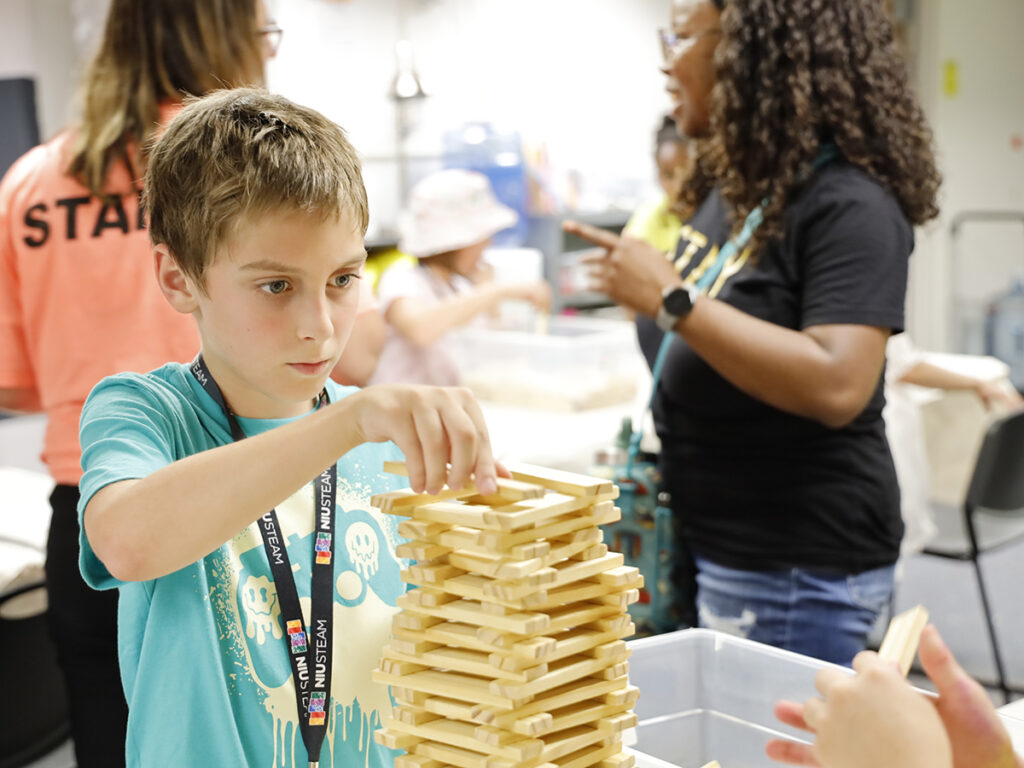
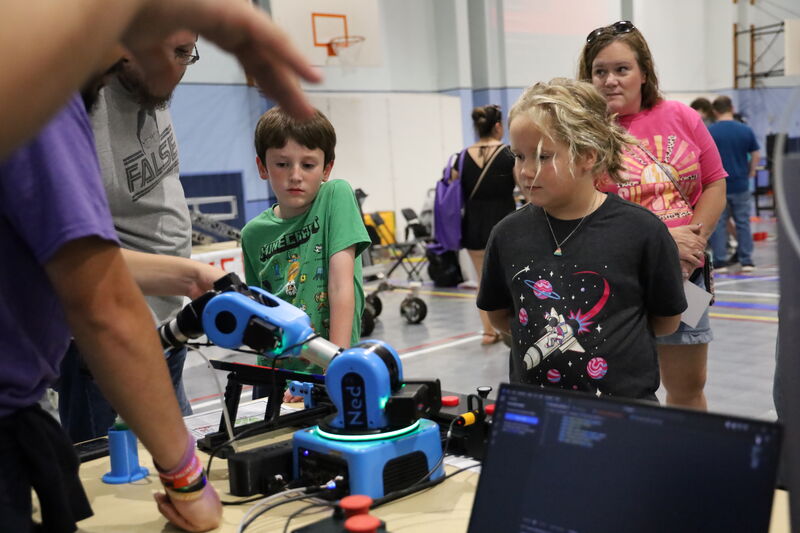
Jasmine: The Barb City STEAM Team is a free afterschool program on the NIU campus for middle school students in DeKalb District 428. Right after school we provide food and check in with students, then we have homework help and STEAM (science, technology, engineering, arts and math) project-based learning. We encourage genuine feedback from the students and try to give them input in the units we choose.
Chrissy: The high school program, which was new this year, is called STEAM Studio. It’s similar to the Barb City STEAM Team, but with even more freedom of choice for the older students. It’s kind of a “genius hour” or innovation hour, where the students come in and choose a few skills they’d like to work on, such as 3D printing, computer-aided design or electronics. Then they get to work on their own projects and interests with mentors to help.
What are some of the benefits of the afterschool program?
Chrissy: The part of the program that’s most important and impactful to me is that we are building relationships with kids that maybe their teachers don’t get to build with them. I was a high school classroom teacher for eight years, and although I loved teaching, the thing that frustrated me was that – in a class of 30 or 35 kids – you have to keep track of all the students, and you often don’t have time to give that extra attention to students who might benefit from it. So one of the things I love about our afterschool program is that we have time to build those deep connections and social emotional learning that might be missing from other aspects of their lives.
The middle school kids, in particular, are exploring STEAM and at the same time they’re exploring who they are. Maybe they’re shy at school and a little nerdier than their classmates. We give them an opportunity to come out of their shell, be social and tell stories, in addition to STEAM career content.
Jasmine: To add to that, we’re serving middle school students in the community, and we know there are a lot of other community-based and extracurricular programs that are serving those same students. Our idea is not to be in competition with those programs but to work in conjunction with them to make sure that, as a community, we’re helping to grow the whole child, to grow well-rounded humans.
So, for example, our program is divided into multiple sessions through the year. Perhaps a student sees that we have robotics for the fall session, and they’re really excited to sign up, but then they love to play on the school basketball team. The student would be free to take a break from our program for the winter session to focus on basketball and then return in the spring. We encourage those other extracurricular activities and programs around the community. It gives kids what we call “voice and choice” to pursue their interests and self-development.
This year, we’ve also done a lot more with community engagement and community-based learning as well as traditional steam content.
Can you say more about that community engagement and share some examples?
This semester we did a leadership series with another steam instructor, Becky Swiontek. I had an idea of a leadership series bringing community members with different backgrounds and careers to talk to the students, and Becky was amazing – she scheduled two different community members to come in each week during all of February and early March.
It was really meaningful to the kids to talk to those different community members about what their career looked like, what their path to success was, and some of the ups and down and struggles they experienced along the way. Many of them also brought in activities for the students and talked them through a day-to-day scenario of what their job looked like. We heard from a plant manager, a local barber with a successful business, an NIU police sergeant and a community college associate vice president who’s in charge of career services, apprenticeships and internships. We also had someone from First National Bank come by to talk about budgeting and financial planning.
How many students did the program serve this past year?
Jasmine: We had 36 middle schoolers, and of those 26 met the minimum number of hours required to continue with the program.
Chrissy: This was the first pilot year of the high school program, so we only had five high schoolers. Many of the high school students interested in the program also have jobs and play sports or other extracurriculars, so we’re reworking the hours to fit better with the additional commitments that are common for high school students, and we expect to grow the program this coming year.
What do you most enjoy about working with the afterschool program?
Chrissy: One of the things I most enjoy is the freedom we have to let students take their time and follow their interests. In a formal school setting, there’s some rigidity to what you can cover, and your scope and sequence. Even though at NIU STEAM we’re still using Next Generation Science Standards and state standards, we have more latitude in how we do that.
One of the very cool things about NIU STEAM is that we focus on our industry partners, so the skills we’re teaching have real world connections. I’ve never once had a student in our afterschool programs ask me when they’re going to use these skills out in the real world. When I was a classroom teacher, students asked that on a regular basis. It’s very rewarding to me that the projects and skills we provide for students are things they’re truly interested in and that they can apply outside their time with us.
Jasmine: For me, I appreciate that I can be truly honest with the kids when I assure them that they will use these skills. Even outside the STEAM content, they’re gaining the ability to talk to community leaders at the middle school age, which is amazing. And the chance to see different career paths and start deciding that they’d like to work at a school or be an entrepreneur and start their own business is powerful.
It’s very personal to me because I started off here at NIU as a little freshman student, and I had STEAM instructors who were mentors and took me under their wings and taught me different things. Now to be back here in that same position and serving as a mentor to even younger students is just amazing.
Do you have any special moments or stories you’d like to share?
Jasmine: For me, it’s not a single moment, but I love that the students feel safe enough with us to be completely honest when they’re sharing input about the program. So when they express that we’re doing something right, it’s really meaningful.
Just recently, a kid who’s been with us since sixth grade expressed, basically, “You’re doing good, I enjoy this program. It’s helped me learn more about my community that I didn’t know even though I’ve been here my whole life.”
Chrissy: I agree, it’s hard to narrow it down to just one or two stories because we see a lot of growth from the students on a regular basis. But there is a common theme to the moments for me – the students’ growth of confidence. The students are often very quiet and reserved when they first come to us as sixth graders, and then they come into their own over time.
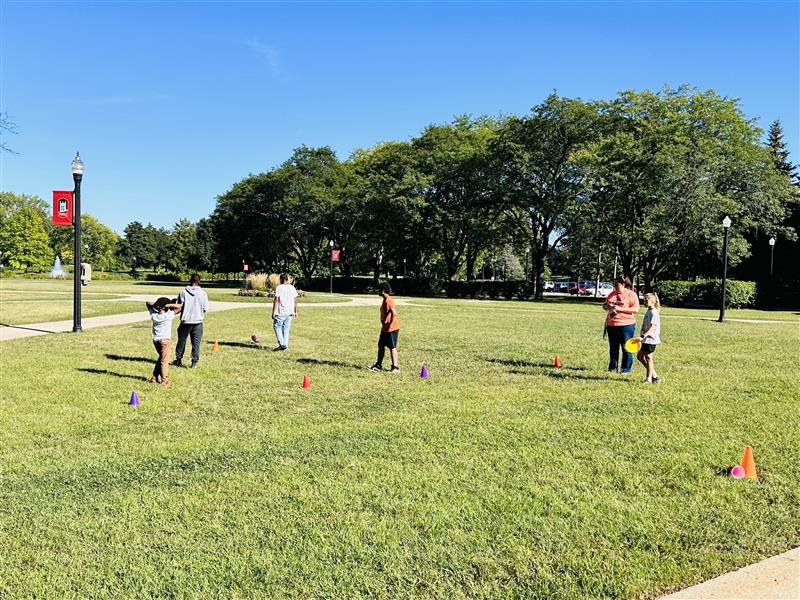
We had one student who was so quiet, I don’t think we heard more than five words from him in the first six months of the program. Then recently we partnered with Professor Paul Wright and NIU Department of Kinesiology and Physical Education students, and that particular middle schooler ended up leading a game for all the Barb City kids, for us adult instructors and for the NIU kinesiology students. He was up there in front explaining the game, which wasn’t easy because you have people of all different ages and levels of experience in the group! He tailored his explanation so everyone could understand, and it was incredible.
We had another student who was so reserved that she got frustrated when she had to participate in social situations. And now she’s grown to the point where she can present herself with confidence –and she’d even leading extracurricular groups outside of Barb City, applying those social skills and confidence that she learned.
That’s super rewarding because we’re helping them find out who they are and progress from meek to confident.
Jasmine: Another day-to-day experience that’s super rewarding is when we hear the students correcting each other. Usually, if someone tells another person to shut up or is rude, they’ll correct one another. And the way they interact with one another is great. If there’s a student who needs a little more help or direction on a project, another student will often step in and take that responsibility to guide them.
And then do they accept the correction and guidance with grace?
Jasmine: Yes!
Chrissy: They even correct us! We’ve got a rule that you can’t eat on the back lab tables, and I snuck a piece of pizza over there. They reminded me that you’re not allowed to eat there, and they mimicked me – the same teacher look I give them when they eat back there! That was amazing. I was like, “Yes, you’re 100 percent right,” and I moved. So they have an ownership of the classroom and what’s going on there. They’re invested and engaged.
Is there anything else you’d like folks to know about the program?
Jasmine: In addition to community engagement, we also partner with people across the university, like Professor Wright and his Kinesiology students, and the NIU Chemistry Club. We also partner with Kelly Gross in NIU’s School of Art and Design. Her NIU students are getting into art and design education, and they’re so excited to work with our Barbs and get some experience with lesson plans and curriculum. For the past two semesters their projects with our students have been amazing. They’ve worked on media, technology and art-related projects, including stop-motion animation. One of the middle schoolers is just extremely proud every time he produces a stop-motion animation project – his projects are truly cinematic productions, and I love to see that from him. I can see our students begin to understand what it would mean to attend college here and what some of the options are once you get to university.
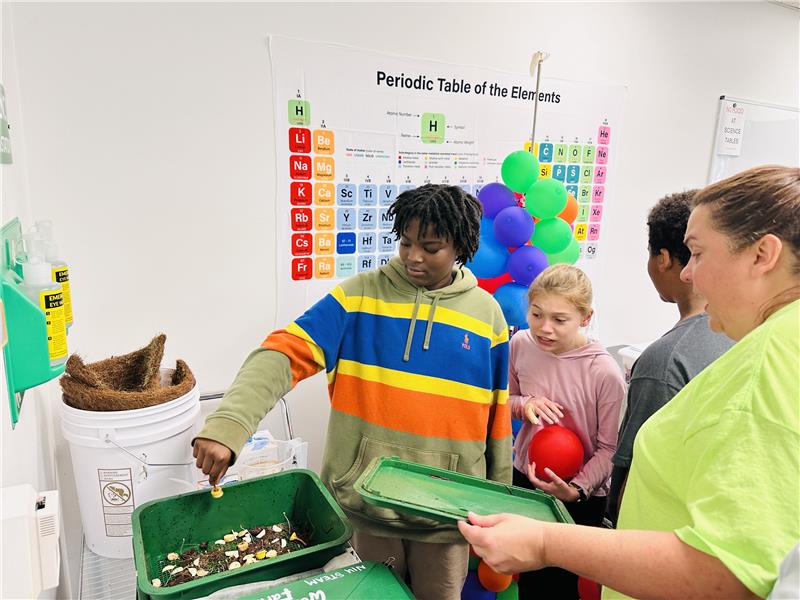
Chrissy: We also partner with NIU’s Edible Campus program. We’re looking to connect our students’ STEAM learning to healthy eating and taking care of themselves. Learning about sustainability in food systems is a great way to do that. We’ve got 26 raised bed garden boxes out by the NIU Stevens Theatre Building, and this summer we’re working with the students to grow produce, herbs and spices so they have access to fresh vegetables and nutritious food, as well as knowledge of where their food comes from. I have to admit that I’m not a vegetable lover myself, so I’ve been going on this journey with the students, tasting different vegetables and learning to appreciate them.
I also want to add that one of the best parts of working with all our campus and community partners is that they don’t treat our students like little children, but instead they take the middle schoolers seriously as artists, scientists and investigators. They make the content accessible for the kids, but they never talk down to them, which gives the students an authentic learning experience.
When and how can people sign their children up for the programs?
Jasmine: Sign up will start in August for both afterschool programs: the Barb City STEAM Team for DeKalb middle schoolers and the STEAM Studio for DeKalb high schoolers. Folks can find more information and sign up links on our website at niusteam.niu.edu/community/. The sessions start September 8. Before that we’ll do our Welcome Week, where families come in, fill out any documentation they might still need and sign up for the app that we use to alert families to the schedule, give updates, etc. We like to talk them through that process and answer their questions, so they’re prepared for the year. We also tell them about our family nights, which all the families are encouraged to come to.
Chrissy: Folks should know that, even though sign up for the afterschool program doesn’t start until August, students can attend our summer camps to get a taste of the STEAM programming that we do. We have camp scholarships for DeKalb County residents, so it’s worth getting in touch to see if those are still available!
We still have several camps open on niusteamcamps.com for elementary, middle and high school students. The elementary camps are day camps, and the middle and high school camps are residential camps where students stay here on the NIU campus and get a taste of the college experience.
Have you ever had one of those days where everything feels overwhelming—work piling up, personal stress creeping in, and the weight of it all making it hard to focus? You’re not alone. In fact, the key to navigating these challenges might not be working harder but working smarter—with a little more self-awareness, a dash of humor, and a whole lot of hope.
That’s exactly what we unpacked in our latest STEAM Studio Spotlight episode with Brian Smith, Director of Employee Well-Being at Northern Illinois University. With over 25 years of counseling experience, Brian brings wisdom, warmth, and some much-needed real talk about mental health, workplace dynamics, and how to build resilience—even when life feels like a never-ending to-do list.
Why Well-Being Isn’t Just a Buzzword
Brian’s role at NIU isn’t just about crisis management, it’s about prevention, growth, and creating a culture where people feel supported. His office (formerly called Employee Assistance) rebranded to Employee Well-Being—a shift that reflects a broader, more holistic approach to mental health.
“Well-being isn’t one-size-fits-all. What works for me might not work for you, and that’s okay. The goal is to help people define what balance looks like for them—whether that’s therapy, coaching, or just learning to give themselves grace.”
And here’s the best part: it’s free and confidential for NIU staff, faculty, retirees, and their families. No issue is too big or too small—whether it’s work stress, family struggles, grief, or just needing someone to talk to.
The Limbic System, Anxiety, and Why Your Brain Isn’t “Broken”
One of the most fascinating parts of our conversation? How our brains are wired to react to stress. Brian breaks it down simply:
“Anxiety and depression often stem from fear, powerlessness, or uncertainty. Your brain isn’t malfunctioning—it’s doing exactly what it’s designed to do: protect you. The key is learning how to work with it, not against it.”
Ever had a moment where a coworker’s tone or email sent you spiraling—even though logically, you knew it wasn’t a big deal? That’s your limbic system (your brain’s alarm system) pulling from past experiences. Understanding this can help you pause, reset, and respond instead of just reacting.
Humor as a Survival Tool (Yes, Really)
Let’s be real—when work gets stressful, sometimes the only options are to laugh or cry. And according to Brian, humor isn’t just a distraction, it’s a connector.
“Laughter releases serotonin and endorphins—the same chemicals that help us bond with others. When teams can laugh together, they build trust and resilience. The trick is making sure humor unites rather than divides.”
Of course, sarcasm can backfire (especially in professional settings), but shared, lighthearted moments—like swapping ridiculous cat memes or bonding over a funny work mishap—can actually lower stress and strengthen teams.
Hope: The Secret Ingredient to Resilience
Here’s a surprising stat Brian shared: In a global Gallup poll, hope ranked as the #1 most important leadership trait—above trust, stability, and even competence.
Why? Because hope fuels perseverance.
“Hope isn’t about toxic positivity or pretending everything’s fine. It’s the belief that things can get better—and that you have the ability to make it happen. That’s what keeps people going through tough times.”
Whether you’re leading a team or just trying to get through a rough week, cultivating hope—for yourself and others—can be a game-changer.
This is just a taste of the wisdom Brian dropped in this episode.
If you’ve ever felt stuck, stressed, or just in need of a fresh perspective, this episode is for you. Just remember, at the end of the day, we’re all works in progress—and that’s more than okay.
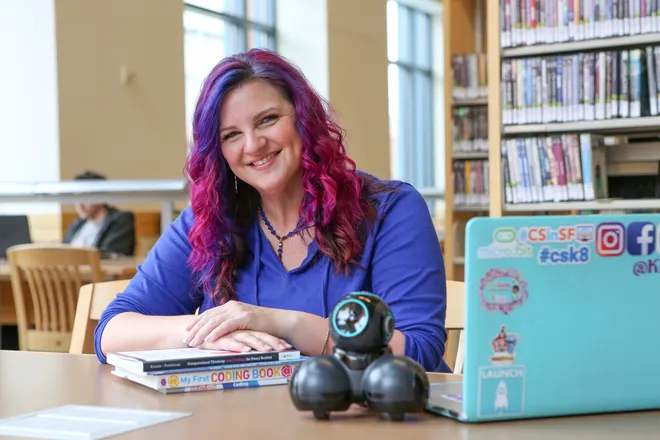
When Kiki Prottsman was a kid, her dad had an unusual rule: A woman’s place is in the kitchen. But this wasn’t some outdated stereotype—it was because that’s where the family computer lived. In an era when most households didn’t even own PCs, Kiki’s father turned their kitchen into a tech lab, encouraging his daughters to experiment, fail, and discover the magic of making things work with code.
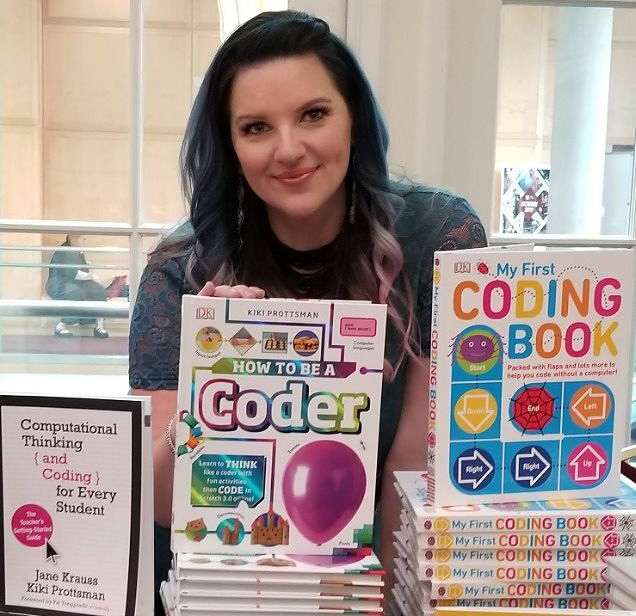
That early spark ignited a lifelong passion that would eventually lead Kiki to become one of the most dynamic voices in computer science education today. From developing curriculum for Microsoft MakeCode to writing books that make coding irresistible for kids, she’s on a mission to prove that programming isn’t just for engineers—it’s for anyone who wants to think creatively and solve problems in a world shaped by technology.
Coding as Creative Expression
For Kiki, coding was never just about typing commands into a screen—it was a form of self-expression, like writing poetry or painting a picture. She remembers the thrill of writing her first program in BASIC as a child: a simple quiz that guessed which family member you were based on hair and eye color. “I was so proud,” she laughs. “It was like showing my mom a drawing—except she couldn’t hang it on the fridge.”
That sense of playful creativity still drives her work today. Whether she’s designing unplugged coding activities (think board games and craft projects) or helping teachers bring computational thinking into classrooms, Kiki believes the key is making tech feel fun first. “If kids love it, they’ll dig deeper on their own,” she says.
Why AI Makes Coding More Important Than Ever
With artificial intelligence transforming everything from homework to healthcare, Kiki argues that understanding tech is no longer optional—it’s essential. But she’s not worried about robots taking over. Instead, she sees AI as a tool that could democratize coding, letting people focus on big-picture problem-solving while leaving the syntax to machines.
“The real skill isn’t memorizing commands,” she explains. “It’s learning how to break down problems, spot patterns, and communicate clearly—whether you’re talking to a computer or a coworker.”
The Unexpected Path to Microsoft (and Why You Should Say ‘Yes’ to Scary Opportunities)
Kiki’s career has been anything but predictable. After dropping out of computer science to study art, then spending years as a stay-at-home mom, she stumbled back into tech almost by accident. A chance encounter at an education conference led to writing a book—which led to another book—which eventually caught the attention of Microsoft.
Her advice for anyone hesitant to take a leap? “The worst that can happen is you actually get the opportunity—then you have to do it,” she jokes. “But that’s also the best part.”
This episode is a must-listen for teachers, parents, and anyone who’s ever thought, “Coding isn’t for me.” Kiki’s infectious enthusiasm and real-world insights will leave you seeing technology—and your own potential—in a whole new light.
“It’s like art, but then it does things. That’s the magic of code.” — Kiki Prottsman
If you’ve ever struggled to learn a new language, marveled at how effortlessly some people switch between dialects, or wondered what it takes to keep Indigenous languages alive, then you’re going to love this episode of STEAM Spotlight.
Our guest, Samuel Bello, isn’t just a linguist—he’s a storyteller, a teacher, and a bridge between cultures. Born in the small Indigenous town of Totoro, Colombia, and now a Fulbright Scholar studying in the U.S., Samuel brings a perspective on language that’s as rich as it is eye-opening.
The Magic of Multilingualism
Samuel’s journey with language started young—first with music (yes, Katy Perry and Lady Gaga played a role), then through teaching, and now in the world of linguistics. But what makes his story so compelling isn’t just his fluency in multiple languages—it’s his belief that no language is “better” than another. Instead, each one serves a unique purpose, carrying the history, identity, and worldview of its speakers.
In this episode, he challenges the idea that languages exist in a hierarchy, explaining why treating them as equals—rather than labeling some as “superior”—is key to preserving cultural heritage.
The Fight to Save Disappearing Voices
Did you know that 90% of the world’s languages are Indigenous, and many are at risk of vanishing forever? Samuel dives into the urgent work of language revitalization, sharing powerful examples from Colombia, the U.S., and beyond. He talks about how governments, educators, and communities can (and must) work together to keep these languages alive—not just as relics of the past, but as living, evolving forms of expression.
One of the most moving moments? When he describes how a single elder in Australia is now the last fluent speaker of his language—and why that loss would be a loss for all of humanity.
What We Get Wrong About Learning Languages
Ever felt judged for an accent or grammar mistake? Samuel unpacks why linguistic discrimination is so harmful and how we can shift our mindset to celebrate, rather than criticize, language learners. His advice for teachers? See your students as human beings first—because language isn’t just about rules; it’s about connection.
And if you’ve ever been intimidated by learning a new language, Samuel’s infectious enthusiasm might just inspire you to try.
Let’s be honest—few things drain a teacher’s energy faster than constant behavior challenges. You plan an amazing lesson, only to spend half your time redirecting, reminding, or resetting. What if the secret to smoother classroom management isn’t more rules or consequences, but something far more powerful: engagement?
In the latest “Conversation from the STEAM Studio,” we sat down with two educators who’ve spent years cracking this code. Jess Winn (a teacher-turned-instructional coach with a knack for student-centered learning) and Kari Harris (a literacy and MTSS expert who’s all about proactive strategies) shared game-changing insights on how engagement shapes behavior—and vice versa.
Here’s the truth they dropped: Students don’t act out when they’re invested. Sounds simple, right? But the magic lies in how we get them there. Jess and Kari dug into:
Why “controlled choice” (yes, that’s now my new favorite term!) can be a game-changer, even in structured curricula.
How a quick “interest inventory” can reveal what students actually care about—and transform reluctant participants into active learners.
The surprising role teacher confidence plays in classroom dynamics (hint: it’s not about having all the answers).
One of my favorite moments? When Kari pointed out that “equal doesn’t mean the same”—a reminder that flexibility (like letting one student stand while others sit) isn’t unfair; it’s necessary. And Jess’s take on mistakes? “Admit them. Model them. Fix them.” (Because guess what? Students respect authenticity more than perfection.)
Whether you’re a teacher drowning in behavior plans, an admin supporting struggling staff, or just someone who loves rethinking education, this episode is packed with practical wisdom. No jargon, no fluff—just real talk from educators who’ve been in the trenches.
And don’t forget, If you love this conversation, join Jess, Kari, and our team at the Engaged Learning Conference this June for even more actionable ideas!
Picture this: A recent college grad throws a dart at a map to decide her future. It lands on Alaska—and suddenly she’s teaching in national parks, writing curriculum for NASA, and eventually helping Illinois middle schoolers tackle social justice issues through 3D printing.
That’s the whirlwind story of Jess Winn, one of those educators who makes you think, “Why don’t all teachers have adventures like this?” I had the chance to sit down with her for our latest STEAM Spotlight episode, and within minutes, I realized: This isn’t just a conversation about lesson plans. It’s about what happens when you treat education like the wild, messy, exhilarating journey it should be.
“Wait—Cornfields Don’t Feed People Here?”
Jess’s first culture shock after moving from Alaska to Illinois wasn’t the lack of mountains—it was the corn. “Back home, farms meant farmers’ markets,” she laughed. “Here, I learned most corn isn’t even for eating! It’s for ethanol, livestock feed, plastics… My students and I fell down this rabbit hole about agricultural economics, and suddenly we’re doing math with crop yield data.”
That’s classic Jess: spotting teachable moments in everyday surprises. Whether she’s using DeKalb’s sunset colors to explain light refraction or turning a tornado drill into a physics lesson (“No, we don’t actually need to hide in the basement every time the siren goes off”), she’s mastered the art of “STEAM stealth”—slipping deep learning into experiences that feel like exploration.
The Day 7th Graders Schooled the School Board
But here’s where Jess’s approach gets really interesting. Last year, she noticed her after-school STEAM club kids buzzing about everything from gender inequality to climate anxiety—topics that often get sidelined as “too heavy” for class. So she flipped the script.
“We gave them CAD software, podcast equipment, and one challenge: Make adults listen.” The result? Students designed 3D-printed models representing pay gap data, recorded impassioned podcasts about gun violence prevention, and even presented to local policymakers. “Suddenly, these ‘too young to understand’ kids were the experts in the room,” Jess said. “That’s when you see what STEAM can really do—it’s not about gadgets. It’s about agency.”
Confessions of a Recovering “Rule Follower”
What stays with me most, though, is Jess’s take on teaching under constraints. “Early in my career, I treated standards like railroad tracks—something to rigidly follow,” she admitted. “Now? They’re more like guardrails. The destination matters, but the route you take? That’s where the magic happens.”
She tells the story of a reluctant science teacher who doubted her students could handle an open-ended engineering project. “I said, ‘What if we frame it as a heist? Your classroom is a museum, and they need to design a way to “steal” the exhibit.’ By week two, kids who’d never turned in homework were staying after school to tweak their prototypes.”
Listen to the full conversation on Spotify, Apple Podcasts, or anywhere you get your podcasts—you’ll walk away rethinking what’s possible in your classroom, your living room, or wherever learning happens.
P.S. Want to try Jess’s “STEAM Spy Camp” activities with your kids? She swears the best ones only require cardboard, curiosity, and a willingness to embrace glorious chaos.
Picture this: A classroom buzzing with students laser-cutting geometric art, tinkering with 3D printers, and scribbling prototype ideas on dry-erase tables. It’s the kind of hands-on, creative chaos that makes educators’ hearts sing. But here’s the reality check—without the right planning, that dream maker space can quickly turn into a cluttered graveyard of expensive gadgets and half-finished projects.
That’s exactly why we loved talking with April Startzel, a STEAM Program Coordinator and artist, on the latest STEAM Spotlight episode. She’s the kind of educator who geeks out over CAD design just as much as safety data sheets—because she knows that the magic of a great maker space isn’t just about the tools. It’s about intentional design, accessibility, and a little bit of tough love when it comes to organization.
“Wait, We Need Ventilation? And Other Overlooked Essentials”
April laughed when I asked about the biggest surprise people encounter when setting up a maker space. “Everyone gets starry-eyed about the laser cutters and robots,” she said, “but nobody’s ready for the oh right, this thing could literally catch fire moment.”
She’s not exaggerating. One of her first tasks when designing a new space? Getting down on the floor with a tape measure—not just to map out where the 3D printers would go, but to ensure the room could handle electrical loads, ventilation for fumes, and even emergency exits. “You can’t just shove a laser cutter in a corner and call it a day,” she explained. “Those fumes need somewhere to go, and if you’re working with kids, you definitely need an eye-wash station.”
The Myth of the “Perfect” Maker Space (Hint: Start Small)
Here’s a hard truth: Most schools don’t need a $100,000 maker space to make an impact. April’s advice? Begin with tools that are forgiving, versatile, and hard to break.
“Start with a Cricut instead of a laser cutter,” she suggested. “Or a basic 3D printer that doesn’t require a PhD to troubleshoot. The goal isn’t to impress with tech—it’s to get students making fast.”
Her favorite low-tech upgrade? Whiteboard tables. “They’re cheap, they’re durable, and suddenly every kid who ‘hates drawing’ is sketching out prototypes. It’s like magic.”
The Secret Sauce? Systems (Yes, Really)
Let’s be honest: Maker spaces get messy. April’s solution? Ruthless organization.
“We switched to clear bins for everything—no more ‘mystery tub of broken parts,’” she said. A simple checkout system for tools cut down on lost supplies, and a “just-in-time” inventory approach kept them from drowning in popsicle sticks.
But her real pro tip? Train everyone—even the skeptics. “If only one teacher knows how to use the 3D printer, it’ll become a very expensive paperweight,” she said. “We run ‘no-stress’ workshops where teachers can mess up, ask dumb questions, and finally understand why their kids love this stuff.”
Why Art Isn’t Just the ‘A’ in STEAM
As a working artist, April sees maker spaces differently. “People think ‘art’ means painting next to a robot,” she said. “But really, it’s about teaching kids to think in 3D—to prototype, fail, and see problems from new angles.”
She told a story about a student who designed a sculpture digitally, then painstakingly assembled it from laser-cut pieces. “That kid wasn’t just ‘doing art’—they were learning engineering, spatial math, and persistence. That’s the power of STEAM.”
This is just a taste of April’s wisdom. In the full episode, we also cover:
The one tool she’d rescue in a fire (it’s not what you’d guess).
How to convince admin that maker spaces aren’t “just playtime.”
The hilarious truth about what students actually do with 3D printers.
🎧 Listen to the full conversation on Spotify, Apple Podcasts, or anywhere you get your podcasts— and let us know: What’s your maker space win (or disaster)?
P.S. If you’re secretly hoarding 10,000 popsicle sticks “just in case,” April judges you. (But she’s been there too.)
In a recent episode of The Steam Studio, hosts Dr. Kristin Brynteson and Russ Devereaux sat down with Beth McGowan, Curator of Rare Books and Special Collections at NIU Libraries, and Melissa Adams-Campbell, Professor of English at NIU, to discuss their exciting new initiative—the Book Lab.
What is the Book Lab?
The Book Lab is a hands-on space dedicated to exploring the history, technology, and future of books. Located on the fourth floor of Founders Library, it houses a remarkable replica Common Press—the same kind of printing press used by Benjamin Franklin—along with other historical presses and printing materials.
The idea for the lab came when Melissa discovered that NIU already had an incredible collection of printing artifacts, including a replica 18th-century press built by a NIU engineering student in the 1970s. With these resources, the Book Lab was born, offering students and the community a chance to engage with book-making technologies firsthand.
From Rare Books to Hands-On Learning
NIU’s Rare Books and Special Collections include treasures like:
First editions of Phyllis Wheatley’s poetry (the first African American published poet)
Dime novels from the 19th and early 20th centuries
Early printed materials, medieval manuscripts, and science fiction collections
Through the Book Lab, students in courses like Technologies of the Word don’t just read about historical printing—they set type, operate presses, and create their own projects, gaining a deeper appreciation for how books have shaped communication.
Why Does This Matter?
As Beth and Melissa explained, the history of books is also the history of technology, accessibility, and cultural change. The shift from handwritten scrolls to printed books revolutionized knowledge sharing, much like digital media does today. The Book Lab encourages people to think critically about how technology evolves—and what that means for the future.
Join the Book Lab’s Journey
Want to see the presses in action? The Book Lab is hosting an Open House on April 28th (3:30–6 p.m.)—a perfect chance to explore this unique space.
Whether you’re a book lover, history buff, or just curious about how ideas spread, the Book Lab offers a fascinating glimpse into the past—and the future—of the written word.
Are you looking for ways to make learning more meaningful for your students? Do you want to move beyond traditional projects and create experiences that truly prepare students for the real world? In this must-listen episode of The Steam Studio, hosts Dr. Kristin Brynteson and Dr. Lori Hensold sit down with Laura Williams, a 21st-century learning specialist, to explore authentic learning and Agile classrooms—two powerful approaches that are transforming education.
Why Authentic Learning Matters
Laura Williams believes learning should be real, relevant, and connected to the world beyond the classroom. She shares her “authentic learning litmus test”—three key elements that define truly impactful learning experiences:
Connecting with Experts – Students learn from professionals in the field, gaining insights that go beyond textbooks.
Creating Real-World Deliverables – Projects have a purpose beyond a grade—they solve problems, serve a community, or contribute to an industry.
Using Industry-Standard Processes – Students apply real-world methods like Agile project management, preparing them for future careers.
Agile Classrooms: A Structured Approach to Student-Driven Learning
Struggling with group work where students don’t collaborate effectively? Laura introduces Agile classrooms, a structured yet flexible approach that:
Empowers student ownership – Learners take charge of their work through iterative planning, doing, and reflecting.
Improves teamwork – Daily stand-ups and retrospectives help students communicate, problem-solve, and grow together.
Makes progress visible – Tools like Kanban boards keep students on track while allowing teachers to personalize support.
Learn More at the Engaged Learning Conference
If this conversation excites you, don’t miss the chance to dive deeper at the NIU Engaged Learning Conference on June 20th in Naperville. Laura Williams will be delivering a keynote and hands-on session to help educators bring these strategies into their classrooms.
Ready to get started? Laura offers free templates, protocols, and tools to help educators implement authentic learning and Agile practices. Check out her book and resources at: