Weather Balloons and Applied Science – Welcome to Meteorology!
An interview with Victor Gensini, Ph.D., NIU Associate Professor of Meteorology in the Department of Earth, Atmosphere and the Environment
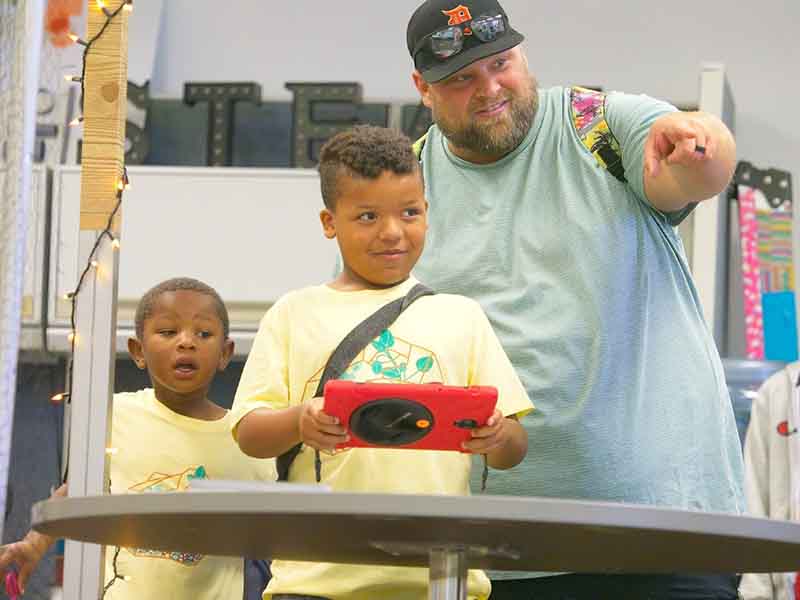
STEM Fest 2022; students and sponsors
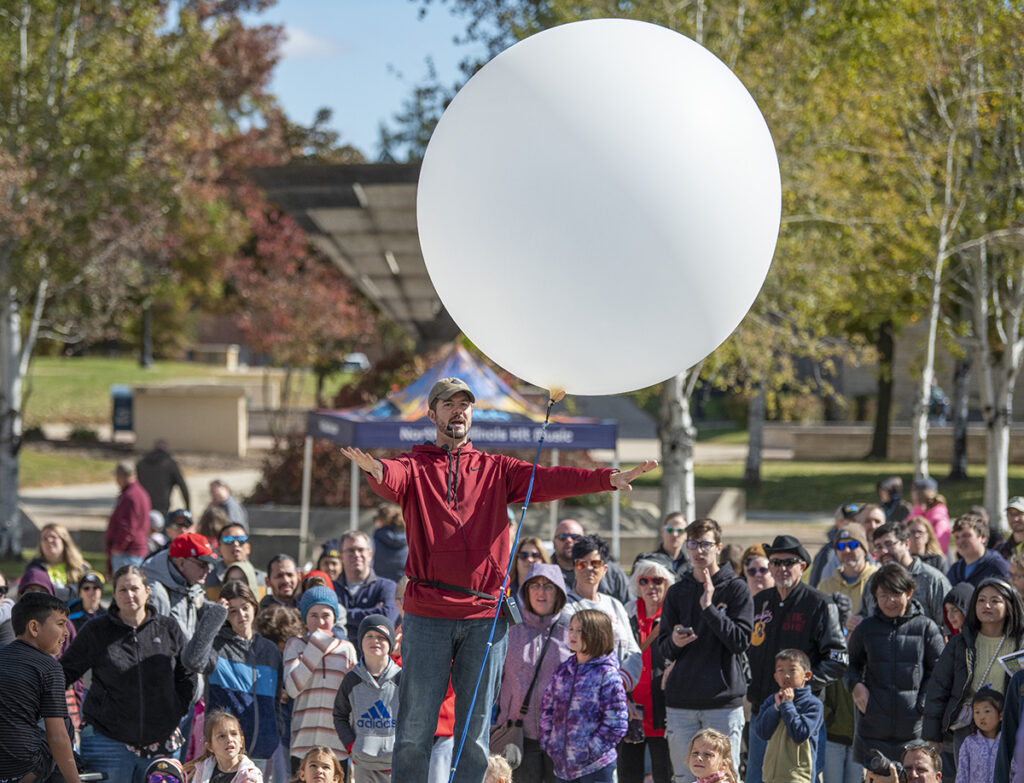
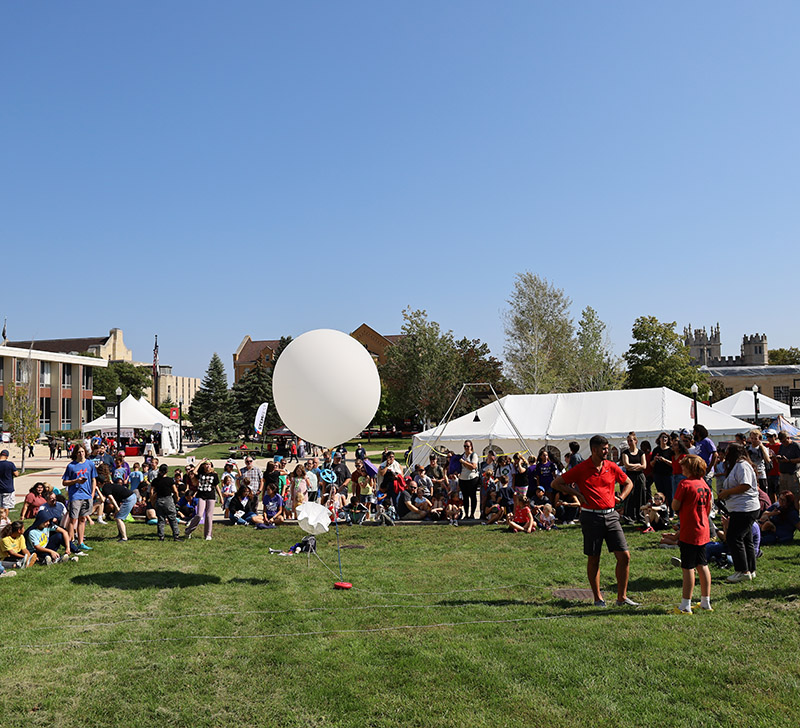
STEM Fest is coming up on Sept. 28, and we can’t wait! To help us prepare we sat down with Professor Victor Gensini to learn more about the annual weather balloon launch – and why everybody is fascinated with meteorology. Don’t miss Dr. Gensini’s presentation on the STEM Fest stage, followed by a live weather ballon launch outside on MLK Commons.
NIU STEAM: Can you tell us a bit about what you’re going to talk about in the stage presentation and then the weather ballon launch? What should the audience expect?
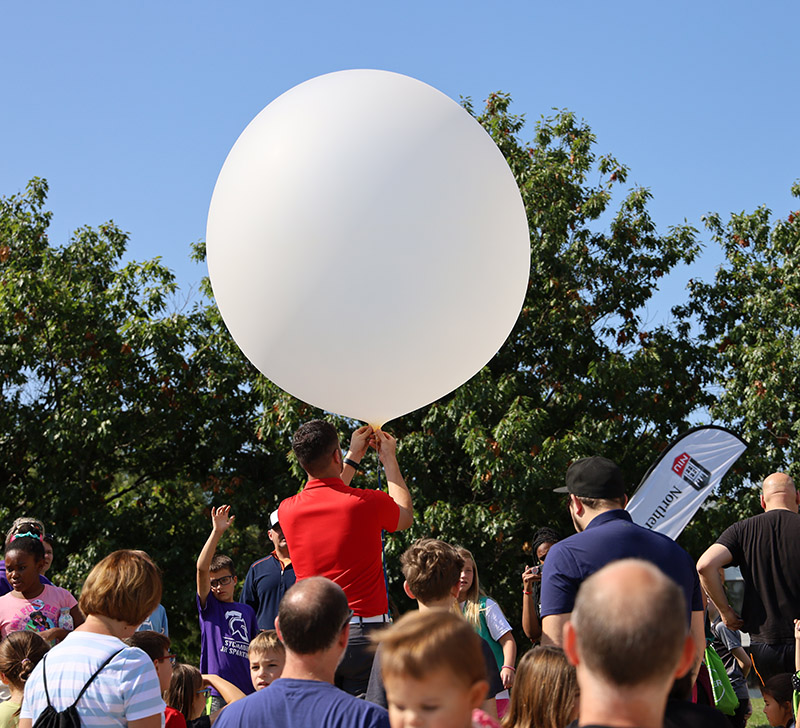
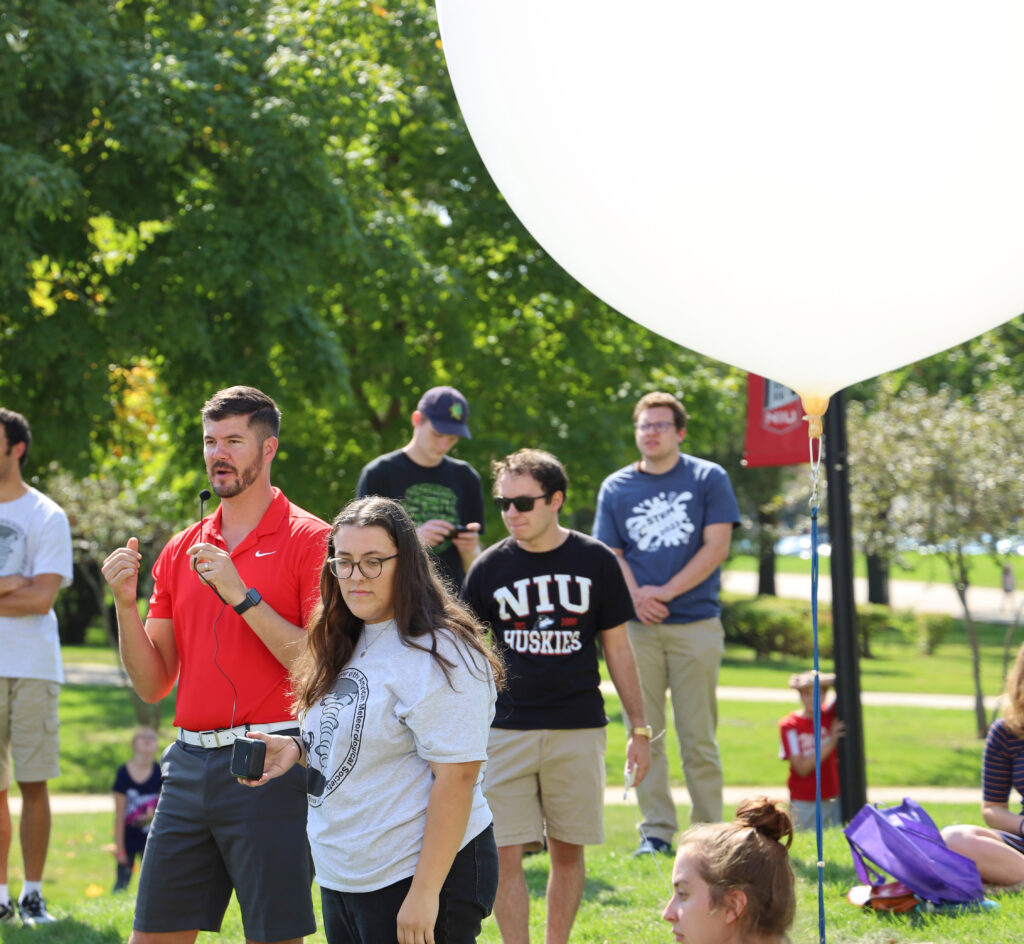
Victor Gensini: I’ll begin with about a 20-minute presentation on stage. I’ll start by talking a little bit about the history of weather balloons: why we started using them and why we’re using them today. Then, I’ll talk through some of the instrumentation and describe each of the components of the weather balloon.
STEAM: Can you say a bit more about those components?
Gensini: So obviously there’s the latex balloon itself, the helium and the receiver station. So we’ll walk through the mechanics of those components, and then I’ll show some visualizations of data – so people can understand, this is what a weather balloon captures. This is what the data output looks like, and this is how you can take that data and use it to forecast weather.
STEAM: Then there will be the weather balloon launch itself?
Gensini: At the very end, my hope is we’ll be able to just walk the audience right out to MLK Commons for the balloon launch. The students will be out there with the balloon all prepped and ready to go. We’ll do our countdown, and we’ll let it rip!
STEAM: I know the weather balloon launch is a STEM Fest tradition and is really popular every year! Can you tell me a bit about why you originally chose weather balloons as a topic? Why is the weather balloon launch so appealing to people of all ages?
Gensini: Weather is something that everybody experiences every single day, as soon as they step outside. Every aspect of our lives is impacted by weather, so I think people have a general curiosity about: how do we know what we know about weather? How do we predict tomorrow’s weather or what the weather might be this weekend?
Meteorology is a really beautiful example of an applied STEM field. Some of our STEM fields are very deeply integrated in mathematics and theory, and they’re very technical. It can be harder to understand how they impact our everyday lives.
Meteorology, on the other hand, is a very tangible example of how STEM has a direct benefit on our daily lives. It’s very easy to connect the dots and show the value of weather balloon data, as well as the process – how technology allows us to capture those observations and then relay them and use them in real time.
STEAM: That’s fabulous. Can you tell me, why do you enjoy being part of STEM Fest each year? What keeps you coming back?
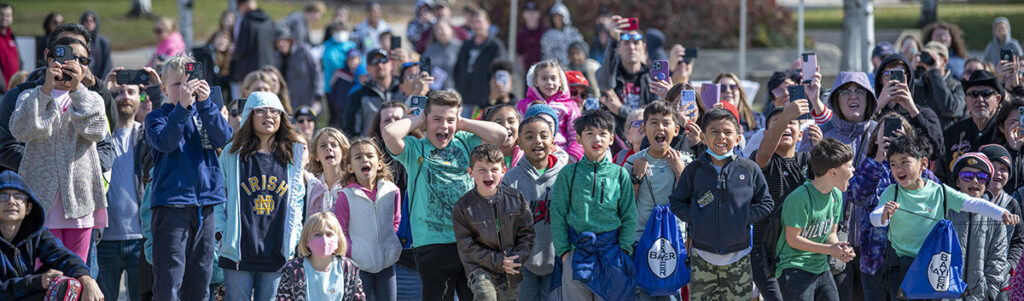
Gensini: I love that moment when I’m about ready to launch the balloon. My favorite thing is looking out at the audience and seeing all those smiles and the eyes that are as big as quarters!
First of all, for the children, especially, this is probably the biggest balloon they’ve ever seen in their lives! Balloons feel like a celebration, so there’s an excitement about that – people can’t wait to see it rise through the atmosphere.
Then there’s the added excitement of the data that it collects. I’ve launched hundreds of these balloons in my life, and I still get excited every time I launch one. So there’s so much excitement for somebody who’s never experienced it before.
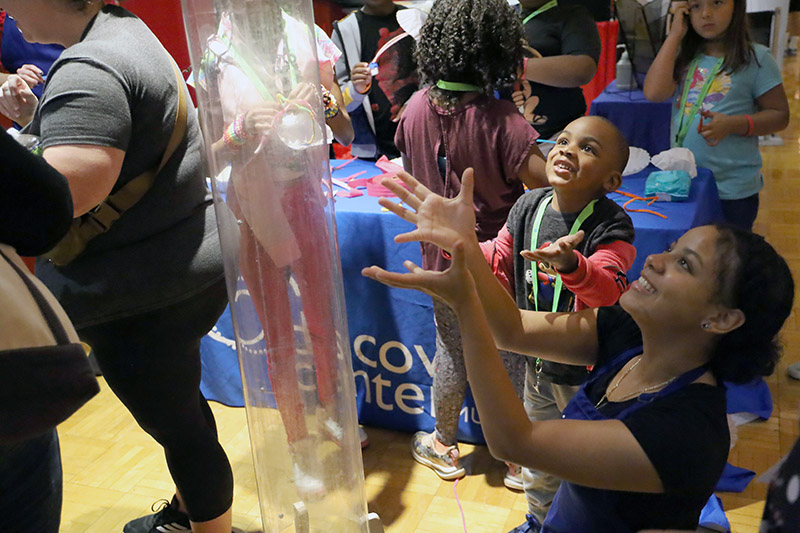
STEAM: Oh yes! We get the best photos every year of the kids just looking up at the sky in wonder.
Gensini: This is a chance to teach that wonder and excitement to another generation. You never know who might get bitten by what we call “the weather bug.” This can start a real interest in meteorology, and they’ll think back to the time when they saw that weather balloon launch and the wheels started turning from there.
You never really know how many people you’re going to touch and get interested in the field, and that’s why I do it every year.
STEAM: That is the magic of STEM Fest! Before we finish up, is there anything else you want DeKalb and the NIU audience to know?
Gensini: If you find the weather balloon package, send it back to us! They are recoverable, and sometimes we do get them back, and we can recycle and reuse them. We’ve had one STEM Fest in the past where we received the radio unit back. It had actually landed in north central Indiana, very close to the campus of Notre Dame.
But most of all, we want you to come out to STEM fest and enjoy yourself and learn a little bit about weather prediction. **
Learn more about STEM Fest and start planning your day on our STEM Fest website. The STEM Fest map and stage schedule will be posted by the week of Sept. 21!
For the Love of Chemistry: The NIU Chem Club Demo Show and One Student’s Chemistry Journey
An interview with Calvin Soldan, President of the NIU Chemistry Club
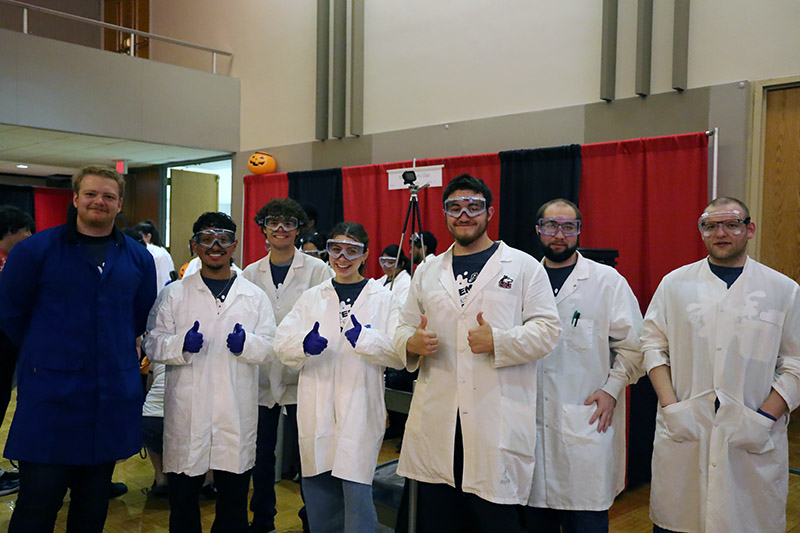
STEM Fest is coming up on Sept. 28, and we can’t wait! To help us prepare we sat down with NIU Chemistry Club President Calvin Soldan to learn more about the exciting Chem Club Demo Show, which will take place in Sandburg Auditorium of the Holmes Student Center at 1:30 p.m.
Calvin is a senior majoring in Chemistry at NIU, and he loves to share his passion for chemistry with the community. Keep reading to learn about the demo show and Calvin’s journey into the field of chemistry.
NIU STEAM: Can you talk me through what will happen in the Chem Club Demo show at STEM Fest so people know what to expect?
Calvin Soldan: Yes! We did a Chem Club show last semester with a video game theme. It had lots of different experiments with glowing reactions, and it was really fun. So we’re going to show a lot of those same experiments at STEM Fest.
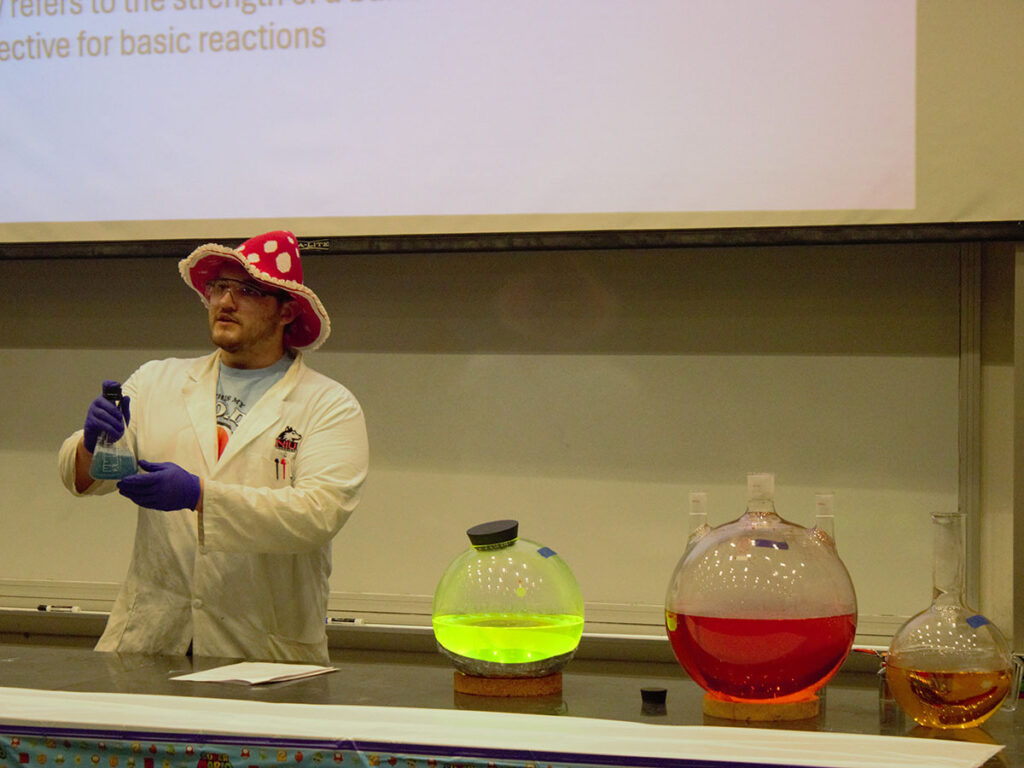
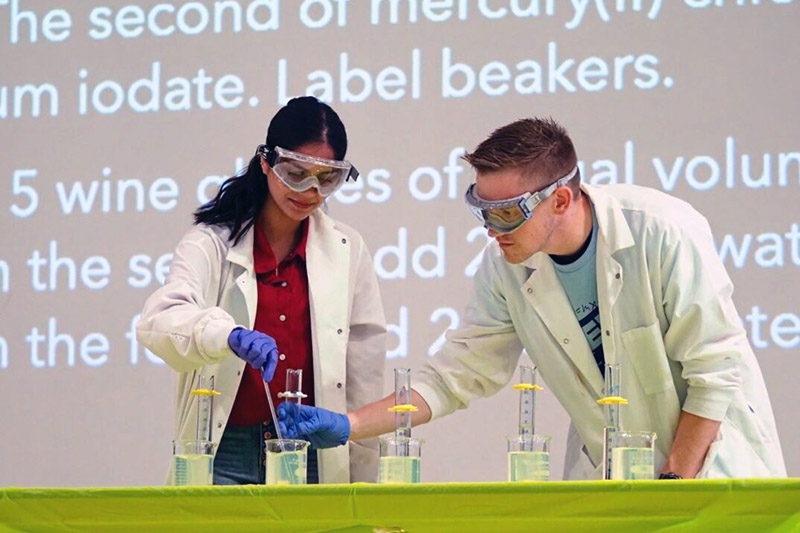
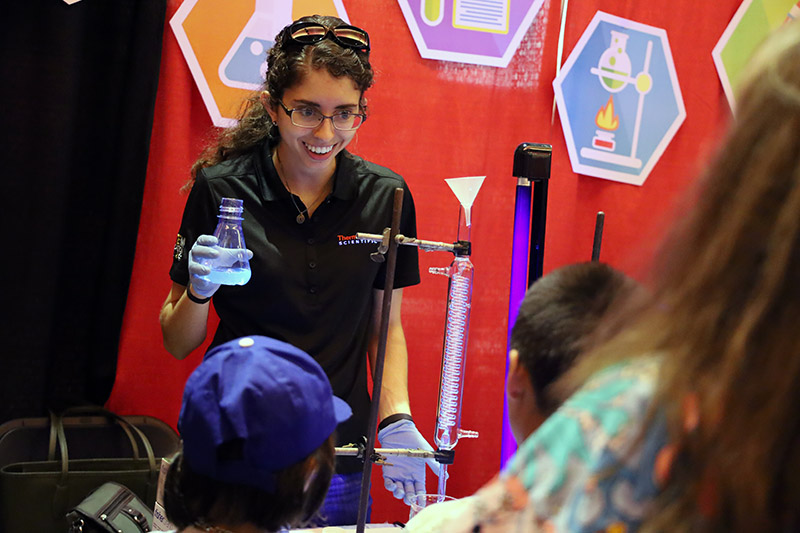
We’re going to have a clock reaction – which flips through a bunch of different colors. It’s going to look amazing! And we’ll do a chemiluminescence one where we pour things into some tubing. It’s going to spin around and glow and fluoresce as it hits the bottom.
STEAM: Excuse me… chemi- what??
Calvin: Chemiluminescence. It’s an interesting word! It combines the words for chemistry and light – it basically means a chemical reaction that makes light.
STEAM: Thank you. Please continue!
Calvin: So, we’re going to do both those reactions, then we’re going to have one that’s called a blue bottle experiment. Basically, we’ll take this bottle that has a clear solution. We’re going to shake it, and immediately it will flick to blue.
A lot of the reactions are going to focus on the light and color of chemistry. And then we’re going to end the show with a big finale – a giant ping pong barrel experiment where we take liquid nitrogen, put it in a barrel with some warm water, and it’s going to shoot a bunch of ping pong balls and go everywhere. I mean – a lot of ping pong balls!
STEAM: So, lots of light, lots of colors, and then an explosion of ping pong balls to cap it off. That sounds amazing!
Can you tell us a little more about how you choose which experiments to show? What led you to choose these particular ones?
Calvin: We chose these experiments because they are very eye catching! They get people to look and get excited, and it gives people an opportunity to see things that they don’t normally see. We focus on these reactions to give people new and memorable experiences – something cool to look at and something that’s not done in every single chemistry show they’ve seen before.
STEAM: Tell me – how many times have you been to STEM Fest before? And what keeps you coming back every year?
Calvin: I’m a senior at NIU, and I’ve been to STEM Fest three times. I have to admit, at first I came back because we got a free t-shirt. It’s a really cool t-shirt!
But then I went from being a regular member of the NIU Chem Club to being an event coordinator, planning all the different experiments and getting a passion for that. I started coming back to do the table experiments at the Chemistry booth, interacting with kids, trying to get people to learn more about chemistry and kind of connect the dots into everyday life. Because not everyone thinks about chemistry 24/7 like I do – but really, chemistry is part of everything we do throughout the day.
STEAM: Why do you love chemistry so much?
Calvin: Because it explains the world to me. For example, I’ve done research on solar panel material and learned how electrons create current and how the material makes a difference in that current. So now when I look at a computer screen, I think – oh yeah, it’s a bunch of little electrons being passed around in a bunch of different crystalline structures making an image or picture by light reflection. So chemistry just connects the dots for me every single day and helps me understand things in my life.
STEAM: How did you first get interested in chemistry?
Calvin: To tell you the truth, in middle school I hated chemistry! I didn’t like math, and I didn’t understand the point.
But then, as a sophomore in high school, I had a really good teacher, and she taught the material in a way that I understood. I was getting the math, I was getting the concepts, and she brought in a lot of outside experiments that no other teacher in the school was doing. So my class got a specialized format of chemistry experiments and demonstrations, and it just clicked for me. I felt more connected to everything than I did previously.
We got to experience exactly the kinds of experiments and demonstrations that the Chem Club uses in our stage show! You never know who might see a demonstration – and when that might spark a lifelong interest in science.
STEAM: I know you’re a senior at NIU, graduating pretty soon. Do you have any plans for after graduation?
Calvin: If you had asked me a year ago, I would have had no clue! But I’ve had a lot of research experiences recently that helped me figure out what I want to do. I’ve worked on a solar panel group, which was very intense. Then I worked with a medicinal chemistry group, creating a bunch of different antifungal agents and getting that experience. And right now, while also still making those antifungal agents, I also work at a wastewater facility analyzing wastewater and all the different contaminants in it.
With all that experience, I realized that I want to go to graduate school and focus on drug manufacturing. Medicinal chemistry – developing and creating new medications – is what I’d really love to do.
STEAM: Wow! I didn’t realize there were so many options in chemistry.
Calvin: Yes – it’s a very versatile degree, and you can do so much with it!
STEAM: Is there anything else that you want the NIU community to know about the demo show?
Calvin: There are going to be a lot of cool colors, and a lot of flashing lights. And we’re going to need a lot of help cleaning up our ping pong balls all over the place! So come, see a great show, and participate. This is not something you’ll get to see every day.
**
Learn more about STEM Fest and start planning your day on our STEM Fest website. The STEM Fest map and stage schedule will be posted by the week of Sept. 21!
As we get closer to STEM Fest, one of the questions we get most often is, “Where on campus is STEM Fest?” And really, it is all over NIU’s central campus. So, let’s take a tour of the sites. I enlisted the help of NIU STEAM staff member Russ Devereaux and we made a short video tour to showcase all the campus locations of STEM Fest so you’ll know what to expect when you join us on the 28th.
If you are more of a “tell me, and show me” person, here is a written tour of where to find all things STEM Fest here on campus.
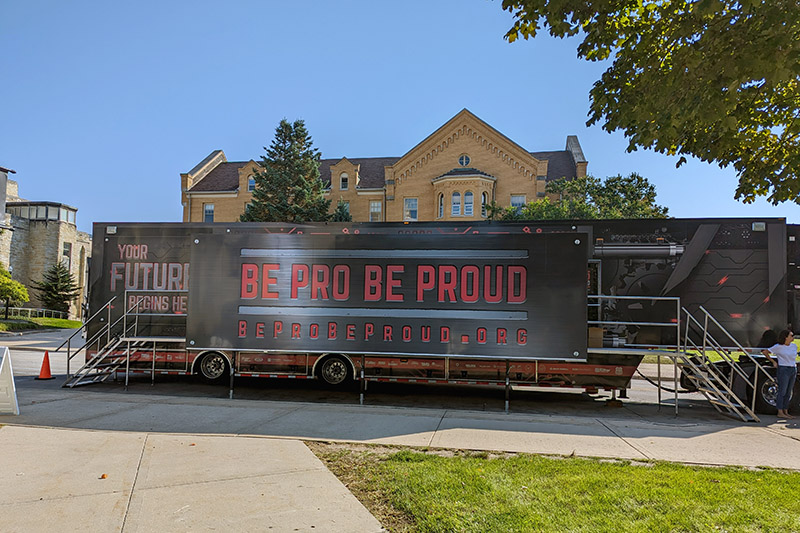
Just north of Route 38, Lincoln Highway, is the parking garage. You can turn either on Normal Rd or Carrol Ave to get there. Parking is free on Saturdays and the parking garage is your closest option to the center of STEM Fest. Once you park, head north towards Martin Luther King (MLK) Commons. Look for the tents. Outside you will find a wide variety of exhibitors and activities, including the brand-new Environmental Innovation Zone where you can explore topics related to food, water, earth science and beyond. You won’t want to miss the always popular weather balloon launch at 11:30 a.m. or the Be Pro Be Proud truck with some amazing simulations to explore. You can even watch a local graffiti artist create a STEM Fest themed work of art. Watch it progress during the day! The MLK Commons is a great place to start but there is so much more to see.
The tower to the north is Holmes Student Center (HSC). We have taken over the entire main floor! Head inside and you’ll find almost one hundred hands on booths across the three exhibit areas, Exploration Hall, the Health and Wellness Zone and the Artist’s Playground. There is something for everyone. If you have littles, don’t miss the Tot Spot filled with hands on fun for our youngest explorer. And catch a demonstration on the STEM Fest stage in Sandburg Auditorium. Check the website for the full stage schedule.
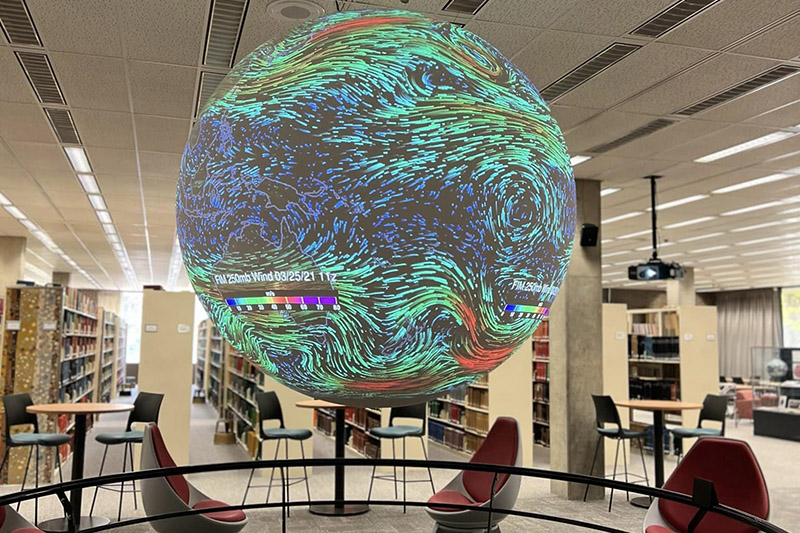
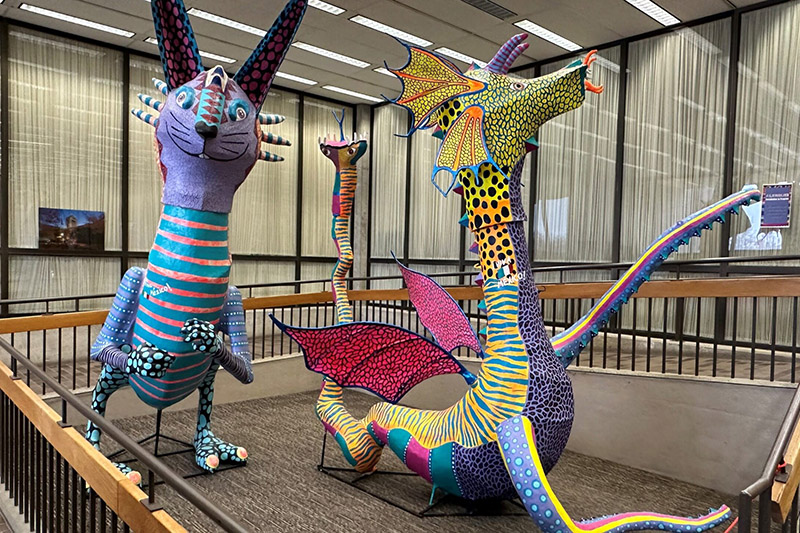
Once you’ve thoroughly explored the exhibit rooms in HSC, exit the south doors, through the MLK Commons and into the Founders Memorial Library. This year there is something interesting on each floor. Including Science on a Sphere, the Alebrijes Exhibit on the first floor and the Innovation Studio on the lower level. If you are looking for quieter options, you can explore the many displays on upper levels. Back on the main level, you’ll can meet several of your favorite Illinois Reads Authors in the STEAM Stories area. You’ll have a chance to hear book talks and connect with them one on one at the book signing tables.
Has all that exploring left you hungry? Don’t worry, in addition to the two dining options in the lower level of HSC, Normal Road will be filled with local food trucks. So, take a moment to refuel because we are not done yet. There is still a lot to see and do!
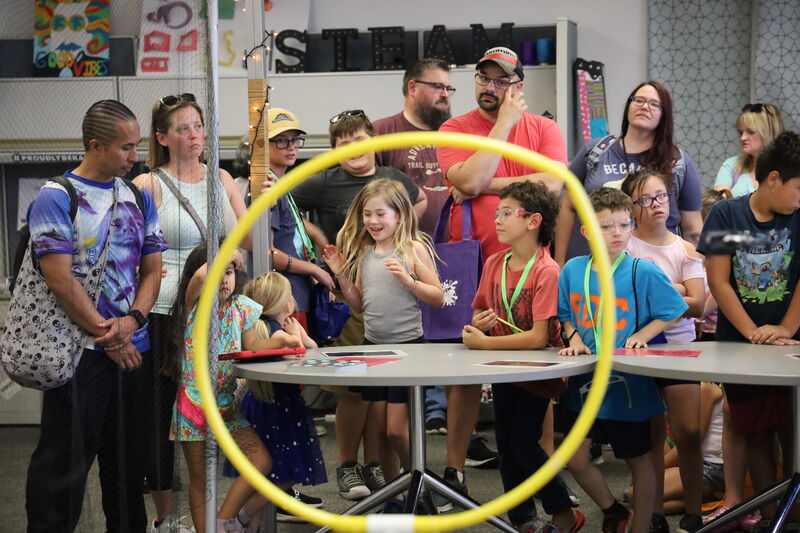
Just east of the food trucks in Swen Parson Hall, come and explore our STEAM Studio with interactive stations designed by the Barb City STEAM Team, our local afterschool club with DeKalb CUSD 428 students. They have been working hard all month to create a STEM-tastic space!
There is still one area you can’t miss but you’ll need to take a quick 5-minute walk. It is worth the walk!
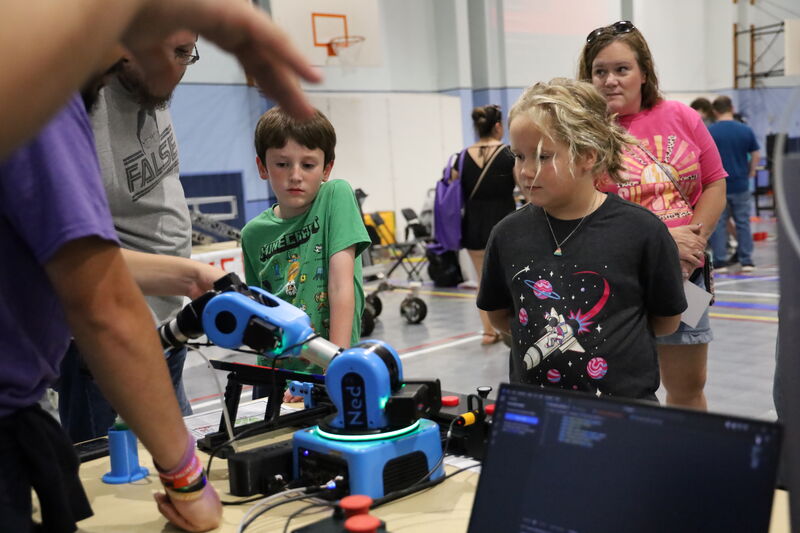
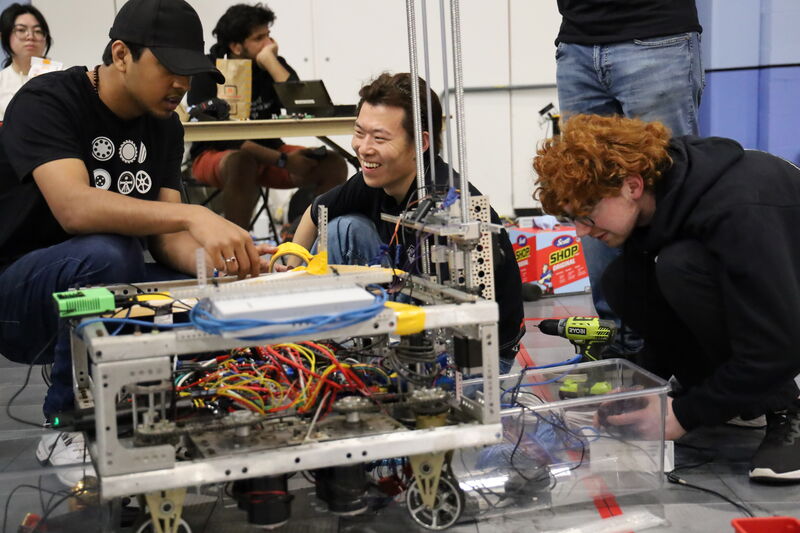
From MLK Commons, head east on Lucinda to Anderson Hall on the corner of Lucinda and Garden Rd. Anderson Hall is once again home to the Robotics and Rover Expo where you can see student-built robots and interact with the students who built them. Both the NIU Robotics and Mars Rover Teams will be showcasing their robots as well as high school students from area First Robotic Teams. We’ll also have a drone cage set up where you can fly a drone or maneuver a robot through a maze. Look for the tent in the Anderson Hall parking lot to the north of Lucinda to see the Mars Rover team, then head inside for more robot fun. But that’s not all, this year Anderson Hall is home to the brand new Sport Performance Arcade, where you can try out some sports performance equipment. Also, check out the Edible Campus booth with guided tours of the market garden and the cutting-edge hydroponic garden.
There is so much to do at STEM Fest and something for every age and interest. Be sure to visit our website to plan your day. The fun runs from 10-3. We’ll see you here on September 28th!
Are you headed to STEM Fest and looking for some ways to support engagement with our exhibitors? Whether you are an educator, youth leader, parent or other enthusiastic individual bringing young, inquisitive minds to campus, we have options for you!
As a high school science teacher for fourteen years, I often found myself in the following situation: at the start of class I would enthusiastically ask my students, “Who can recap for us what we learned about yesterday? Who can summarize for our absent students what we worked on?” More often than not, what followed next was the all too familiar sound of silence and blank stares looking back at me.
I am also a proud auntie of two nieces who are currently in preschool and early elementary. When I ask them, “How was school today? What did you do? What did you learn?” They usually start out with some short answers like, “Good” or “Fun” or “I don’t remember.”
In both situations, I’ve learned that I need to include a little more specificity with the questions I ask, which gives everyone involved a better jumping off place for the conversation. For example, as a teacher, “Who can recap for us what we learned yesterday when we carried out our urinalysis investigation?” Or, as an auntie, “What did you make today in art class?”
STEM Fest is awesome because we have so many exhibitors with a wide range of experiences to share, and we are spread across multiple buildings on campus. Some of us attending know exactly how to jump in, and some of us need some extra support on how to engage as a visitor.
If you’re looking for resources to support your explorers as they travel throughout STEM Fest, check out the guides below. If you are bringing a group of students and would like them to document their journey with some specificity, check out our exploration guides. If you are a parent or other guardian looking for an option that is a little less involved, check out our bingo cards. We also have a list of suggested questions that could help anyone better engage with our exhibitors.
Please print out any materials you would like to use and bring them with you the day of STEM Fest. In an effort to cut down on paper waste, we will not have printed copies available upon your arrival. We look forward to seeing you on September 28th on our NIU campus!
Becky Swiontek, MS Ed. is a NIU STEAM Educator, specializing in inquiry education for students, as well as standards-aligned curriculum and assessment.
By Jessica Cima, NIU STEAM Campus Engagement Coordinator
Preserving food is not only one of our family’s guiding principles for eating sustainably, but it is a Cima family event! We use the following methods to preserve our food: canning, dehydrating, freezing and fermenting. At this point in the year, most everyone’s tomato plants are full of ripe tomatoes. So, I wanted to provide a step-by-step guide to blanching and water bath canning tomatoes.
Rinse, Cut, and Blanch
After harvesting tomatoes, rinse them well.
Bring a large pot of water to a rolling boil.
Combine equal parts ice and water in a large container, set aside.
Cut a small X on the bottom of each tomato. Prepare all the tomatoes that you plan to use before moving to the next step.
Gently lower the tomatoes into the water in small batches (5-6 medium). Adding too many tomatoes at once will lower the water temperature.
Most recipes say to boil tomatoes for 30-60 seconds. I tend to watch my tomatoes and remove them when the skins start to split. I quickly transfer the tomatoes into an ice bath to stop the cooking process.
Peel Tomatoes and Prep Jars
Peel the tomato skins and set aside for later use.
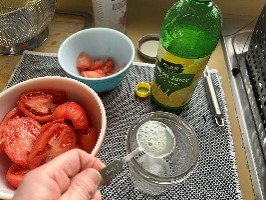
Wash and rinse jars, and check jar rims for any cracks or chips. Warm the jars in the water bath canner. When you’re ready to start filling the jars, remove them from the warmer, and add salt (½ teaspoon per pint or 1 teaspoon per quart) and lemon juice (1 tablespoon of bottled lemon juice per pint or 2 tablespoons per quart), to the bottom.
Did you know? Tomatoes generally have a neutral ph, so lemon juice is added to increase the acidity, making them safe to preserve. Bottled lemon juice should always be used over fresh lemon juice since the acidity of bottled lemon juice is stable whereas the acidity of fresh lemons could vary from lemon to lemon.
After the jars are filled, leaving ½ inch of headspace, clean the rim, add seal and screw on the rings fingertip tight (that means just tightened by hand, not super tight).
Time for the Water Bath!
Now it’s time to water bath can! Room temperature jars of tomatoes are then added to the water bath canner and brought to a boil. (Don’t pt cold jars straight into hot water – they might crack.)
Place the lid on to bring the water to a rolling boil, and begin your processing time.
Processing time is dependent on your elevation. DeKalb IL’s elevation is 879’, which means that raw packed tomatoes (pint or quarts) should be water bath canned for at least 35 minutes.
Leave No Waste
Adhering to a no waste practice, I use the remaining tomatoes skins in two ways.
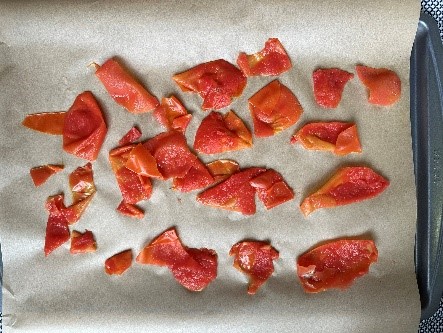
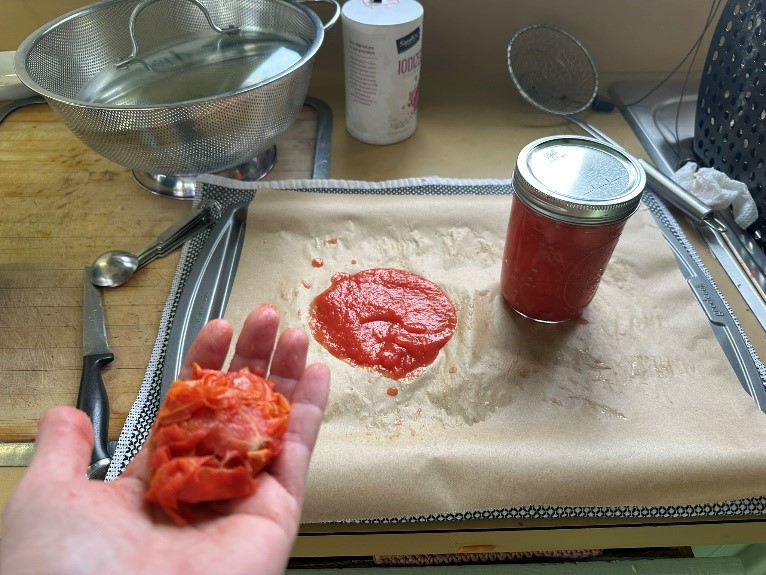
The first option is to dehydrate and grind the dried skins into tomato powder, which can be added to any dish for added flavor. (See Figure 1.)
Alternatively, I process the tomato skins and other tomato remains through a food mill and dehydrate the remains to produce tomato paste. (See Figure 2.)
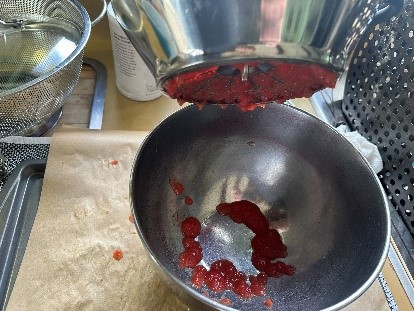
The very final remains from the food mill are then composted resulting in no waste. (See Figure 3.)
Figure 1.
Figure 2
Figure 3
I hope you enjoy water bath canning! Maybe this will become a family tradition for your family, as well as mine.
NIU’s Edible Campus Program will be offering canning and food preservation workshops soon! Check out the Edible Campus website for details.
In this episode of Winning Ideas, why should you send your kiddo to NIU Summer camps?
I’m going to respond to that question with another question! Think back to your childhood… What are some of the best parts of summer camps? Building friendships, learning new skills, maybe even exploring a place you haven’t been. What if your camp experience also included learning from industry professionals and taking exploratory field trips that engage your mind in ways you hadn’t imagined? What if you were allowed, encouraged even, to make mistakes as you embarked on your learning journey?
Are you sold yet? If not, let me throw yet another excellent reason to attend a summer camp at NIU. NIU summer camps offer students opportunities to inspire true local change in their communities.
While there are numerous summer camp options for families, we believe NIU summer camps are a cut above the rest. From school camps to the gym-based camps, sports camps, or even horseback riding camps, it feels like the options are endless. Selecting a camp that encourages your student to grow and fit in while still challenging them and preparing them for the future in a fun way feels a little overwhelming. With NIU STEAM summer camps students are challenged to think independently and explore ideas and problems that they might not see in a traditional classroom, while still building relationships and having all the fun a summer camp typically provides. We have options and opportunities for students to learn and engage in a plethora of options.
Our high school camps are all residential. Students spend a week with us learning from college professors in the morning and completing community service projects in the afternoons. When students show up in the morning they are met with the latest technologies and tools. They will engage with what it means to be a college student, going to short lectures that include hands on activities. In the afternoons, they are guided through service projects that align with college degrees and focus on community resilience as well as growth and civic engagement. In the evenings students experience adventures like exploring forest preserves, playing in the rec center, and challenging each other at NIU’s state of the art Esports Arena. They round out their experience by staying in the dorms, eating in the dining hall, and developing bonds with fellow students who may one day be their peers on campus.
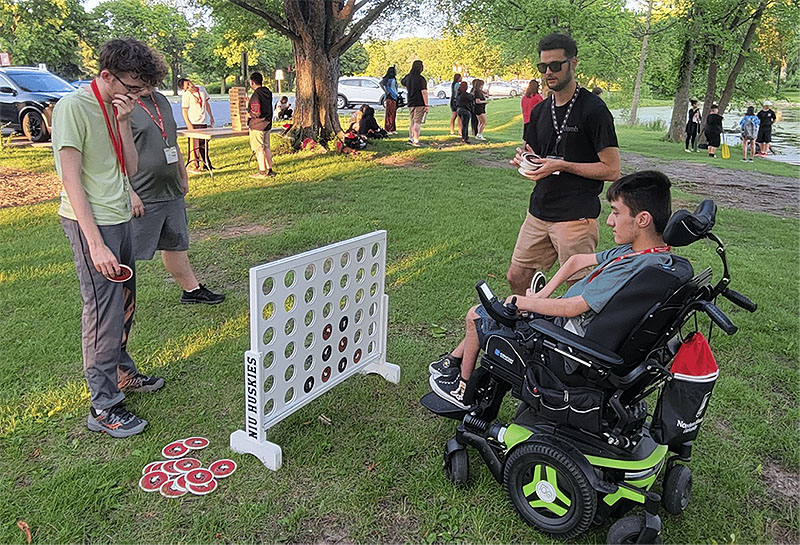
If you know a young person with a disability of any kind who will graduate high school in 2025, let them know about our unique Huskies BELONG camp! Led by NIU Associate Professor of Rehabilitation Counseling Bryan Dallas, Huskies BELONG helps college-bound students with disabilities learn to navigate a college campus, make connections with other college students with disabilities, and learn about the variety of college majors available.
For middle school students we offer two options. One is a traditional sleep away camp at NIU’s Lorado Taft Campus, nestled comfortably along the rock river. Students will hike, learn archery and hang out around the campfire for part of the time and engage in STEAM concepts (like shelter building, invasive plant identification and removal, fire building, and water filtration) for the other half. Students will stay in bunk houses and dine on some of the best cinnamon rolls in the Midwest.
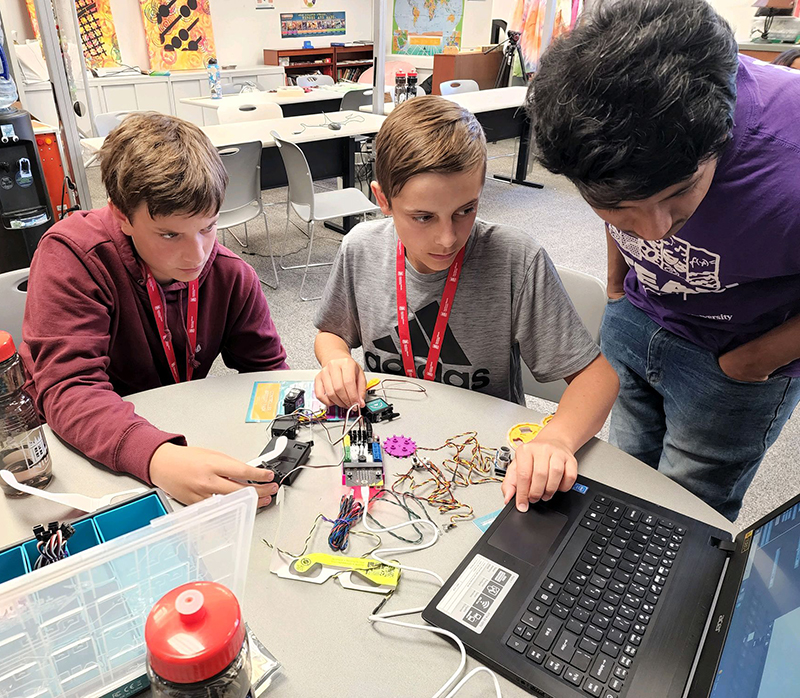
For those younger students who want to stay a little closer to home, NIU offers middle school day camps, as well as elementary day camps. These engaging classes focus on robots, programming, storytelling, and more. Students are on campus for the day, learning from the best STEAM educators around through hands-on, engaging experiences. These young people will walk the campus as pre-college students, get comfortable with the idea of preparing for college, and be set up for success as they grow through our programming.
All of our camps are led by highly qualified STEAM educators. They are trained to help guide young people through the challenges of non-traditional learning. They work diligently to create new and innovative lessons and projects that not only challenge students, but also inspire creativity and curiosity. We are ready to invite you to our summer camps! Come join the fun and learn something new at an NIU Summer Camp!
As always, don’t forget to share your projects with us! Tag #NIUSTEAM and @NIUSTEAM for a chance to be featured in our weekly newsletter.And as always, do good things, be good people, and make yourself better than the day before.
Are you intrigued by the world of medicine and eager to explore career possibilities in healthcare? Look no further than NIU STEAM’s Biomedical & Health Careers Summer Camp! This weeklong residential camp for students entering grades 9-12 provides an immersive experience into the important role health professionals play in communities and demonstrates how rewarding this growing field can be!
Throughout the week, campers will engage with a diverse group of healthcare professionals who will share their real-world experiences and insights. They’ll get a firsthand glimpse into the numerous career paths and variety of education and salaries available in the field. Campers will also have the unique opportunity to learn from college students who are actively pursuing their own pathway toward a future health or medical career. They’ll have the chance to ask questions and hear from the generation ahead of them.
NIU STEAM’s Biomedical & Health Career camp will be on the move, exploring various learning spaces on NIU’s campus and in the local area. Campers will have many hands-on learning opportunities to experience what it’s like to work in the field. Throughout the week, campers will use their research and learning to design and develop their own innovative biomedical device.
Join NIU STEAM in making this a summer to remember for your camper as they connect with peers who share their passion for healthcare and science, form lasting friendships and begin building a network that will support them on their own future career path.
This month, it’s starting to really feel like spring! So for this edition of Winning Ideas, I wanted to explore the health benefits of getting outdoors. Keep reading for some tips for getting your family outdoors. And check out Part 1 of this month’s Winning Ideas to see some health and wellness tips for educators and classrooms.
The benefits of being outside in nature are known to be astronomical. Getting outside with your family can help to lower mental stress, increase physical health, and improve our mental capabilities. Not only that – but being outside with your family can also help build relationships, trust and confidence. It can instill positive memories that change relationships for the better, and for future generations who will also learn to love being outside.
Even if you don’t have very much time, I hope you can try at least one of these activities together with your family and friends. Here are a few of my favorites:
If you have the means, go out for a frozen treat on a hot summer evening, then sit outside and count the stars.
Take a walk outside and go find local parks in your neighborhood for your kids to play.
Reconnect with your community by attending community sponsored events. It’s great to rediscover neighbors and friends after the long winter months of isolation.
Try gardening or bringing plants into your home to freshen the air and potentially provide some nutrients.
Remember that the outdoors is for everyone – trails, parks, rivers, and forests belong to all of us, so go explore!
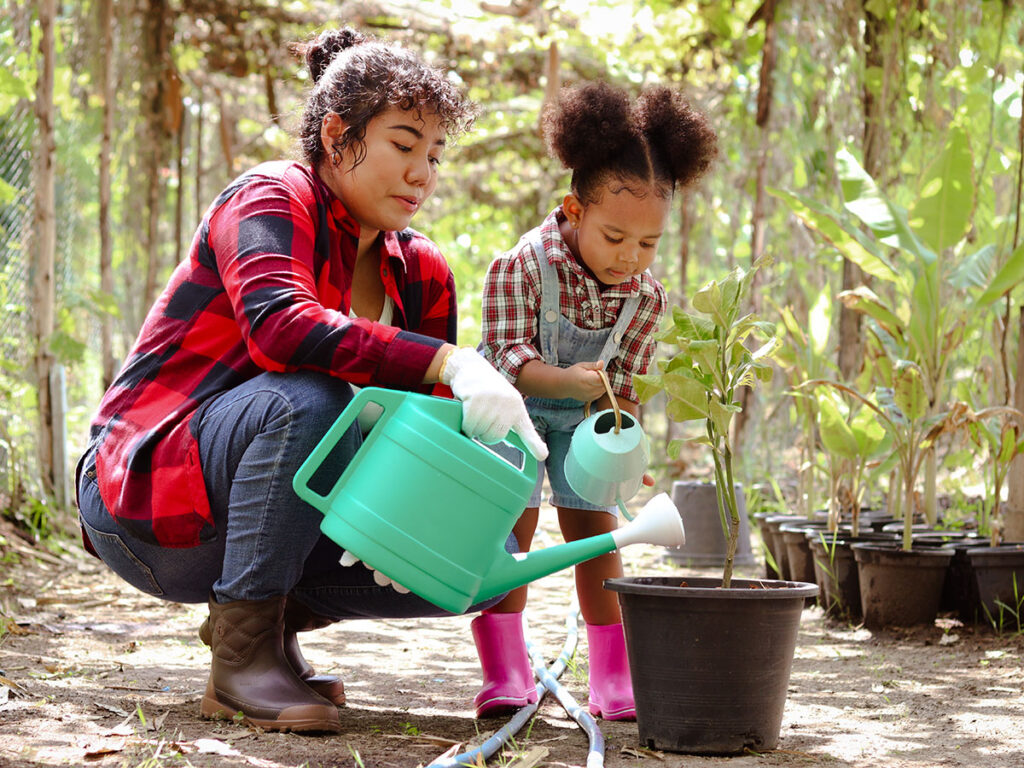
If you have a little more time to spend, try creating a Cereal Box Garden! Next time your family finishes a box of cereal, cut the box in half and save the bottom that is still sealed. Rinse out the bag and fill it with soil. Set the bag back in the box and gently press seeds into the soil an inch or so apart. Then, set your box in a sunny window (maybe on an old grocery bag to prevent any water damage) and water it once a week.
Find your closest trail or park. Once you have found it – once a week, if you can, walk the trail and talk about what you are seeing and how things are changing from week to week. Use it as an opportunity to connect with your kids. Keep your cell phones off unless you are looking up plants or animals. Make that effort to be present with your family.
Make a map of your sky. Help your children draw a picture of their house. When they have their image, go out on a clear night and see if you can map any stars.
I hope this spring you’re getting out and absorbing the healing benefits of nature – and learning the importance of protecting nature. I like to remember the words of Sir David Attenborough: “If children grow up not knowing about nature and appreciating it, they will not understand it, and if they don’t understand it, they won’t protect it, and if they don’t protect it, who will?” Get out there and soak in the healing that is being outside, experiencing the air, wind, sun, and so many more of the benefits nature offers.
As always, don’t forget to share your projects with us! Tag #NIUSTEAM and @NIUSTEAM for a chance to be featured in our weekly newsletter.And as always, do good things, be good people, and make yourself better than the day before.
Hey friends! NIU STEAM Summer Camps are coming up soon! Take a moment to register your kiddos for camp. We offer day camps for students in grades 2-5 and middle school, overnight STEAM camp for middle school at Lorado Taft Field Campus, and college/career focused hands-on resident camps for high school students.
If you know any college-bound high school students with disabilities, be sure to tell them about our Huskies BELONG summer camp, which is free to qualifying students.
Conserving Wonder with Sir David Attenborough. Green Eyed Monster Films. (2014). https://greeneyedmonsterfilms.com/portfolio/conserving-wonder
UC Davis Health. (2023, June 4). 3 ways getting outside into nature helps improve your health. health. https://health.ucdavis.edu/blog/cultivating-health/3-ways-getting-outside-into-nature-helps-improve-your-health/2023/05
In this episode of Winning Ideas, health and wellness matter! (Even at school – even for teachers – and, let’s be honest, for everyone.)
Y’all. It’s finally May. We made it! For most schools and educators, classes are done (or almost done), and we are beginning to think about a nice long break and, hopefully, how we plan on taking care of ourselves.
During the school year, while we focus heavily on meeting standards and evaluating students on their progress in math and reading, we sometimes forget to focus on their mental well-being and ours. So how, during even the busiest times, do we make time for ourselves, for our students, and for our friends? Let’s jump into the importance of mental health and well-being in education and how you can bring it to the forefront of every lesson you plan.
For many of us educators, our students are our number one priority. We work every day on new and innovative ways to keep them entertained and engaged, off their cell phones and focused on the lesson. Sometimes it feels like a losing battle. We worry about what happens when they aren’t in our classrooms and what could happen to them even walking down the halls. We fret about if they had enough to eat that day or if they got any sleep. Oftentimes, we’re even wondering if they had a chance to be a kid or if they immediately had to go home, do piles of homework and watch younger siblings or get a job. Balancing that, as an educator who is also concerned about performance reports, evaluations, those parent emails (and don’t forget – you have a staff meeting today!) can be overwhelming.
Lately, many districts have made a big push for social and emotional learning coupled with trauma informed practices as a part of their educational plan. However, unfortunately, many teachers are not given professional development in those areas – yet are still expected to perform at the highest possible level.
If you’re feeling overwhelmed just reading this far, welcome to the very real world of education. Districts and teachers want nothing but the best for their students. You are met with families who want their children to have the best possible education. You have state goals and laws that do and don’t allow certain things in the classroom. Students feel pressure from families to perform in a certain way or uphold a name, pressure from the school to do well and be successful, and sometimes sports that hold them to high standards. Education is a lot. Unfortunately, it’s also not changing anytime soon. So, what do we do?
As educators and parents, we need to remember the most basic piece of advice when it comes to our students. They are just kids. I know that not everyone in this country has the luxury of allowing their children to play and explore until they graduate high school. But we can make a difference, no matter how small.
Educators, my top piece of advice is: build in time for students to be kids again, no matter what age they are. Focus on play-based learning in your classroom. (And play doesn’t have to be only for the youngest! It can be fun and educational even for older students and adults.) Start engaging students in hands-on, fun labs and activities that allow their creativity and curiosity to shine through.
Even those ubiquitous cell phones can be leveraged as a tool of fun and learning instead of a mindless doom-scrolling device! Teach your students how to use generative AI to assist them in finding the right answers. Sign up for an account on an app like Calm and build 5-minute meditations into the beginning of your classes so that you start each day a little more centered and focused. As the teacher, don’t skip that meditation time! Meditation can also help your own stress levels.
Another simple thing you can do is get outside. Take your students to the play yard, the field, or a nearby park for a lesson. And yes – you have time. In fact, create a lesson around going outside and engaging with nature – it relates to literally every content area.
Finally, please don’t forget to take care of your own mental health, as well. Do things that make you happy. You have 24 hours in each day. Pause for a moment and ask, how are you going to spend them? Will you take up crocheting or join a group of people your age who walk their cats by the lake every Friday afternoon? Will you go out for a run, then sign up for a 5K, 10K or even marathon – just to prove your body can do it? Maybe you will start experimenting with cooking or homesteading. Potentially you want to follow your singing goals and produce your own music. When you show your students that you are also following your dreams, making time for yourself, and creating a healthy work/life balance – they will start to see what it means to be healthy.
Here are some tips for how to take your lessons outside:
For ELA, encourage students to write outside with pencil and paper. Have them create poems or generate scenery for a piece they are crafting.
In math class, students can calculate ratios of trees to space, leaves to branches, or population density of grass or other plants. They can identify shapes, generate word problems about events outside, or complete a math scavenger hunt where they need to generate answers to questions based on the outdoors. (For example, you may have: “parallel lines” and the student may write monkey bars, slide sides, or teeter totters in similar positions.)
For art, students can use flowers, grasses, leaves and rocks to generate different pigments and test them out on different mediums. Students can learn to press flowers or generate pictures in the clouds.
History has many applications outside, as well. Students can gather materials and attempt to make paper from them, like it was done in ancient times. They can re-enact different eras and learn through doing how different people lived and thrived. They can generate the history of the school building based off their intuition and then research the school’s history to compare types of documents and learn how to identify the “real” answers.
PE students can create obstacle courses or games in the grass. They can learn to build shelters from gathered materials, or other fun engaging games that allow them to be outside.
Scientists can complete many labs outside. They can keep nature journals and track changes to weather, temperature, humidity, moon phases, etc. Students can generate solutions to mitigate climate disasters or create inventions to support people when natural hazards may occur.
Musicians can learn how wind impacts playing and identify how sound travels. They can also generate ideas to allow outdoor concerts and festivals to play their music without using a ton of electricity in speakers.
I had so many ideas to share about health and wellness this month that we ended up splitting into two blogs! Check out Part 2 to learn more about Family Fun and the Benefits of Getting Outdoors.