

Wellness Matters! (Part 1)
Health and wellness tips for educators
By Jess Winn, NIU STEAM Educator
In this episode of Winning Ideas, health and wellness matter! (Even at school – even for teachers – and, let’s be honest, for everyone.)
Y’all. It’s finally May. We made it! For most schools and educators, classes are done (or almost done), and we are beginning to think about a nice long break and, hopefully, how we plan on taking care of ourselves.
During the school year, while we focus heavily on meeting standards and evaluating students on their progress in math and reading, we sometimes forget to focus on their mental well-being and ours. So how, during even the busiest times, do we make time for ourselves, for our students, and for our friends? Let’s jump into the importance of mental health and well-being in education and how you can bring it to the forefront of every lesson you plan.
For many of us educators, our students are our number one priority. We work every day on new and innovative ways to keep them entertained and engaged, off their cell phones and focused on the lesson. Sometimes it feels like a losing battle. We worry about what happens when they aren’t in our classrooms and what could happen to them even walking down the halls. We fret about if they had enough to eat that day or if they got any sleep. Oftentimes, we’re even wondering if they had a chance to be a kid or if they immediately had to go home, do piles of homework and watch younger siblings or get a job. Balancing that, as an educator who is also concerned about performance reports, evaluations, those parent emails (and don’t forget – you have a staff meeting today!) can be overwhelming.
Lately, many districts have made a big push for social and emotional learning coupled with trauma informed practices as a part of their educational plan. However, unfortunately, many teachers are not given professional development in those areas – yet are still expected to perform at the highest possible level.
If you’re feeling overwhelmed just reading this far, welcome to the very real world of education. Districts and teachers want nothing but the best for their students. You are met with families who want their children to have the best possible education. You have state goals and laws that do and don’t allow certain things in the classroom. Students feel pressure from families to perform in a certain way or uphold a name, pressure from the school to do well and be successful, and sometimes sports that hold them to high standards. Education is a lot. Unfortunately, it’s also not changing anytime soon. So, what do we do?
As educators and parents, we need to remember the most basic piece of advice when it comes to our students. They are just kids. I know that not everyone in this country has the luxury of allowing their children to play and explore until they graduate high school. But we can make a difference, no matter how small.
Educators, my top piece of advice is: build in time for students to be kids again, no matter what age they are. Focus on play-based learning in your classroom. (And play doesn’t have to be only for the youngest! It can be fun and educational even for older students and adults.) Start engaging students in hands-on, fun labs and activities that allow their creativity and curiosity to shine through.
Even those ubiquitous cell phones can be leveraged as a tool of fun and learning instead of a mindless doom-scrolling device! Teach your students how to use generative AI to assist them in finding the right answers. Sign up for an account on an app like Calm and build 5-minute meditations into the beginning of your classes so that you start each day a little more centered and focused. As the teacher, don’t skip that meditation time! Meditation can also help your own stress levels.
Another simple thing you can do is get outside. Take your students to the play yard, the field, or a nearby park for a lesson. And yes – you have time. In fact, create a lesson around going outside and engaging with nature – it relates to literally every content area.
Finally, please don’t forget to take care of your own mental health, as well. Do things that make you happy. You have 24 hours in each day. Pause for a moment and ask, how are you going to spend them? Will you take up crocheting or join a group of people your age who walk their cats by the lake every Friday afternoon? Will you go out for a run, then sign up for a 5K, 10K or even marathon – just to prove your body can do it? Maybe you will start experimenting with cooking or homesteading. Potentially you want to follow your singing goals and produce your own music. When you show your students that you are also following your dreams, making time for yourself, and creating a healthy work/life balance – they will start to see what it means to be healthy.

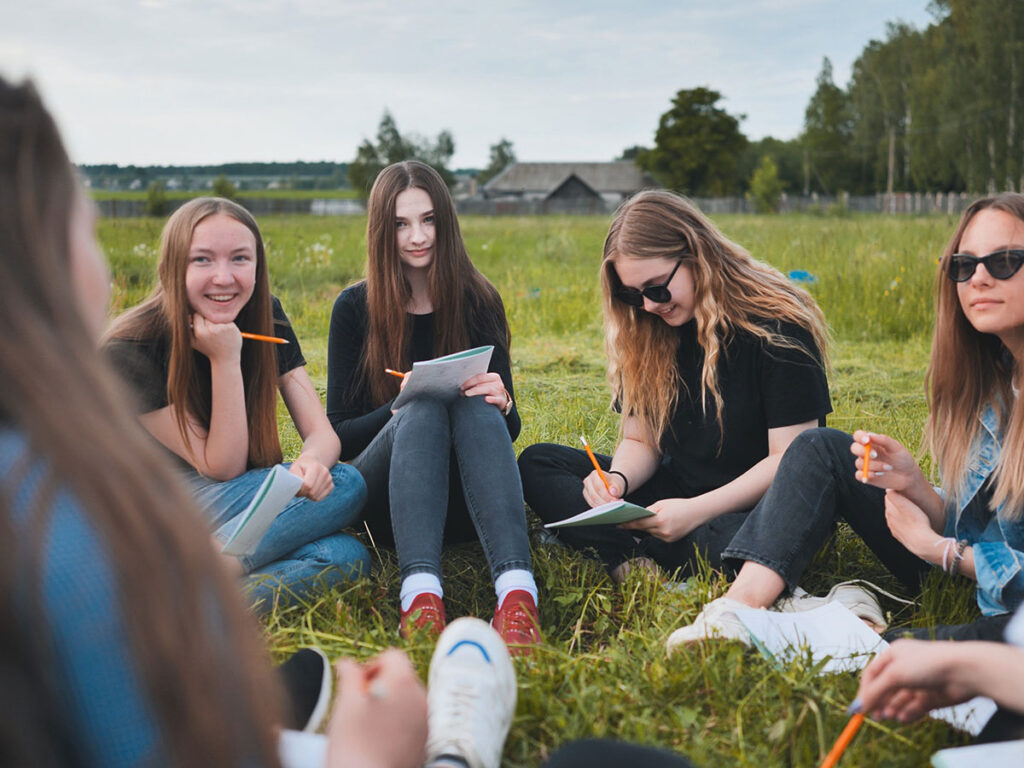

Here are some tips for how to take your lessons outside:
- For ELA, encourage students to write outside with pencil and paper. Have them create poems or generate scenery for a piece they are crafting.
- In math class, students can calculate ratios of trees to space, leaves to branches, or population density of grass or other plants. They can identify shapes, generate word problems about events outside, or complete a math scavenger hunt where they need to generate answers to questions based on the outdoors. (For example, you may have: “parallel lines” and the student may write monkey bars, slide sides, or teeter totters in similar positions.)
- For art, students can use flowers, grasses, leaves and rocks to generate different pigments and test them out on different mediums. Students can learn to press flowers or generate pictures in the clouds.
- History has many applications outside, as well. Students can gather materials and attempt to make paper from them, like it was done in ancient times. They can re-enact different eras and learn through doing how different people lived and thrived. They can generate the history of the school building based off their intuition and then research the school’s history to compare types of documents and learn how to identify the “real” answers.
- PE students can create obstacle courses or games in the grass. They can learn to build shelters from gathered materials, or other fun engaging games that allow them to be outside.
- Scientists can complete many labs outside. They can keep nature journals and track changes to weather, temperature, humidity, moon phases, etc. Students can generate solutions to mitigate climate disasters or create inventions to support people when natural hazards may occur.
- Musicians can learn how wind impacts playing and identify how sound travels. They can also generate ideas to allow outdoor concerts and festivals to play their music without using a ton of electricity in speakers.
I had so many ideas to share about health and wellness this month that we ended up splitting into two blogs! Check out Part 2 to learn more about Family Fun and the Benefits of Getting Outdoors.