

A Guide to Canning Tomatoes
By Jessica Cima, NIU STEAM Campus Engagement Coordinator
Preserving food is not only one of our family’s guiding principles for eating sustainably, but it is a Cima family event! We use the following methods to preserve our food: canning, dehydrating, freezing and fermenting. At this point in the year, most everyone’s tomato plants are full of ripe tomatoes. So, I wanted to provide a step-by-step guide to blanching and water bath canning tomatoes.
Rinse, Cut, and Blanch
- After harvesting tomatoes, rinse them well.
- Bring a large pot of water to a rolling boil.
- Combine equal parts ice and water in a large container, set aside.
- Cut a small X on the bottom of each tomato. Prepare all the tomatoes that you plan to use before moving to the next step.
- Gently lower the tomatoes into the water in small batches (5-6 medium). Adding too many tomatoes at once will lower the water temperature.
Most recipes say to boil tomatoes for 30-60 seconds. I tend to watch my tomatoes and remove them when the skins start to split. I quickly transfer the tomatoes into an ice bath to stop the cooking process.
Peel Tomatoes and Prep Jars
- Peel the tomato skins and set aside for later use.
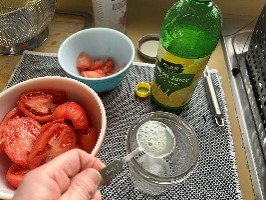
- Wash and rinse jars, and check jar rims for any cracks or chips. Warm the jars in the water bath canner. When you’re ready to start filling the jars, remove them from the warmer, and add salt (½ teaspoon per pint or 1 teaspoon per quart) and lemon juice (1 tablespoon of bottled lemon juice per pint or 2 tablespoons per quart), to the bottom.
- Did you know? Tomatoes generally have a neutral ph, so lemon juice is added to increase the acidity, making them safe to preserve. Bottled lemon juice should always be used over fresh lemon juice since the acidity of bottled lemon juice is stable whereas the acidity of fresh lemons could vary from lemon to lemon.
- After the jars are filled, leaving ½ inch of headspace, clean the rim, add seal and screw on the rings fingertip tight (that means just tightened by hand, not super tight).
Time for the Water Bath!
- Now it’s time to water bath can! Room temperature jars of tomatoes are then added to the water bath canner and brought to a boil. (Don’t pt cold jars straight into hot water – they might crack.)
- Place the lid on to bring the water to a rolling boil, and begin your processing time.
- Processing time is dependent on your elevation. DeKalb IL’s elevation is 879’, which means that raw packed tomatoes (pint or quarts) should be water bath canned for at least 35 minutes.
Leave No Waste
Adhering to a no waste practice, I use the remaining tomatoes skins in two ways.
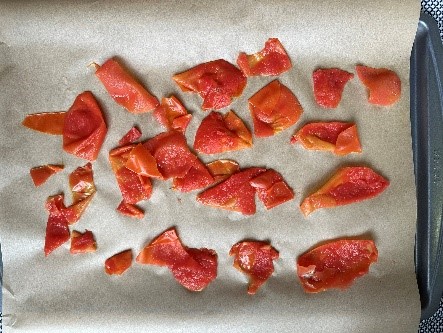
- The first option is to dehydrate and grind the dried skins into tomato powder, which can be added to any dish for added flavor. (See Figure 1.)
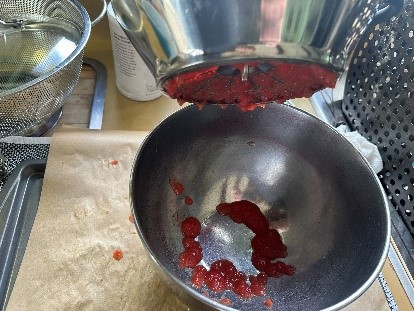
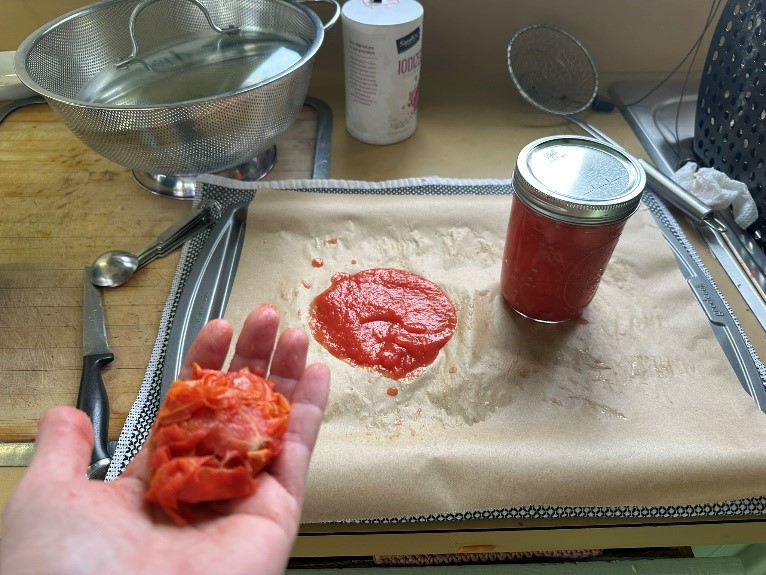
- Alternatively, I process the tomato skins and other tomato remains through a food mill and dehydrate the remains to produce tomato paste. (See Figure 2.)
- The very final remains from the food mill are then composted resulting in no waste. (See Figure 3.)
I hope you enjoy water bath canning! Maybe this will become a family tradition for your family, as well as mine.
NIU’s Edible Campus Program will be offering canning and food preservation workshops soon! Check out the Edible Campus website for details.