About 10 years ago while talking with a friend, I was given an ultimatum. “You need a bedtime. I don’t care if it is 7 p.m., or 10 p.m., or one in the morning. You need to pick a time and go to bed at that time every night. You drive me absolutely nuts when you are sleep deprived. If I am truly your friend, and you truly value our friendship, just go to bed at the same time!” Ok, so maybe I am moody when I am sleep deprived. And perhaps a little angsty and overwhelmed. And maybe I grab on with both hands to things that would normally roll off my back and obsess about them until a bean bag chair, a blanket and soft teddy bear intervene. But it can’t just be me, right? There must be some physiological truth to getting enough regular sleep to not make me lose friends, neighbors and coworkers.
November is National Sleep Comfort Month, so what better time to talk about sleep regularity than right now! I used to listen to life productivity experts who would tell us that the more hours you have in the day, the more you get done in a day. Those that get ahead, work while others are sleeping. And as someone who always feels two steps behind, this resonated with me! In 1993, on the album Keep the Faith, Bon Jovi released an entire song entitled, “Sleep When I’m Dead,” so it’s got to be a thing! For some people it might be, but what does the Science say?
There are some crucial physiological processes that occur while a person is getting their 40 winks. The brain participates in memory consolidation where it strengthens pathways to new memories, ideas and learned material and makes them easier to recall. Sleep also helps the brain purge ideas and memories that are unwanted, not useful, or are not tied to other stored information. This is essential to preventing cognitive overload.
Neuroplasticity is defined as the brain’s ability to change through growth, reorganization and the rewriting of neural pathways. Adequate sleep is essential to the maintenance of brain organization and building new pathways as a function of learning and processing new information, recalling memories, and internalizing life experiences. It is far more difficult to make new wrinkles in that grey matter if it’s sluggish and sleep deprived.
Getting enough quality sleep affects other systems of the body as well. Your immune system relies on your time asleep to produce cytokines which are proteins that prevent inflammation. Natural Killer Cells, a type of white blood cell that is part of the immune system we were born with that target viruses, bacteria, parasites, and cancer cells, can be severely compromised with a lack of shut eye. Other white blood cells that aren’t specifically “employed” but spring to action when an invader is detected, could be lacking in number when your immune system is called upon to keep you feeling as well as possible. This would be akin to launching a battle against 1000 soldiers with only 100 troops of your own.
I can go on about chemical processes like increased cortisol concentration, impaired glucose tolerance, insulin resistance, prediabetes, deposits of protein plaque in the brain and other endocrine concerns raised by lack of sleep, but you all get the picture. Our bodies participate in essential maintenance and growth while we sleep.
So now that we know sleep is important, how to maximize our ability to sleep? One of the most important steps you can take is what my friend Robyn alluded to a decade ago: establish a consistent sleep schedule. Go to bed and wake up at the same time every day, including weekends. You can gradually adjust your sleep schedule until you find the ability to be consistent.
Quality of sleep is just as important as quantity of sleep. Lying in bed staring at the ceiling, thinking about the silly comment you made at a work dinner 5 years ago, doesn’t earn you sleep brownie points because you are lying in bed. Try to create a conducive environment in which to sleep. Make the room in which you sleep as dark as possible; use blackout curtains or shade to minimize external light. Set the thermostat between 60- and 67-degrees Fahrenheit, so that your body temperature can slowly decrease – a message to your brain that it is time to sleep. Keep your bedroom clutter free and free of distractions.
Finally, there are behaviors you can adjust to reap the benefits of good sleep. Avoid electronics and other activities that stimulate your brain at least an hour before bedtime. We talk about this in our Sound of Science episode: Light’s Spectrum and its Effects on Sleep. Cut off caffeine and other stimulants midday, stop eating 3-4 hours before bedtime, and limit naps to 20-30 minutes so that hormones and other signals your body gives to induce sleep aren’t disturbed. Engage in activities that promote relaxation and reduce stress that you have experienced during the day. Build a nighttime routine that helps you wind down and signals to your body that sleep is on the way. Also, if you know you have an underlying health condition that interferes with your sleep, address it right away with professional guidance.
Some of you may read this and have a new baby (or a teenager) in the house, the necessity to work multiple jobs to make ends meet, insomnia, schedules that vary greatly from day to day…you know, life. And all this information is all well and good, but sometimes hard to practice. Of course, individual needs and preferences vary so there is no one-size-fits-all approach. Adjust the parts of your sleep hygiene that are most in your control to ensure that that the quality and quantity of sleep that you are getting is maximized. And if you are someone who has this sleep thing figured out to a Science, please have patience and give grace to those of us that are still trying. We’re just working on trying to find a bedtime.
This blog post expands on our recent episode of Sound of Science, where Chrissy Swartz and Jasmine Carey explored the topic of “Does the Earth Have Two Moons?”
Hollywood is famous for casting heroes and placing them in situations that ensure at least some of the Earth’s population makes it through whichever “Emergency Extinction Event” has been whipped up in a flurry of explosions and near-death experiences for the hero, their love interest, and the rest of humanity. In Armageddon, Bruce Willis and his team of scrappy oil rig employees saved us all from near destruction by drilling a hole in an asteroid to detonate it Death Star style before it collided with Earth. In that same year, Tea Leoni exposed a governmental cover up involving a rogue comet with Earth in its sites. Robert Duvall was employed by President Morgan Freeman, as a result of the exposé, to also use explosives to disrupt the comet’s path of destruction in the movie Deep Impact.
Are Emergency Extinction Events released in cinematic form involving space debris really something of concern? Will we get more than 48 hours’ notice that humanity is in jeopardy? Is that even enough time to track down Dwayne “The Rock” Johnson, Gerard Butler, or Jason Momoa?
Rest easy, our well-being is looked after consistently by NASA’s Asteroid Terrestrial-Impact Last Alert System, or ATLAS. The ATLAS system consists of 4 observatories located in Hawaii (X2), Chile, and South Africa that sweep the entire dark sky every 24 hours searching for NEOs or near-Earth Objects. The first two locations, opened in Hawaii in 2017, were later joined by Sutherland Observing Station in South Africa and the El Sauce Observatory in Chile in 2022.
From space debris the size of a standard tractor trailer to larger than multiple football fields, ATLAS can give us a warning a week out for smaller objects and weeks out for a planet destroyer. To give perspective, a 40 mile wide asteroid could transform Earth into an uninhabitable planet, and an asteroid 1/3 as big as the moon would cause certain mass extinction.
Before we all start digging to start an underground society, NASA feels strongly that though no system can be 100% reliable, ATLAS is something partnered with other redundancies is pretty darn close. With the expansion of observatories, both Northern and Southern Hemispheres are covered. Orbit calculations that are derived from data collected by ATLAS are shown to be highly accurate. With the frequency of scans and wide field of view, the ATLAS observatories have the capability to give us significant warning of incoming space objects. And along with continued funding, and its addition to other NASA search systems, ATLAS will only continue to become more instrumental in the location of near-Earth objects. For now, our Hollywood action stars can rest easy with the knowledge that humanity is safe…at least from the skies.
Over the past year we’ve reimagined and reinvented our educator professional development – and we’re excited to share our newest PD offerings! Our goal was to closely align with the NIU STEAM Framework – which has three Differentiated Tiers of Impact.
We often talk about our programs for students and families in terms of where they fit on the three tiers. Now we’re more intentionally fitting our educator PD into the three tiers as well. We hope that helps you, as an educator, navigate your individual journey of professional development to follow your interests and get from where you are now to where you want to go. We hope you also take this journey together with your colleagues by attending training sessions together or booking a custom training for your whole team.
Our Tiers of Impact
Our tiers represent different levels of engagement that can either inspire your interest and curiosity in STEAM education, amplify your skills and knowledge, or totally transform a learner (you) or learning environment (your classroom or maker space).
Here is a quick look at our new PD programs and how they fit within the tiers.
Inspire – Are you looking for a spark of inspiration or a new idea that is easily implemented in any classroom? If inspiration is what you’re looking for, then check out our STEAM Learning Series mini-modules and the NIU Engaged Learning Conference.
The STEAM Learning Series are short, self-paced learning modules that provide STEAM tips and classroom ideas for any learning environment. Each one should take no more than an hour to complete but are packed with great information. Our first one in the series is STEAM Starter, perfect for informal or classroom educators who are ready to start their STEAM learning journey. Additional topics will be released early in 2025.
The NIU Engaged Learning Conference, hosted in partnership with the Illinois MTSS Network, is a one day interdisciplinary conference filled with informative breakout sessions. This conference is offered twice a year in two different locations. In January, we’ll be in Bloomington/Normal and in June, we’ll be in Naperville. Each conference will offer new and exciting ideas and tips for making the most of engaged learning strategies. Registration for the January conference is open now. Take advantage of early bird pricing until November 22, 2024.
Amplify – Tier 2 is focused on amplifying your STEAM efforts by building organizational capacity and skills through deeper engagement with NIU STEAM strategies. We will help you amplify your STEAM efforts through our new STEAM Learning Networks.
A learning network is a virtual community of practice led by one of our experienced STEAM educators. When you join a learning network, you’ll participate in monthly interactive sessions on a variety of different topics focused on a central theme.
Starting in December, we’re launching the five session STEAM Stories Learning Network, where you can explore the connections between STEAM and literacy.
In February, we’ll start two additional Learning Networks that will meet for four sessions: Growing STEAM and Sustainable STEAM.
Become part of a supportive community as you build your STEAM toolbox from the comfort of your own space. But don’t forget to meet up with your community in person at one of the Engaged Learning Conferences!
Transform – The third tier of impact centers on sustained support for cultivating systemic change across your organization. At this tier, we are goal focused. We’ll work with you and your organization to set up a system of support to help you meet your specific goals. We can mix and match services to provide you with a customize plan of action.
We have a full catalog of support services including, but not limited to:
On site, hands-on teacher workshops – NIU STEAM experts come to your location to facilitate half-day, full-day or multi-day workshops. All workshops are hands on, interactive and high energy. They could be focused on general STEAM Framework concepts or targeted to specific program implementation such as STEAM Stories or After School programming.
Virtual coaching – Online collaboration or planning sessions with teachers and NIU STEAM Educator(s).
Onsite Coaching and/or Co-Teaching – A STEAM Educator will work with an individual teacher or team of teachers to plan and co-deliver the materials with students and reflect on the process.
You can also include modules from our STEAM Learning Series, enrollment in a Learning Network, or registration at one or both of the Engaged Learning Conferences. The goal is to work with you and your leadership to set up a system of supports to help you as you work towards your STEAM goals.
Our team of STEAM instructors have decades of classroom experience and are ready to help you get started no matter where you are on you STEAM journey.
I hope you’ll take just a minute to fill out our online form so we can call you for a consultation.
A conversation with Kristin Brynteson, Ed.D., NIU STEAM Director
On Dec. 3, 2024, our STEAM Stories Learning Network will begin – featuring monthly interactive online sessions with a supportive community of educators. Then on Jan. 24, 2025, several of the sessions at our NIU Engaged Learning Conference, cosponsored with the Illinois MTSS Network, will also focus on the connections between literacy and STEAM.
That’s why this seemed like a great opportunity to sit down with NIU STEAM Director Kristin Brynteson to learn more about why literacy and STEAM work so well together.
Can you start off by sharing some of the conference highlights related to literacy and STEAM?
We’ve got two presentations at the conference that will be of particular interest to people who want to explore the intersections between literacy and STEAM.
One is from our partners at Illinois Reads, who will be talking about the STEAM connections in some of the latest Illinois Reads books. Every year, they present a recommended reading list for different age groups: birth to age 4, grades K-2, 3-5, 6-8, 9-12 and adult. Illinois Reads focuses on promoting the love of reading here in Illinois and promoting our local Illinois authors.
We’ve been working with them to write lesson plans related to some of the Illinois books that have STEAM and STEM connections. Not all of the books have those connections, but many of them do, and they’re a great pathway into an interest in STEAM concepts.
We hope teachers will come to this session to get an introduction to some of the Illinois Reads books and get some mini lessons, idea sparks and other practical ideas for how to incorporate them into your classroom.
Can you share examples of some of the STEAM connections in Illinois Reads books?
One great example is Illinois author Ruth Spiro, whose books are amazing! She has a whole series of baby books about different STEM concepts (“Baby Loves Aerospace Engineering,” for example).
In addition, she has two new K-2 books called “How to Explain Coding to a Grown-Up” and “How to Explain Robotics to a Grown-Up.” She’s great at taking very complex concepts and making them easier to understand by putting them in story form. Her books also help children become experts who can then explain the concept to their grown-up – that’s engaged learning in action!
What other kinds of books work well to highlight STEAM connections for different ages?
While Ruth Spiro’s books are explicitly about science, those hard science books aren’t the only ones that work well. A book doesn’t have to be a hard science book or even a science fiction book to have STEM connection we can explore. STEM and STEAM are all about problem solving, all about applying concepts to the real world – and you can find that in many different stories!
A great story really brings problem solving to life, so if we start with the problems the characters are facing in the book, we can connect that to one of the content areas that we’re addressing in science or math, or some of the problem-solving skills that have universal application. Ideally, to solve the problems, students will be applying all kinds of 21st century skills, such as teamwork, critical thinking, and creativity.
Humans love storytelling, and diving into a story can be a very accessible and tangible way to approach STEM content and skills.
You mentioned there were at least two STEAM and literacy sessions at the conference. What is the other one that’s been confirmed?
Another great STEAM and Literacy session will be led by experienced STEAM teacher and NIU STEAM instructor Kristi Sutter. She’ll be talking about STEAM Stories and digging into the connections between STEAM and storytelling. In fact, Kristi will also be leading our STEAM Stories Learning Network that begins on Dec. 3.
Can you tell me more about the STEAM Stories Learning Network?
It’s an online community of practice with synchronous and asynchronous connections among teachers, and it’s recommended for grades K-8 in particular. Kristi Sutter is the educator who’s going to be leading that, and we’re thrilled to benefit from her years of experience as a classroom teacher and library media specialist. Kristi is a middle school makerspace teacher at the Thomas Metcalf School at Illinois State University, and she has more than 25 years of experience as a classroom teacher.
For the first session, we’ll be looking at the STEAM Stories philosophy, and the process and benefits of connecting stories to STEAM and STEM concepts and problem-solving.
Then each month after that, we’ll be delving into different books for different age bands in that K-8 range. We’ll be doing hands-on lessons based on the books and then discussing and really mapping out – how can teachers bring that into their own classroom?
We’re still working with Kristi to choose which books to use as our examples, but we’ll cover a range of ages and types of activities so teachers will have a lot of possibilities that will meet the needs of their students.
Is there anything else you want folks to know?
I hope people will consider signing up for both the conference and one of our Learning Networks!
If you’re part of the STEAM Stories Learning Network, you will have met twice online with your classmates –once in December and once in January – and you hopefully will have participated in some ongoing discussions in our virtual STEAM classroom message boards. The conference will then be a wonderful chance to connect with some of your fellow classmates in person and have some more in-depth discussions.
Often – especially in a small school – you might be the only STEM teacher in your school or grade level, and that can be a bit isolating. The goal of the Learning Communities and the conference is to help you build that community of practice, so you have somewhere to turn for support, for answers to your questions, and for feedback from people who have faced may of the same challenges you’re facing.
While at the 15th Annual NIU STEMFest, the STEAM team had the opportunity to interact with the community’s youth. One inquisitive student wanted to know what made the leaves on the trees change. She was amazed to find that many of the pigments that we see in the leaves during fall are around all summer. They are merely hidden by the green color of the chlorophyll found within the chloroplasts of the leaves’ cells. How can we prove that this is true and not just a story made up during our middle school years? We can separate the pigments while the leaves are still their vibrant summer green right in our homes using common items.
In a process called paper chromatography, isopropyl alcohol (rubbing alcohol) and a coffee filter work together to pull out the individual pigments found in the leaves of just about any plant. In fact, it is preferable if you gather leaves of different colors so that a collection of pigments can be explored.
Here’s a fun activity to see how it works!
Supplies Needed
Fall leaves of various colors
Coffee filter
Isopropyl alcohol (rubbing alcohol)
Small jars, like baby food jars
Tape
Step 1:
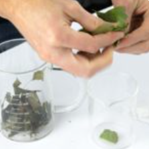
Rip your leaves into small pieces and place the pieces into small jars. Baby food or garlic jars are a great size to use. Pour 70-80% isopropyl alcohol into each jar so that there is just enough to cover the leaf within the jar. Stir gently so that the alcohol and leaf pigments may react together.
Step 2:
As you wait for the leaf solution to steep, cut the coffee filter into strips to be used as chromatography paper. Actual chromatography paper can be purchased online, but a coffee filter works great! These strips are needed so that the pigments have a medium on which to separate. A strip or two of paper should be lowered into the jar length-wise until the bottom of the strip comes into contact with the leaf solution. To make sure that the paper strip is suspended and doesn’t run the risk of falling into the jar, fix the paper to the jar with a piece of tape.
Step 3:
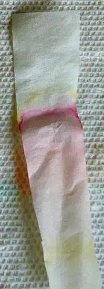
Let the jars sit undisturbed for 30-40 minutes to allow the liquid to saturate and wick its way up the filter paper. As the leaf solution moves up the paper, the green of the chlorophyll will stain the bottom, but the other pigments found in the leaf should also begin to start separating out onto the filter paper as well. The bands of colors observed could range from different shades of green, to the yellow xanthophyll pigment, the red and purple of the anthocyanins, or the orange carotene pigment.
Different pigments absorb different kinds of light, and the more pigments a leaf has the broader the spectrum of energy the leaf can use during the process of photosynthesis. We typically don’t see these secondary pigments because the green pigment found within the chloroplasts are at a higher concentration.
In a September Sound of Science (Friday afternoons at 1:04 PM on WNIJ) recording, we discussed the idea of whether a person can accurately be described as “right-brained” or “left-brained.” This concept suggests that a person’s preference for being logical or creative will indicate which hemisphere of the brain they utilize the most. This dichotomy has been debunked through study and research, but there is an anatomically interesting observation that can be made from the studies.
The control of motor functions is linked to brain hemispheres; the right side of the brain governs the left side of the body, and the left side of the brain governs the right. Most aspects of speech and communication are processed in the left hemisphere of the brain, while the right hemisphere is responsible for spatial analysis, intuition, and non-verbal processing. However, there is no definitive evidence of hemisphere dominance, and individuals who have suffered injury to one hemisphere of the brain may experience difficulties with spatial abilities and calculating simple mathematical problems at the same time – each a function of creativity and a function of logic.
Based on the prescribed pattern, one might incorrectly infer that vision functions similarly to motor control. It may seem that the right eye sends images to the left hemisphere of the brain, and the left eye sends images to the right hemisphere. However, this inference is incorrect, and the reality is quite intriguing.
The human eye requires both hemispheres of the brain to produce a complete, integrated field of vision. Light energy enters the eyes in the form of waves and once exposed to the retina, are converted to electrical energy. These electrical impulses pass through the optic nerve into the optic chiasm, where they are separated towards the left and right side of the brain. The left side of the brain processes the signals generated by the right half of both eyes, and the right side processes the signals from the left half of both eyes. So, rather than each eye being responsible for the field of vision on the side in which they sit, they offer a combined field of vision for both sides.
In anatomy, we teach the systems of the human body using two pathways: form and function. The workings of the eyes are a great demonstration of why looking through these lenses is important. With the eyes having a symmetrical field of view, one could suffer a stroke or other traumatic injury and not completely lose their sense of sight, but rather only one side of the field of view. The way the visual sensory organs and their nerves are built and “wired” allowed the best chance of survival while we were still running the risk of falling as prey while hunting and gathering to sustain our species over a prolonged period of time. The structure and function of the eye has held true for hundreds of thousands of years.
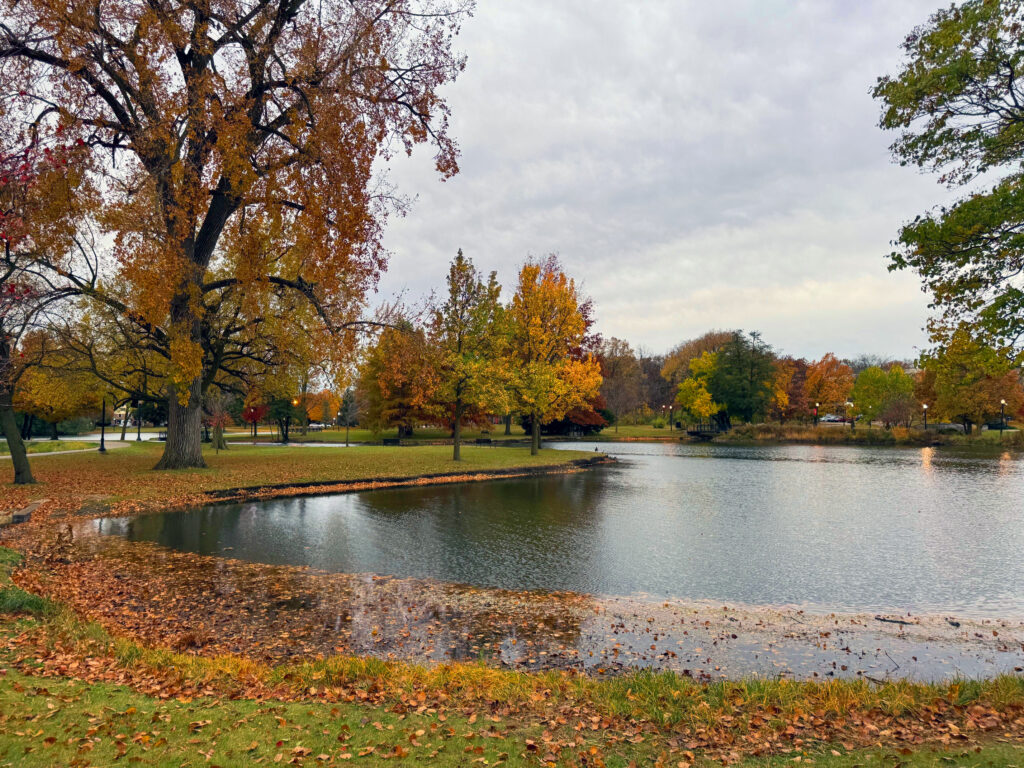
Have you been enjoying the beautiful, colorful tree displays this fall like I have been? I was thinking back to a year ago when we had a very abbreviated season due to storms coming though and knocking the leaves off the trees just as they started to change color. It’s helped me appreciate this season even more!
This got my biology brain working into high gear thinking about different pigments found in nature. Did you know that many of the colorful pigments we see in leaves this time of year were actually there all along, but they were “hiding” behind the green pigment (chlorophyll) during the spring and summer? Well, they aren’t really hiding. It’s more of a numbers game than anything else.
Back in the days when I was a biology teacher, whenever we’d be discussing plants, kids inevitably would shout out “photosynthesis!” as part of their background knowledge. You probably learned that plants make food by capturing light energy, but you may not have gone into too much detail about how they capture light. Plants have different kinds of pigments that can absorb different wavelengths of light. Depending on what wavelength is absorbed, different colors are reflected and seen by our eyes.
The majority of the light capturing that takes place during photosynthesis is done by the green chlorophyll pigments, so plants produce lots and lots of chlorophyll to maximize the amount of food they can produce. However, the yellow, orange, and red pigments are there all along too in supporting roles. It’s just that there is so much more chlorophyll, we don’t see the other colors during spring and summer.
As trees prepare for winter this time of year, and the amount of daylight hours decreases, trees produce and use less and less chlorophyll. It even starts to break down some of the chlorophyll while it’s storing food in the other parts of the tree to make it through the winter months. During this brief window of time each year, the ratio of chlorophyll to other pigments switches, allowing us to see the other colors that were there all along!
We have a similar phenomenon that happens in some people too. Have you ever known or had someone tell you about a baby that was born with blue eyes, but then their eyes changed color as they continued to grow? What’s really happening is that eye color has a lot to do with the production of a pigment called melanin. It’s the same pigment involved in skin color…the more melanin present, the darker the skin color.
When some babies are born, their cells haven’t started producing melanin yet, so their eyes appear blue. As more melanin is produced, the blue appearance starts to get covered up. As a result, eyes start to appear as green, hazel, brown, and lots of shades in between. The more melanin produced, the darker the eyes appear. Some people’s cells never start producing melanin in the eye, so their eyes remain blue throughout their lifetime. Not me though! My eyes were a dark brown from the moment I arrived!
So, the next time you’re observing different colors in nature, ask yourself, I wonder what’s going on with pigments here? Are there any pigments I can’t see because they’re blocked by other pigments? Will the pigments produced change over time resulting in different color appearances? There’s so much science happening everywhere to think about!
In this episode of Winning Ideas, we explore ADHD Awareness and consider ways we can be friends even if people are different than us.
* Here at NIU STEAM we are not medical doctors trying to diagnose your child. If you believe your child struggles with a mental health condition, please seek professional help immediately. *
ADHD – Attention Deficit/Hyperactive Disorder is one of the more common diagnoses thrown around with children who are impulsive. However, in my household it’s simply called “our child.” They are working on their impulsivity, but, man, sometimes it is a struggle.
ADHD can manifest itself in a variety of ways with children (and adults) and there is no one solid way to identify if a person struggles with ADHD or not. Doctors have commonly noted that patients with ADHD struggle with paying attention, showing inordinate amounts of energy (both with moving and talking), and general impulsivity. We all know that people who present with ADHD may appear to be careless in their tasks, and struggle to focus or pay attention. They may have a hard time listening, may be disorganized or even lose things frequently. Our biggest struggle with our child is completing tasks that need focus for long periods of time. They are easily distracted by literally anything else that pops in their line of sight or into their brain.
While it becomes overwhelming constantly reminding them to complete tasks or asking them to focus, we have taken a different approach. We know they struggle. Heck, we struggle too! Instead of getting angry or frustrated, we have begun working as a family on being more mindful and slowing down the best we can. We work really hard to help our kiddo build skills they may find useful later in life, knowing this world is not yet built for neurodivergent people.
If you have someone in your life who is neurodivergent, consider things from their perspective. Oftentimes they aren’t trying to be distracted or unfocused – they simply cannot focus. Here are a few tips and tricks for working with people who may struggle with ADHD – especially children in your family or classroom.
Mindful Activities to Incorporate into Your Day
Play a mindful game. Students who struggle with impulsivity benefit immensely from games like Red Light, Green Light or Simon Says. Give them opportunities to find success in following instructions and taking their time.
Include fidget time. With all people, ourselves included, we need to get up and move. Build a few minutes of silly dances, a lap run around the playground or even a stretching session into each class. When you structure time into your day to intentionally move, you will find that students can work to focus until that time. Break up your day and lessons. It’s better to build movement time into your day than to fight for every minute of instructional time!
HAVE A STRUCTURE! There are so many benefits to having a structure for students who are ADHD and who have impulsivity issues. If they can see what’s coming, they can prepare themselves. It also helps to have a consistent schedule. If I know what is coming consistently, I know how to act in those situations.
* Yes, variation and being able to handle any situation that arises is important, but if I can’t handle the schedule, it’s even harder for me to think about unstructured time too. *
Incorporate resetting breathing into things you do. Deep, focused breathing allows your brain to relax and helps you to focus. The extra oxygen provides your brain with the additional fuel to be able to complete the tasks at hand. Take at least 3 deep breaths, breathing in for a count of 6, holding for a count of 3, then slowly releasing for a count of 6.
Another idea is to build a friendship train where we all learn and grow together. When I was a child, we built those connections in the kitchen. Cooking with people is one area where, if I was distracted, someone else had my back and we made delicious food together. Friendship bread is easy to make, encourages people to come together, and warms your soul with good conversation, a little mess, and a whole lot of fun! Try making friendship break with your students or kiddos. Don’t forget – the whole point of friendship bread is to share with others!
Friendship Bread – An act of learning about each other
While you make this bread, be sure to spend ample time sharing in the love and joy of each other’s company.
You will need:
1 packet active dry yeast
¼ cup warm water (about 110oF)
1 cup flour
1 cup sugar
1 cup milk
How to make it:
In a small bowl, dissolve the yeast in the water – allow it to sit for about 10 minutes.
In a gallon sized zipper bag shake together the flour and sugar.
Slowly add the milk to the water/yeast mixture.
Gently add the milk/water with the flour and sugar mixture and mix well.
Let all of the air out of the bag before sealing it and leaving it at room temperature. Let the air out of the bag everyday!!
Daily Schedule:
Day 1: Do nothing.
Day 2: Mash the bag.
Day 3: Mash the bag.
Day 4: Mash the bag.
Day 5: Mash the bag.
Day 6: Add to the bag: 1 cup flour, 1 cup sugar, 1 cup milk. Mash the bag.
Day 7: Mash the bag.
Day 8: Mash the bag.
Day 9: Mash the bag.
Day 10: Follow the directions below: Add 1 1/2 cup flour, 1 1/2 cup sugar, 1 1/2 cup milk. Mix well.
Get ready to share!
Once you have cycled through “waiting” and “checking” period, you are ready to share! Place a cup of starter in a gallon zipper bag with instructions and share it with your friends. You’ll end up with 4-7 portions depending on how active your starter has been. Make a letter with instructions for them and a note. Don’t forget to save a little bit for yourself to make a delicious loaf of sweet bread or sourdough!
At the end of the day, whether a child is diagnosed with ADHD or any other disorders or different abilities, they are still children who want to learn and grow in a manner that meets their needs. We can help each other through communication, listening, and recognizing that we all have differences and strengths that lead to a better world.
* Here at NIU STEAM we are not medical doctors trying to diagnose your child. If you believe your child struggles with a mental health condition, please seek professional help immediately. *
As always, don’t forget to share your projects with us! Tag #NIUSTEAM and @NIUSTEAM for a chance to be featured in our weekly newsletter.And as always, do good things, be good people, and make yourself better than the day before.
Hey friends! Don’t forget to check out our upcoming events!
Are you looking for a fun engaging field trip? Reach out to NIU STEAM to learn about our new field trip experiences.
We are hosting the Engaged Learning Conference on January 24, 2025, down in the Bloomington Normal area. We would love to see you there to learn along with us! (If you can’t make it to Normal, watch for the next iteration of the conference on June 20 in Naperville.
If you are looking for a place to build your network and contacts, consider signing up for a Learning Network with NIU STEAM. Our first will be a STEAM Stories Network for creating content that includes literacy goals, STEAM content, and connects to a wide range of student ages.
NIU STEAM Summer Camps will be back this year with a whole new feel!
We look forward to seeing you on campus again really soon! Contact us at niusteam@niu.edu to learn more.
References
Amish friendship bread – a recipe and a way of life. Friendship Bread Kitchen. (2021, June 2). https://www.friendshipbreadkitchen.com/amish-friendship-bread/
To help us prepare for her visit, NIU STEAM Outreach Coordinator Jessica Cima sat down with Associate Professor of Rehabilitation Counseling Bryan Dallas to learn more about Dr. Grandin’s visit and her impact on understandings of autism and animal welfare.
NIU STEAM will also be hosting a free community resource and activity fair at 5 p.m. before Dr. Grandin’s talk.
I am personally thrilled to have Temple Grandin come and visit DeKalb because my first introduction to her was the 2010 film that she starred in, and that film made a big impression on me. That was the year I entered Graduate School, and my anxiety became explosive. I remember watching her film and realizing that there were coping mechanisms – that we can all have coping mechanisms to deal with the stressors in our lives. And I learned that my coping mechanism was crafting and keeping my hands busy. That was really key to me, and I’ve remembered her message for 14 years now.
For the DeKalb community, I’m excited to have her visit because I love how she talks about everything as a broad spectrum – it’s not all black and white. And wherever you may fall on that spectrum allows for broad opportunities. I think that is great exposure for our community to know that there are a lot of different people who are neurodivergent in diverse ways. And for us have somebody who is so successful and influential speak to that is wonderful for DeKalb.
What about you, Bryan?
Bryan Dallas: I work in the field of vocational rehabilitation counseling, which helps individuals with disabilities find employment and live independently. Dr. Grandin has influenced me in my work related to serving individuals with Autism. For example, I partnered with NIU STEAM to facilitate a program at NIU called Huskies BELONG that helps high school students with disabilities transition to college. Many of the individuals we have served are on the autism spectrum. Dr. Grandin wrote a book called “Developing Talents: Careers for Individuals with Asperger’s Syndrome and High-functioning Autism” which is a good resource for career exploration with this population. One of my favorite quotes from Dr. Grandin speaking to parents about encouraging children to explore and engage in various endeavors is, “That’s why you’ve got the kids; get them out doing things.”
Jessica: That’s wonderful! Can you tell us a bit about how you first met Temple and her previous visit to NIU?
Bryan: In 2017, I was part of a colloquium committee comprised of students and faculty. We had a little money and were brainstorming about – who do we want to bring to campus? And Temple Grandin’s name kept coming up. She works for Colorado State University and travels all over the world talking to different groups on animal welfare and science, as well as sharing her knowledge and experience as a person with autism. There is simply no one better to present about this topic in a way that’s engaging and relatable to a very wide audience.
Folks can learn more about Temple Grandin and her work on her website at www.templegrandin.com/.
Jessica: Can you tell us more about that colloquium experience?
Bryan: We were fortunate enough to reach out to her at Colorado State University, and she agreed to come in the fall of 2017. It was a great event and very well attended. We got such great feedback from the community that we immediately asked Dr. Grandin if she’d be willing to come back. It took a few years, and the pandemic delayed things a bit, but we’ve maintained that link of communication and we’re thrilled to have her return!
Jessica: And this time we’re able to create an even wider campus and community collaboration to bring her back.
Bryan: Yes! This is a departmental collaboration between the College of Health and Human Sciences, my school of Interdisciplinary Health professions, and you all at NIU Steam working on the resource fair, which is a great addition.
While she’s here, Dr. Grandin will also be visiting K-12 schools in the area, especially visiting the FFA (Future Farmers of America) students at Sycamore High School and their CTE (Career and Technical Education) classes related to agriculture. This will be a chance for Dr. Grandin to share her other areas of expertise – animal welfare and agricultural science. Folks who are aware of Temple’s work on autism and neurodiversity might not realize that she is one of the world’s foremost experts on animal science and the design of humane livestock facilities.
Jessica: I know Dr. Grandin will also be presenting to students at the DeKalb Public Schools, as well – both students who are interested in animal science and students who are neurodivergent. This is such a great opportunity for our community!
Bryan: The community resource fair you’re planning before the event is also a great opportunity. Can you tell us more about it?
Jessica: Yes! I was inspired by Kimberly Shotick’s work at the NIU Libraries. She has a grant to study –how well are the university’s libraries serving neurodivergent students, and what can the library do to become more accessible to that population? As part of that, Kimberly planned a “Neurodiversity Celebration” last spring on campus.
For our event in November, I borrowed her term to call it a “Celebration of Neurodiversity.” The idea is to bring in all sorts of campus and community partners to talk about the resources they provide to neurodivergent individuals and their families. We’ll also have fun, hands-on activities for all ages, ranging from art projects to sensory bins to books folks can check out about neurodiversity from the NIU Libraries and the DeKalb Public Library.
I want parents, families and caregivers to walk away knowing what types of resources are available to them in the community, and I want them to feel supported. I also want people who are neurotypical to realize that neurodivergence exists in all different ways, many of which are invisible to the community, and that it’s important for us all to recognize and celebrate that in our daily lives.
Bryan: You mentioned that you were also motivated by a friend’s personal experience?
Jessica: Yes. Recently I was having a conversation with a friend who is the parent of an adult child with autism. And when her daughter was transitioning from high school into next steps, that process was really difficult for them. Now, three years later, I was speaking with that person and they said, “If we had only known the resources that were available, it would have completely changed the way that we thought about college. I had no idea it would have been possible for her to go to college, but with these resources it would have been.” That’s when I thought, everybody needs to know what resources are available and how to access them.
Bryan: And that’s why we hope everyone will attend the resource fair and the talk! I get excited about events that bring large groups of different stakeholders together. Hearing Dr. Grandin’s message and sharing information and resources can have a positive impact on attendees. Part of NIU’s mission is to engage our communities, and I believe events like this and many others, like the recent NIU STEM Fest, do just that.