

Simulating Fall in Your Dining Room
By Chrissy Swartz
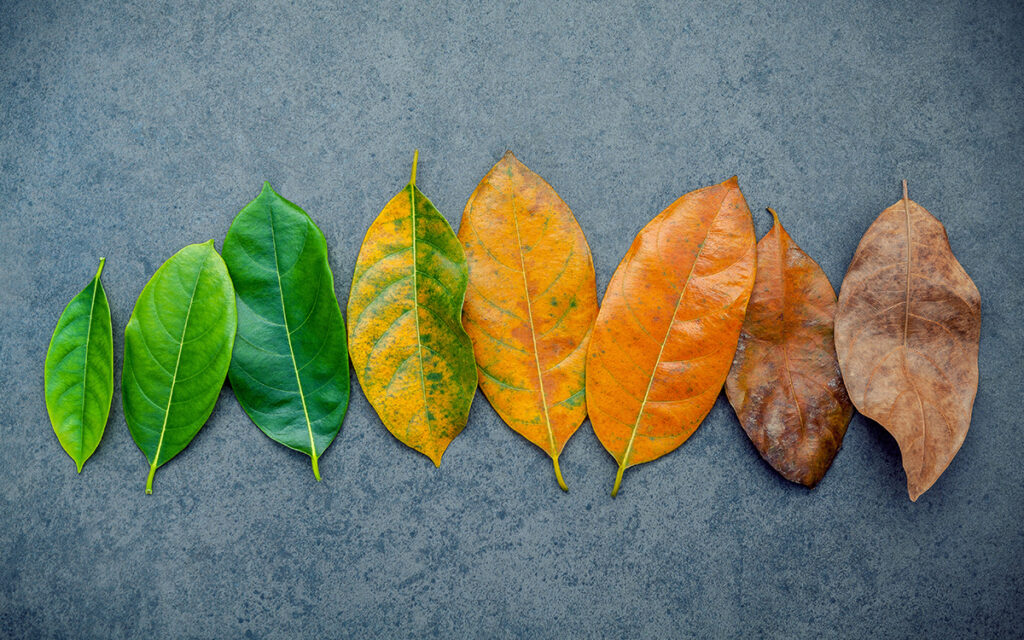
While at the 15th Annual NIU STEMFest, the STEAM team had the opportunity to interact with the community’s youth. One inquisitive student wanted to know what made the leaves on the trees change. She was amazed to find that many of the pigments that we see in the leaves during fall are around all summer. They are merely hidden by the green color of the chlorophyll found within the chloroplasts of the leaves’ cells. How can we prove that this is true and not just a story made up during our middle school years? We can separate the pigments while the leaves are still their vibrant summer green right in our homes using common items.
In a process called paper chromatography, isopropyl alcohol (rubbing alcohol) and a coffee filter work together to pull out the individual pigments found in the leaves of just about any plant. In fact, it is preferable if you gather leaves of different colors so that a collection of pigments can be explored.
Here’s a fun activity to see how it works!
Supplies Needed
- Fall leaves of various colors
- Coffee filter
- Isopropyl alcohol (rubbing alcohol)
- Small jars, like baby food jars
- Tape
Step 1:
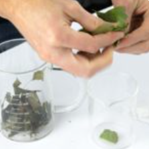
Rip your leaves into small pieces and place the pieces into small jars. Baby food or garlic jars are a great size to use. Pour 70-80% isopropyl alcohol into each jar so that there is just enough to cover the leaf within the jar. Stir gently so that the alcohol and leaf pigments may react together.
Step 2:
As you wait for the leaf solution to steep, cut the coffee filter into strips to be used as chromatography paper. Actual chromatography paper can be purchased online, but a coffee filter works great! These strips are needed so that the pigments have a medium on which to separate. A strip or two of paper should be lowered into the jar length-wise until the bottom of the strip comes into contact with the leaf solution. To make sure that the paper strip is suspended and doesn’t run the risk of falling into the jar, fix the paper to the jar with a piece of tape.
Step 3:
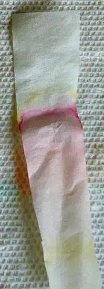
Let the jars sit undisturbed for 30-40 minutes to allow the liquid to saturate and wick its way up the filter paper. As the leaf solution moves up the paper, the green of the chlorophyll will stain the bottom, but the other pigments found in the leaf should also begin to start separating out onto the filter paper as well. The bands of colors observed could range from different shades of green, to the yellow xanthophyll pigment, the red and purple of the anthocyanins, or the orange carotene pigment.
Different pigments absorb different kinds of light, and the more pigments a leaf has the broader the spectrum of energy the leaf can use during the process of photosynthesis. We typically don’t see these secondary pigments because the green pigment found within the chloroplasts are at a higher concentration.
Picture of the pigment bands:
https://thehomeschoolscientist.com/leaf-chromatography-experiment/