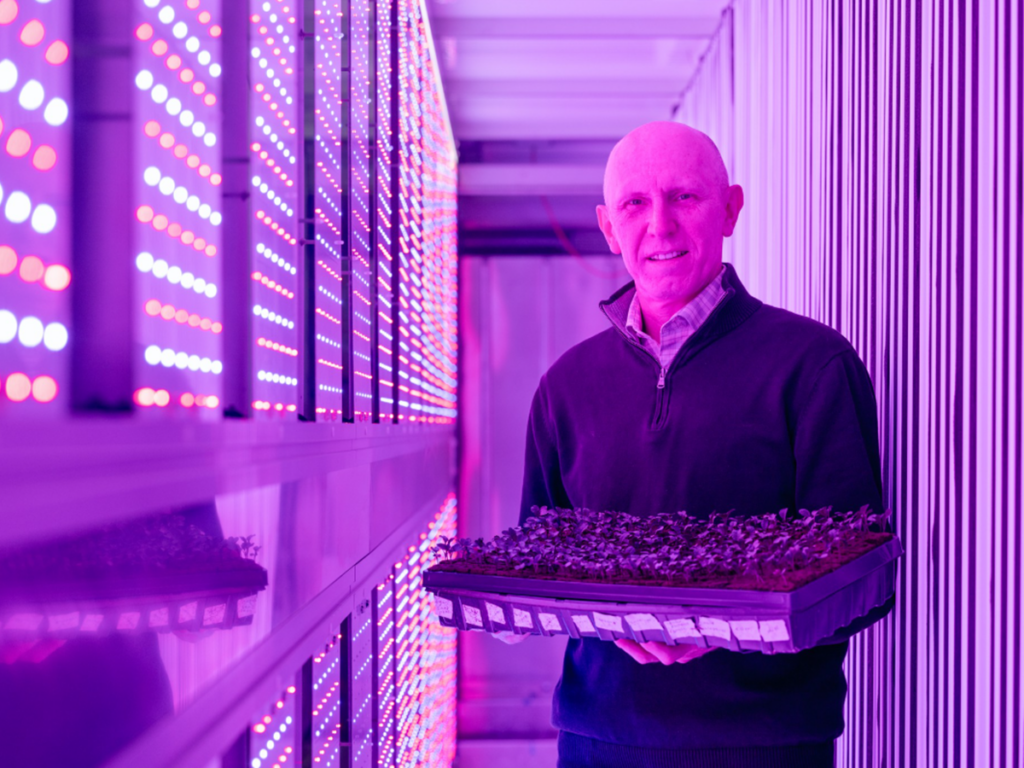
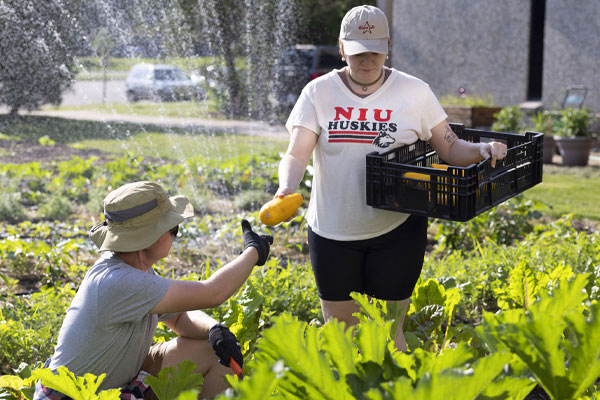
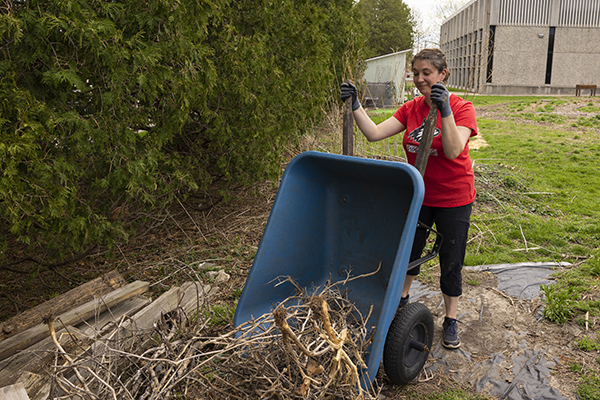
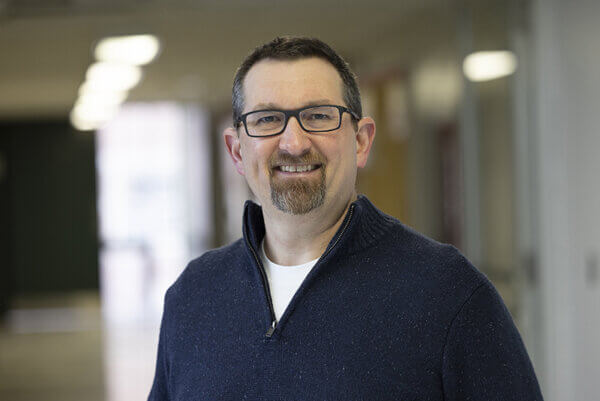
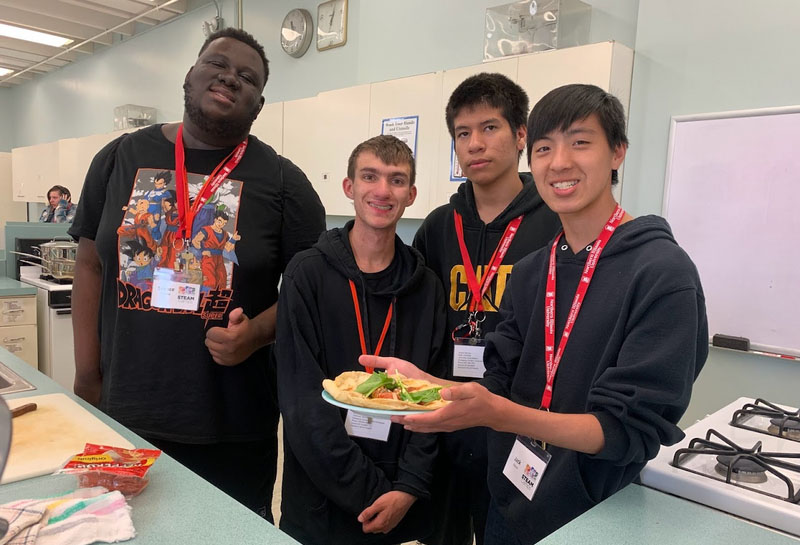
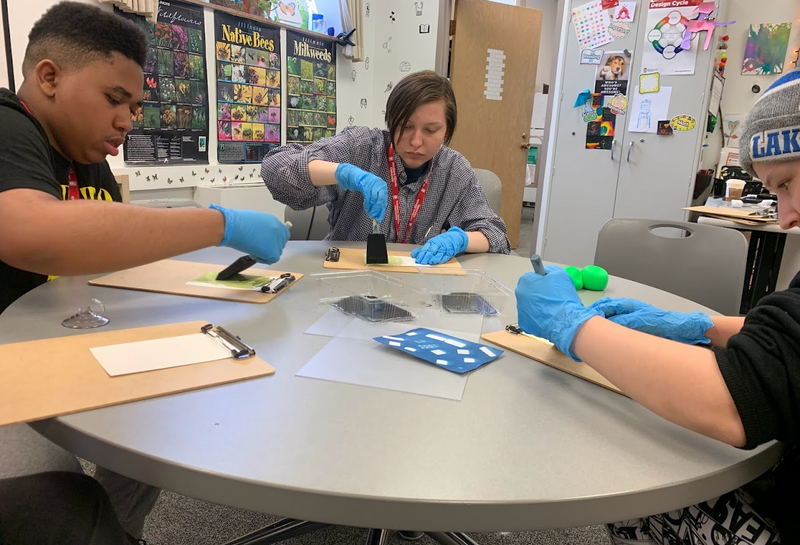
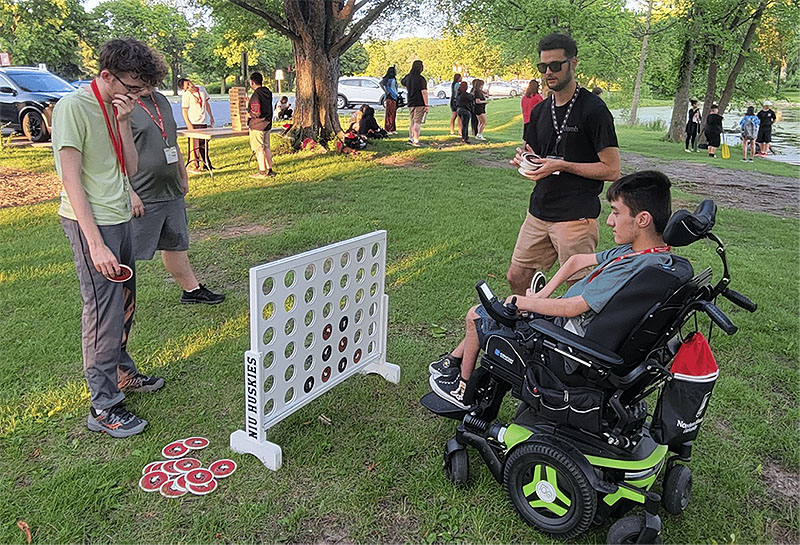
In the latest episode of The STEAM Studio, we had the pleasure of welcoming Bryan Flower, the driving force behind Edible Campus at Northern Illinois University. Bryan’s journey from a culinary professional to a leader in sustainable food systems is nothing short of inspiring. His passion for food, health, and community shines through as he shares the story of how Edible Campusis transforming the way students and the broader community think about food.
Edible Campusis more than just a garden—it’s a living laboratory for sustainable food systems. Bryan explains how the initiative focuses on four key goals: creating a space for research and artistry, advancing university sustainability goals, addressing food insecurity, and promoting the connection between health, wellness, and the environment. From student-run meal prep programs to partnerships with local sponsors, Edible Campus is making fresh, nutrient-dense food accessible and approachable for everyone.
One of the highlights of the episode is Bryan’s discussion of the Food Systems Innovation Challenge, an annual competition that empowers high school and college students to tackle real-world food supply chain issues. By encouraging creativity and collaboration, the challenge is nurturing the next generation of food innovators.
Bryan’s enthusiasm for food literacy and sustainability is contagious. Whether he’s talking about the benefits of locally grown produce or sharing stories from his Innovation Conversations podcast, it’s clear that his work is making a lasting impact.
If you’re curious about how food systems shape our health, environment, and communities, this episode is a must-listen. Tune in to hear Bryan’s insights and learn how you can get involved in the movement to create a more sustainable and equitable food future.
In our lasted NIU STEAM Studio episode, we sat down with Dr. Bryan Dallas, the driving force behind Northern Illinois University’s (NIU) innovative Huskies BELONG program. Designed to support high school students with disabilities, this initiative is breaking down barriers and opening doors to higher education and STEM careers.
Bryan shared his journey from working in disability support services to creating Huskies BELONG, a year-long college immersion program that combines career exploration, skill-building, and mentorship. The program includes a week-long summer camp where students live on campus, participate in STEM-focused activities, and build lasting connections with peers and mentors.
One of the most powerful aspects of Huskies BELONG is its focus on self-advocacy and independence. Bryan emphasized the importance of helping students challenge societal messages that may have discouraged them from pursuing college or careers. Through hands-on experiences, mock interviews, and career assessments, students gain the confidence and skills needed to succeed in higher education and beyond.
The program also provides critical support for families, helping them navigate the transition from high school to college. Dr. Dallas highlighted the importance of early planning, connecting with resources like the Illinois Division of Rehabilitation Services, and visiting campuses to ensure the right fit for each student’s needs.
As Huskies BELONG enters its third year, the program continues to grow, with plans to expand its reach and impact. Bryan and his team are collecting data to measure long-term outcomes, ensuring that students not only enroll in college but thrive once they get there.
This episode is a must-listen for educators, families, and anyone passionate about inclusive education. Huskies BELONG is more than a program—it’s a movement that’s changing lives and proving that with the right support, every student can achieve their dreams.
Education is evolving, and so are the strategies we use to support every student’s success. In the latest episode of The STEAM Studio, we sit down with Dr. Lori Hensold, a seasoned educator with over 25 years of experience, to explore the transformative potential of Multi-Tiered Systems of Support (MTSS) and its integration with STEAM (Science, Technology, Engineering, Arts, and Mathematics).
Lori, who works with the Illinois MTSS Network at Northern Illinois University, shares her journey in education, from her early days as a student teacher to her current role supporting schools in implementing MTSS frameworks. She explains how MTSS provides a proactive approach to education, ensuring that students receive the support they need before they fall behind. But what makes this conversation truly unique is the connection Lori draws between MTSS and STEAM.
Together with host Dr. Kristin Brynteson, Lori discusses how these two frameworks can work hand-in-hand to create more engaging, inclusive, and effective learning environments. They delve into the importance of addressing the whole student—not just their academic needs—and how integrating STEAM into MTSS can help students build confidence, creativity, and critical thinking skills.
One of the highlights of the episode is the story behind their collaboration on the NIU Engaged Learning Conference, a professional development event that brings together educators from both MTSS and STEAM backgrounds. Lori and Kristin share how this conference has evolved, the impact it’s had on educators and students, and their vision for its future.
If you’re an educator, administrator, or simply someone passionate about innovative approaches to education, this episode is a must-listen. Lori’s insights will inspire you to think differently about how we support students and how we can break down silos in education to create more holistic learning experiences.
Listen to the full episode to hear Lori and Kristin’s engaging conversation and learn how you can get involved in the NIU Engaged Learning Conference or connect with the Illinois MTSS Network.
We’re excited that Midwest Dairy is sponsoring our summer NIU Engaged Learning Conference – and not only because we’re looking forward to the delicious lunch their sponsorship helps to provide!
Students often have trouble understanding how basic science concepts relate to everyday life and careers. The lessons Midwest Dairy helped to create connect the dots between topics such as DNA or bacteria and their real-world applications. This is exactly the kinds of hands-on, engaged learning we love to promote!
Show Me the Moo-ney!
At 12:30 p.m. during our Engaged Learning Conference, Erika Fong will be presenting “Show me the Moo-ney! Determine the Genetics of a CA$H-Cow – Connect Genetics to Real-World Dairy Phenomenon.” This session is ideal for high school science teachers! Attendees will work through a hands-on science lesson to discover how DNA plays a pivotal role in agricultural practices and selective breeding. See the real-world implications of DNA testing as you determine the genetic profiles of individual cattle and assist a farmer in identifying promising breeding candidates. You’ll walk away with a DNA lesson ready for your high school science classroom.
Free Online Units and Stand-alone Lessons
This DNA lesson is just one example of the hands-on lessons Midwest Dairy has helped to create! Midwest Dairy has collaborated with the Food and Agriculture Center for Science Education to create free lesson plans and even full units that are Next Generation Science Standards (NGSS) badged. View all their dairy-related NGSS lessons here.
Here are a couple of highlights we can’t wait to try out.
Are All Bacteria Harmful? In this high school task, students explore the food ecosystems of two samples of yogurt with different bacteria to figure out which types are harmful and then explore the environmental conditions that allow harmful and less harmful bacteria to thrive. The lesson brings to life four NGSS dimensions through an exploration of everyday food.
Spicy Peppers and Milk: This phenomenon explores why milk provides relief after eating spicy peppers.
Full Unit – Media Mayhem: Is the production of milk good or bad for the environment? In this high school 5E unit on the dairy food system and sustainability, students explore media claims about the impacts of the dairy sector on the environment to figure out which ones most accurately represent the body of science on the dairy sector’s impacts. Across a series of four modules, students figure out how the components of the dairy food system impact the environment, including pollution, greenhouse gas emissions, climate, and biodiversity. To conclude the unit, students use engineering design processes to evaluate multiple solutions to reduce the dairy sector’s environmental impact.
NIU STEAM is getting in on the celebration with two free family workshops offered by NIU STEAM Community Engagement Coordinator Jessica Cima. In case you haven’t met Jessica yet, you should know – she’s not only dedicated to community engagement! Jessica is also an avid home gardener and canner, and she loves to get the whole family involved.
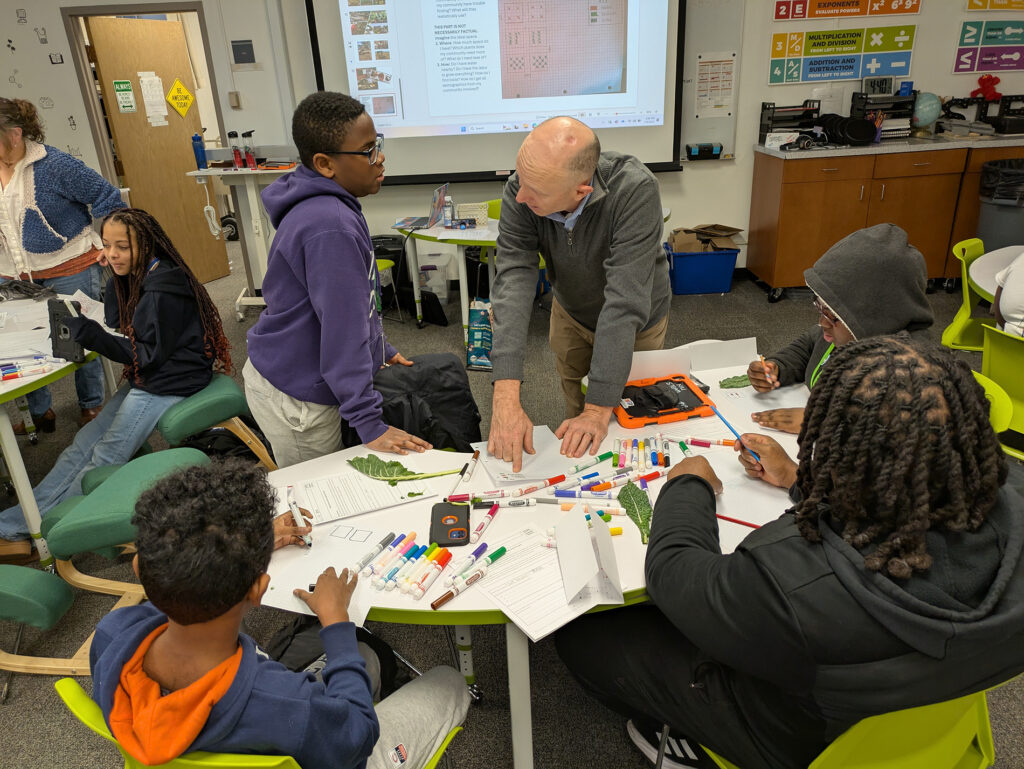
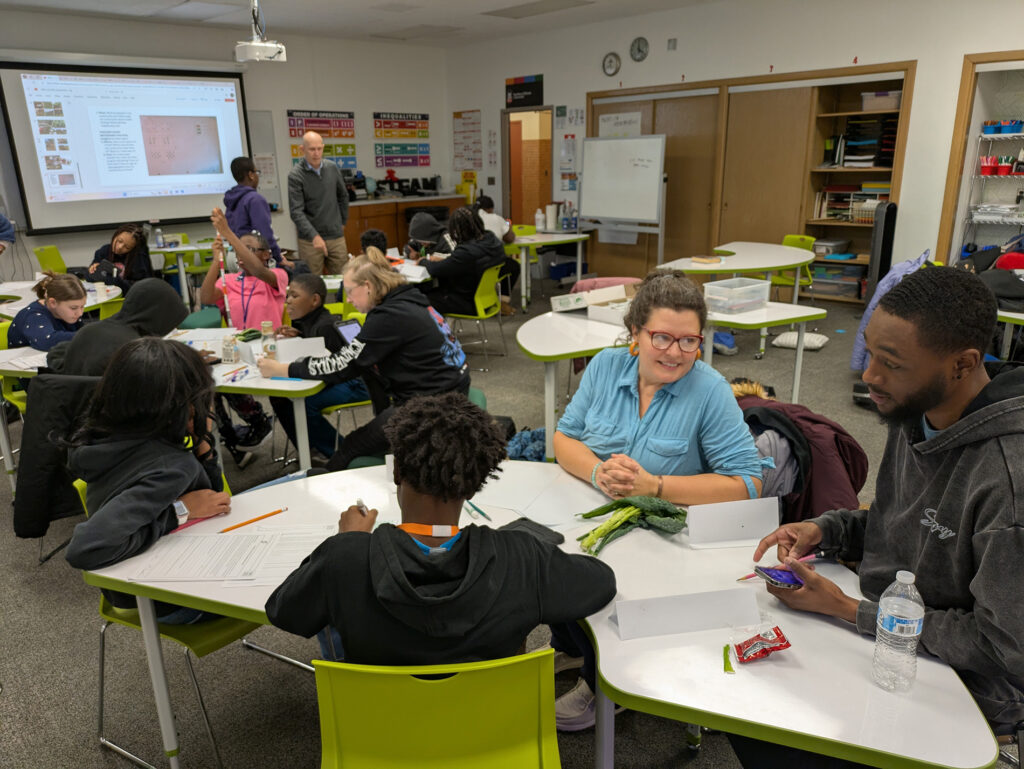
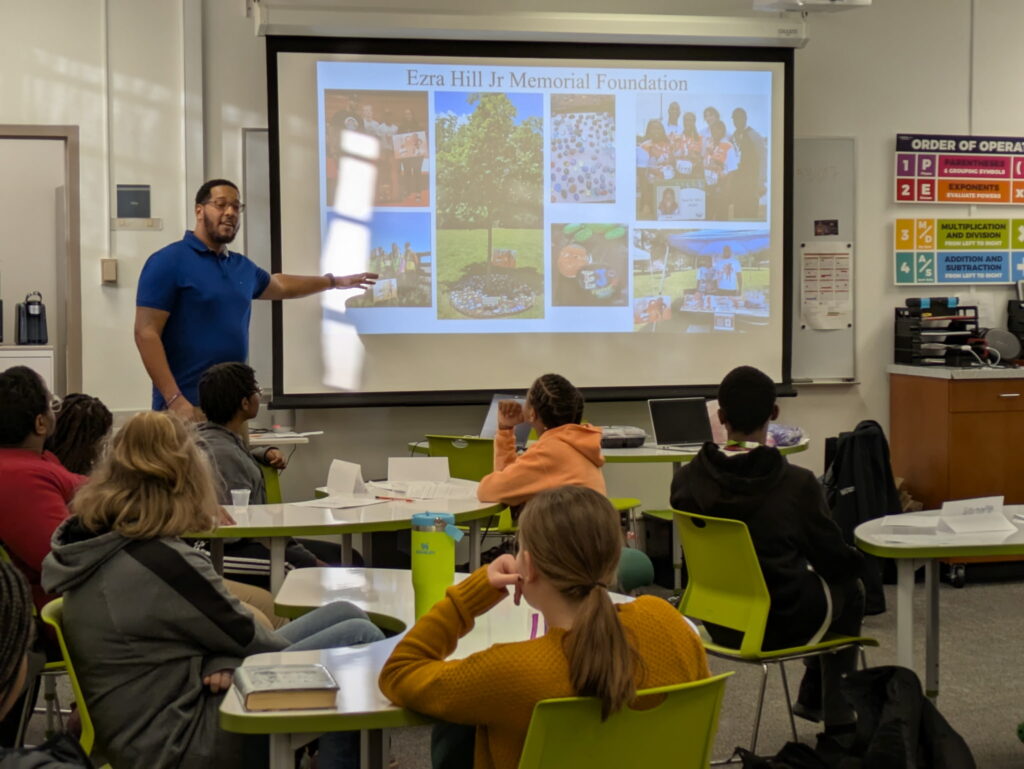
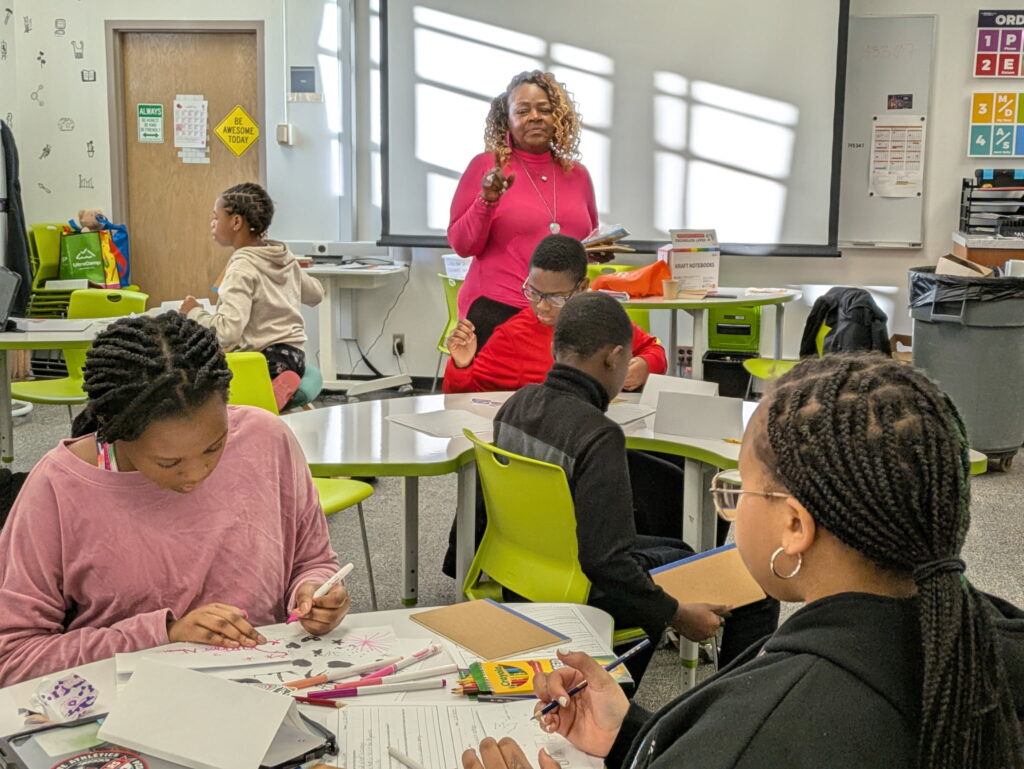
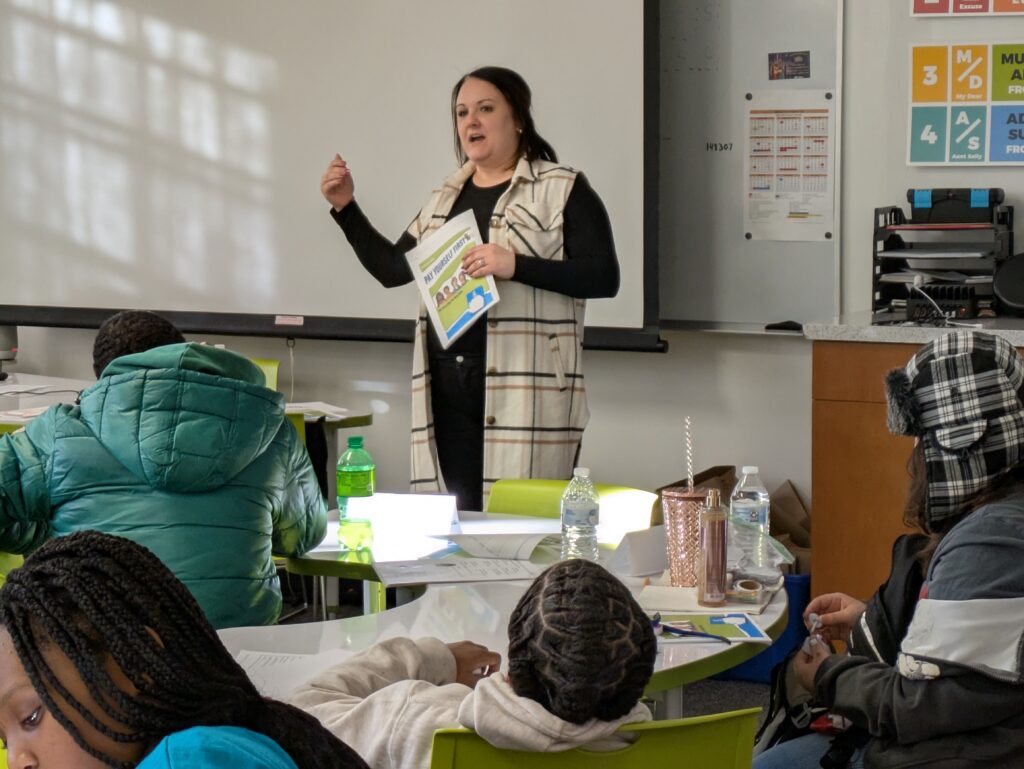
Throughout the year, our Barb City STEAM Team students engage in a variety of different projects both on campus an in the community. This January and February we have been given the tremendous gift of DeKalb leaders sharing their stories with our students. Each week we have arranged for one or two volunteers to come to campus who work with our students. Each leader is putting their own personal spin on a presentation and activity to engage with our middle schoolers.
We have partners from local area businesses, leadership organizations, community service organizations, and campus leaders who have volunteered to share their time and talents with us. So far, we have worked with members of NIU’s Edible Campus, as well as a local barber. In the coming days our kids will learn from a Nestle transportation manager, a FNBO mortgage broker, a NIU police detective, a local family service agency board member, and more. A very sincere thank you to everyone who has volunteered to work with us!
Stay tuned for future updates! Our students will create sound clips about what they’ve learned about leadership that will be shared on our weekly Sound of Science series on Northern Public Radio.
By Kristin Brynteson, Ed.D., Director of NIU STEAM
As we welcome in the new year, many of us are also setting some new goals or resolutions. Personally, for the past five years or so, I have traded in my new year’s resolutions for a “word of the year” – one word that serves as a guide or inspiration for the year ahead. We have some big goals for 2025, so I thought it would be good to have a word of the year for NIU STEAM. What’s our word for 2025?
Reflecting on 2024
2024 was an amazing year for NIU STEAM. We interacted with over 1,000 K-12 students on and off campus. From our afterschool program to summer camps to school and family events, we had a great time sharing our passion for STEAM and igniting that spark in students. We also welcomed close to 5,000 people to campus for our 15th STEM Fest! It was a day to remember. We hosted some amazing STEM Cafes that highlighted the cutting-edge work being done by NIU faculty and alumni. We even celebrated the grand opening of our refurbished learning spaces. 2024 was a busy and successful year across several measures. But what excites me most is that in 2024 we laid the foundation and planted the seeds for future success.
2025 is the year we watch those seeds GROW.
Looking Ahead to 2025
There are many ways the word “grow” captures our goals for 2025. Here are just a few.
New student programs and initiatives that focus on food systems and sustainability. Last year we started to explore new ways to integrate earth and life science and food systems topics into our programs. Thanks to some early success, we’re expanding those initiatives. Our classrooms are now equipped with two grow towers, a worm farm and new technology for investigating earth and life sciences. We’re even partnering with NIU’s Edible Campus, and our students will be managing a set of garden beds here on campus. Some of the food we grow will be used in the FoodMASTER Friday class for our afterschool students where we teach math and science alongside healthy cooking and nutrition. With these new initiatives, both our middle school and high school afterschool students as well as our summer campers will have the opportunity to explore food systems from seed to table and beyond as they experience the science and learn about green career paths.
Expanded opportunities for educators. Last year, in partnership with the IL-MTSS Network, we brought back the STEAMing it Up Conference after a four-year hiatus. This year, we continue that partnership with the rebranded NIU Engaged Learning Conference. And we are hosting it not once…but twice this year. Our first conference is in Bloomington-Normal on January 24, and the second is in Naperville on June 20. Both will be packed full of hands-on sessions and opportunities for educators to connect and share ideas. We’re also launching our new STEAM Learning Series and Learning Networks. The STEAM Learning Series consists of self-paced bite-sized mini-courses. The Leaning Networks are virtual interactive webinars around topics such as food science, STEAM Stories and Sustainable STEAM. These new PD offerings are designed to help busy educators grow their expertise and professional network.
Expanding Partnerships. NIU STEAM has always been focused on developing mutually beneficial partnerships that have a positive impact on our community. In 2025 we’re excited to expand our existing partnership and kick off some new ones. On campus we’re working with faculty to expand the opportunities for our NIU students to gain valuable experience through community-engaged coursework. We continue to reach out to campus partners to explore how we can support the learning of our NIU students. Our new partnerships also extend beyond campus as we continue to develop new relationships with our community and business and industry partners so that we can bring unique learning experiences to our students.
Grow. It seems like such a simple word but for us, it has a big meaning. Everything we do this year, and beyond, is to support the growth of the kids, families, young adults and community members we work with in our programs. We are growing the next generation of scientists, engineers, artists, innovators and problem solvers. The seeds have been planted. The conditions are right. It’s time to GROW!
Learn more about what we have planned for this year and join us.
STEAM is all about hands-on learning and creativity – and that’s why we think STEAM gifts are some of the best options for everyone on your list. Keep reading our recommendations for different ages and at different price points, including homemade gifts that you can make from items around your home.
Gift ideas for any age
Museum annual pass – Did you know that there is a network of science and children’s museums that have reciprocal relationships? That means if your favorite museum, like Chicago’s Griffin Museum of Science + Industry, is part of the network your membership allows you to visit hundreds of other museums around the world at free or discounted rates! Giving the gift of an annual museum pass can unlock the doors to amazing adventures.
STEAM-themed clothing – We love to wear our love of STEAM on our sleeves with clothing from Svaha. From science themed dresses to pajamas to nature loving t-shirts, there is something for every STEAM lover in your life. svahausa.com/
Cardboard cutter – At less than $8, this cardboard cutter is a great stocking stuffer for a creator who loves working with cardboard but struggles to cut it. We love these, and they are indispensable in any maker space.
Blank journal or sketchbook – Is there anything better than getting a new journal or sketchpad and imagining all the exciting ways you’ll fill those pages in the year ahead? There are so many different journal or sketchbooks to choose from, and you can even add in pens, pencils, paints or any other favorite medium!
For younger children
LuxBlox – If you have a creative builder on your list, check out LuxBlox. These interlocking pieces let you build masterpieces that move and flex, and different kits comes in a wide variety of price ranges.
Marble Run – The Super-Fun Marble Run-Master Set is a fun way for kids to learn about how pieces connect, consider the effect of gravity and try out different combinations to see how their marble travels through the built system.
Trace and Draw Projector – This Trace & Draw Projector is a great gift for kids who are in the early stages of learning how to draw. They can choose which objects they want to trace, and it doesn’t require the use of a tablet or other device for instructions.
Smartmax Magnetic Building Set – The Smartmax Discovery Starter set is a good gift for young kids who are interested in how pieces connect and move together. The large size and magnetic connection make for easy handling by little hands.
Magna-Tiles – Magna-Tiles are one of our all-time favorites for preschool through elementary children. With dozens of sets at different price points, you can tailor the gift to your child’s interests and add to their collection year after year.
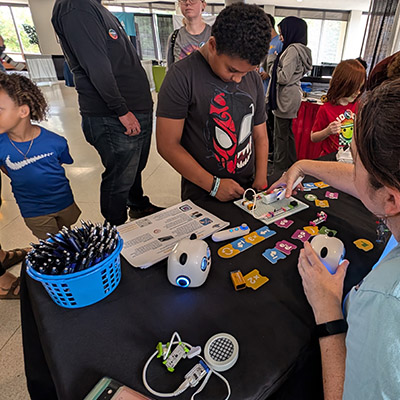
Sphero Coding Robots – Sphero coding robots are very popular with our afterschool programs and summer camps. They offer a ton of fun challenges that help to develop kids’ problem solving and coding skills.
Drone – A drone might sound like an expensive proposition, but inexpensive starter drones are available for as little as $99, and they help young people learn about STEAM concepts such as aerodynamics, lift and drag. Check out this blog from Consumer Reports for some recommendations.
For older youth and adults
The 99% Invisible City: A Field Guide to the Hidden World of Everyday Design – For the curious adult on your list who loves design, check out the book The 99% Invisible City. Based on the popular 99% Invisible podcast, authors Kurt Kohlstedt and Roman Mars explore the amazing stories behind the invisible parts of our cities and towns.
LEGO International Space Station building kit – This International Space Station model comes with a stand, two astronaut microfigures, a brick-built mini NASA space shuttle and three mini cargo spacecrafts to create a spectacular display and rekindle nostalgic memories of childhood LEGO projects.
Indoor Garden Hydroponic Growing System – This hydroponic growing system allows you to grow herbs and vegetables indoors all year round.
Astronomical Reflector Telescope – This Newtonian reflector telescope is great for beginners. It uses mirrors instead of lenses, avoiding the common chromatic aberration issues found in refractor telescopes, and providing clearer images.
Homemade gifts
Home preserved foods – Canning your own foods is the perfect intersection of science and art, and it’s easier than you might think. (Check out this blog post from Jessica Cima to learn how to can your own tomatoes.) If you’re not up for preserving your own food, look for a local farmers’ market for handmade jellies, preserves or local honey – these are inexpensive, unique, and make great gifts!
Knit, crocheted or needlepointed items – There are few things more special than a hand-made textile!
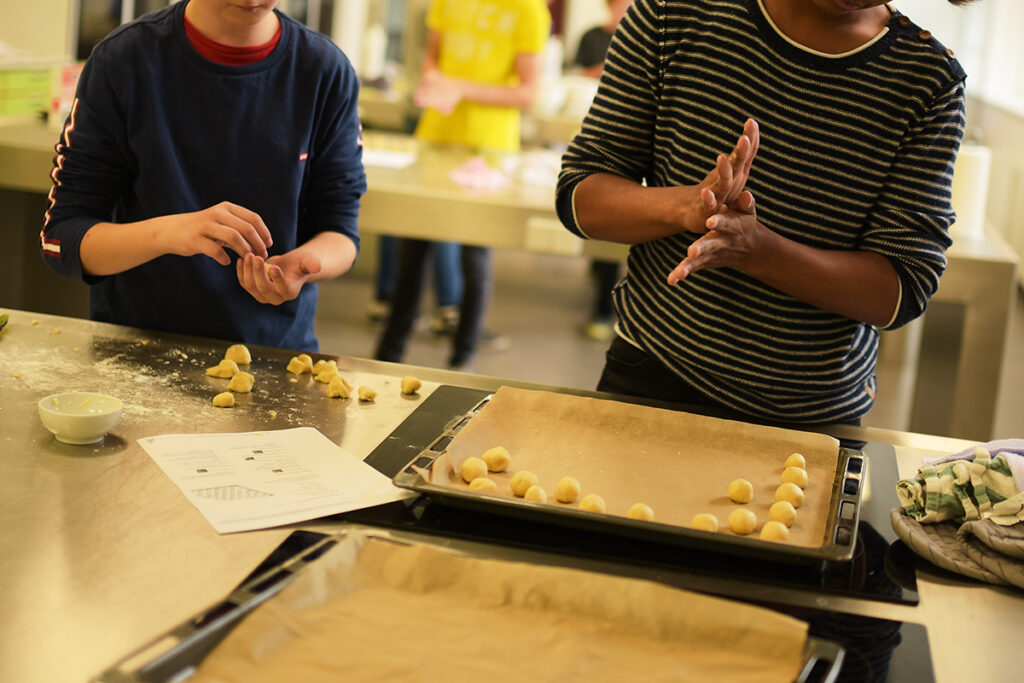
Home baked cookies – Who doesn’t love a batch of home baked Christmas cookies? Check out this recent blog from Becky Swiontek to learn why it’s so important to chill your dough before baking!
Paper “stained glass” decorations – These waxed paper “stained glass” planets are beautiful in a window or on a Christmas tree! This fun, simple activity for kids and adults results in a lovely homemade gift.
Holiday Baking Championship or Christmas Cookie Challenge anyone? This time of year, I always look forward to the latest baking competitions that are streaming on various platforms. Time after time we see bakers who are super stressed and, when they take their precisely measured/shaped cookies out of the oven, they discover the cookies have spread and become misshapen. If you’re either a science nerd and/or home baker like me, you may be wondering why?
During the process of making your cookie dough, the recipe likely instructed you to cream together room temperature butter with sugar. We know when we take a stick of butter straight out of the refrigerator it’s a very firm solid, which makes it much more difficult to combine with sugar. When the butter is removed from the fridge, thermal energy from the air in your kitchen (or if you’re in a pinch from the soften/melt setting on your microwave) is transferred to the butter molecules. This transfer actually speeds up the movement of the molecules, which results in the butter particles moving a little more freely next to one another. In everyday terms, we now have softened butter.
You may recall from school learning about the differences between solids, liquids, and gases, as well as about changes in state of matter. Both refrigerator and room temperature butter are in the solid state, but room temp is closer to 82-97°F, which is the melting point of butter. Because cookies are generally baked at 350-400°F, the butter will certainly melt and become a liquid during the baking process. However, if the butter reaches the liquid state too early while its baking, the cookie dough will begin to spread.
Why does the timing matter? Because of chemistry, of course! The thermal energy from your oven will reach the surface level dough molecules first, causing them to start speeding up. As this transfer continues, the butter molecules closest to the edges will reach their melting point, and the dough in this area will start to spread. This allows for the crystallization process to begin, creating the all-important “cookie dam crust.” As the rest of the butter molecules change to the liquid state, the dough will be held in place by this “dam,” much like a glass or bowl keeps liquids inside from spreading.
When we put all these ideas together, the solution is to chill your dough in the refrigerator after you’ve formed your cookies. This will bring the temperature of your butter back down to the temp of the fridge and further away from its melting point. As a result, the magical “cookie crust dam” will form before the majority of the molecules reach the melting point. This keeps the dough in the shape and space of where it was placed, resulting in dough that hasn’t spread.
So, the next time you’re watching a holiday baking competition where the contestants are under the time crunch, you can do what I do…yell at any contestant whose goal is to create specifically shaped cookies and skips the dough chilling step because they’re running out of time. “Don’t be surprised when your butter melts too early and your cookies come out in different shapes and sizes!”