
A Year of Growth: Barb City STEAM Team End of Year Update
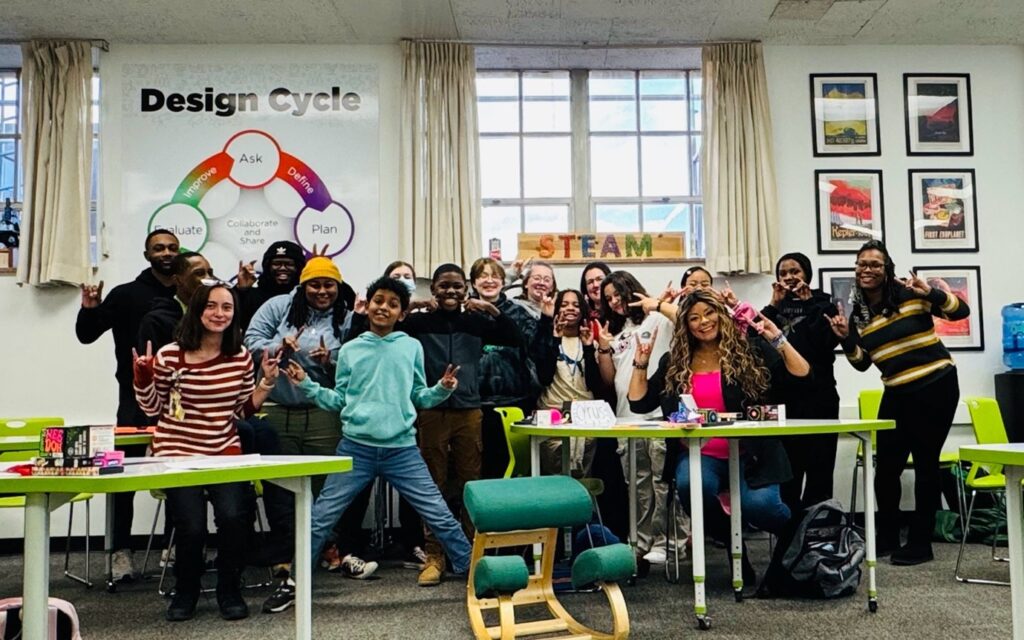
“Growth” is our 2025 word of the year for NIU STEAM – and our Barb City STEAM Team afterschool program epitomizes growth! We sat down with NIU STEAM Educators Jasmine Carey and Chrissy Swartz to learn more about the program and hear about the personal and academic growth students have shown this year.
Can you start by introducing us to the Barb City STEAM Team and STEAM Studio afterschool programs?
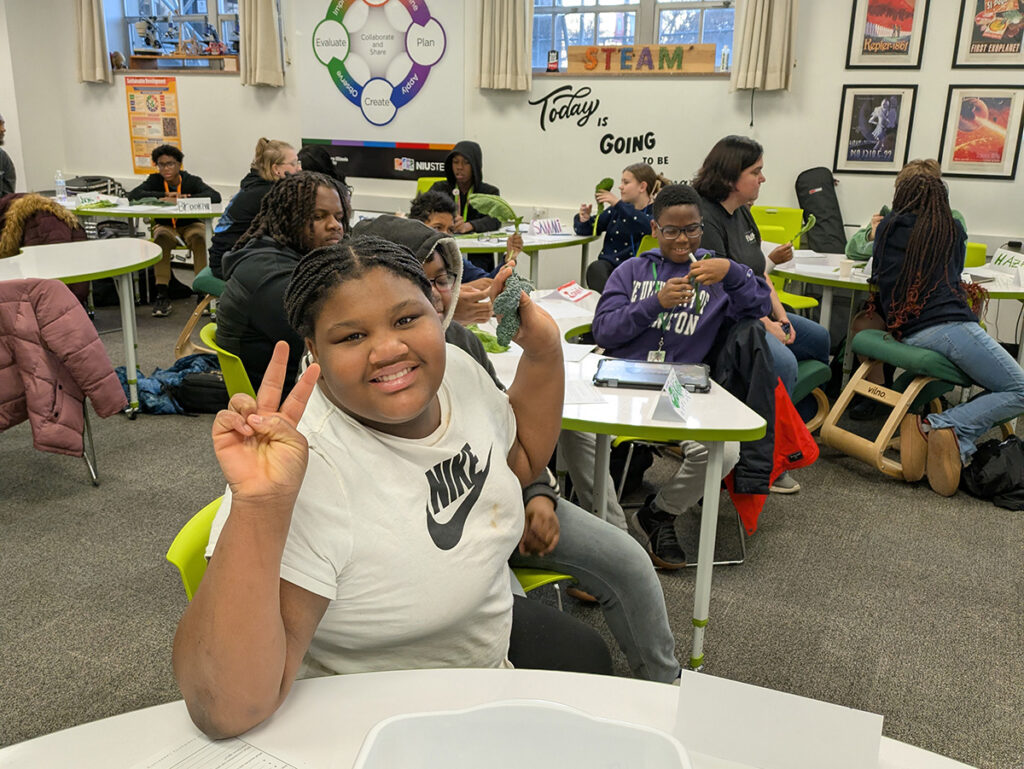
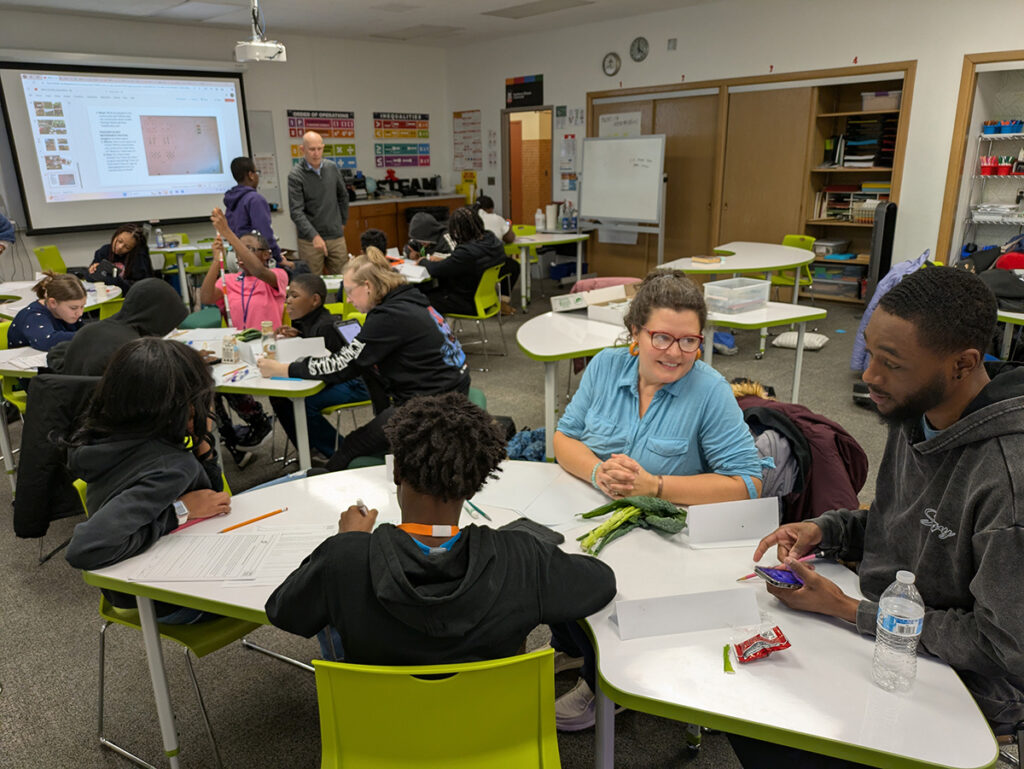
Jasmine: The Barb City STEAM Team is a free afterschool program on the NIU campus for middle school students in DeKalb District 428. Right after school we provide food and check in with students, then we have homework help and STEAM (science, technology, engineering, arts and math) project-based learning. We encourage genuine feedback from the students and try to give them input in the units we choose.
Chrissy: The high school program, which was new this year, is called STEAM Studio. It’s similar to the Barb City STEAM Team, but with even more freedom of choice for the older students. It’s kind of a “genius hour” or innovation hour, where the students come in and choose a few skills they’d like to work on, such as 3D printing, computer-aided design or electronics. Then they get to work on their own projects and interests with mentors to help.
What are some of the benefits of the afterschool program?
Chrissy: The part of the program that’s most important and impactful to me is that we are building relationships with kids that maybe their teachers don’t get to build with them. I was a high school classroom teacher for eight years, and although I loved teaching, the thing that frustrated me was that – in a class of 30 or 35 kids – you have to keep track of all the students, and you often don’t have time to give that extra attention to students who might benefit from it. So one of the things I love about our afterschool program is that we have time to build those deep connections and social emotional learning that might be missing from other aspects of their lives.
The middle school kids, in particular, are exploring STEAM and at the same time they’re exploring who they are. Maybe they’re shy at school and a little nerdier than their classmates. We give them an opportunity to come out of their shell, be social and tell stories, in addition to STEAM career content.
Jasmine: To add to that, we’re serving middle school students in the community, and we know there are a lot of other community-based and extracurricular programs that are serving those same students. Our idea is not to be in competition with those programs but to work in conjunction with them to make sure that, as a community, we’re helping to grow the whole child, to grow well-rounded humans.
So, for example, our program is divided into multiple sessions through the year. Perhaps a student sees that we have robotics for the fall session, and they’re really excited to sign up, but then they love to play on the school basketball team. The student would be free to take a break from our program for the winter session to focus on basketball and then return in the spring. We encourage those other extracurricular activities and programs around the community. It gives kids what we call “voice and choice” to pursue their interests and self-development.
This year, we’ve also done a lot more with community engagement and community-based learning as well as traditional steam content.
Can you say more about that community engagement and share some examples?
This semester we did a leadership series with another steam instructor, Becky Swiontek. I had an idea of a leadership series bringing community members with different backgrounds and careers to talk to the students, and Becky was amazing – she scheduled two different community members to come in each week during all of February and early March.
It was really meaningful to the kids to talk to those different community members about what their career looked like, what their path to success was, and some of the ups and down and struggles they experienced along the way. Many of them also brought in activities for the students and talked them through a day-to-day scenario of what their job looked like. We heard from a plant manager, a local barber with a successful business, an NIU police sergeant and a community college associate vice president who’s in charge of career services, apprenticeships and internships. We also had someone from First National Bank come by to talk about budgeting and financial planning.
How many students did the program serve this past year?
Jasmine: We had 36 middle schoolers, and of those 26 met the minimum number of hours required to continue with the program.
Chrissy: This was the first pilot year of the high school program, so we only had five high schoolers. Many of the high school students interested in the program also have jobs and play sports or other extracurriculars, so we’re reworking the hours to fit better with the additional commitments that are common for high school students, and we expect to grow the program this coming year.
What do you most enjoy about working with the afterschool program?
Chrissy: One of the things I most enjoy is the freedom we have to let students take their time and follow their interests. In a formal school setting, there’s some rigidity to what you can cover, and your scope and sequence. Even though at NIU STEAM we’re still using Next Generation Science Standards and state standards, we have more latitude in how we do that.
One of the very cool things about NIU STEAM is that we focus on our industry partners, so the skills we’re teaching have real world connections. I’ve never once had a student in our afterschool programs ask me when they’re going to use these skills out in the real world. When I was a classroom teacher, students asked that on a regular basis. It’s very rewarding to me that the projects and skills we provide for students are things they’re truly interested in and that they can apply outside their time with us.
Jasmine: For me, I appreciate that I can be truly honest with the kids when I assure them that they will use these skills. Even outside the STEAM content, they’re gaining the ability to talk to community leaders at the middle school age, which is amazing. And the chance to see different career paths and start deciding that they’d like to work at a school or be an entrepreneur and start their own business is powerful.
It’s very personal to me because I started off here at NIU as a little freshman student, and I had STEAM instructors who were mentors and took me under their wings and taught me different things. Now to be back here in that same position and serving as a mentor to even younger students is just amazing.
Do you have any special moments or stories you’d like to share?
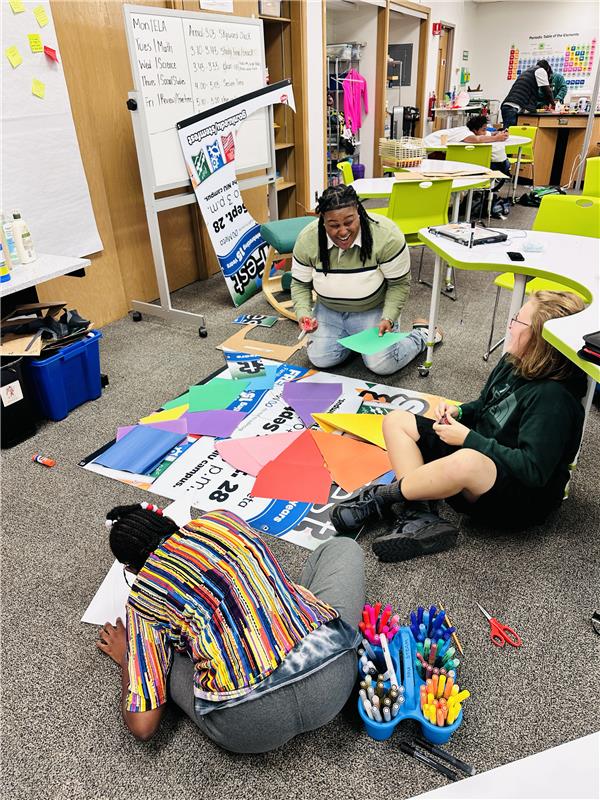
Jasmine: For me, it’s not a single moment, but I love that the students feel safe enough with us to be completely honest when they’re sharing input about the program. So when they express that we’re doing something right, it’s really meaningful.
Just recently, a kid who’s been with us since sixth grade expressed, basically, “You’re doing good, I enjoy this program. It’s helped me learn more about my community that I didn’t know even though I’ve been here my whole life.”
Chrissy: I agree, it’s hard to narrow it down to just one or two stories because we see a lot of growth from the students on a regular basis. But there is a common theme to the moments for me – the students’ growth of confidence. The students are often very quiet and reserved when they first come to us as sixth graders, and then they come into their own over time.
We had one student who was so quiet, I don’t think we heard more than five words from him in the first six months of the program. Then recently we partnered with Professor Paul Wright and NIU Department of Kinesiology and Physical Education students, and that particular middle schooler ended up leading a game for all the Barb City kids, for us adult instructors and for the NIU kinesiology students. He was up there in front explaining the game, which wasn’t easy because you have people of all different ages and levels of experience in the group! He tailored his explanation so everyone could understand, and it was incredible.
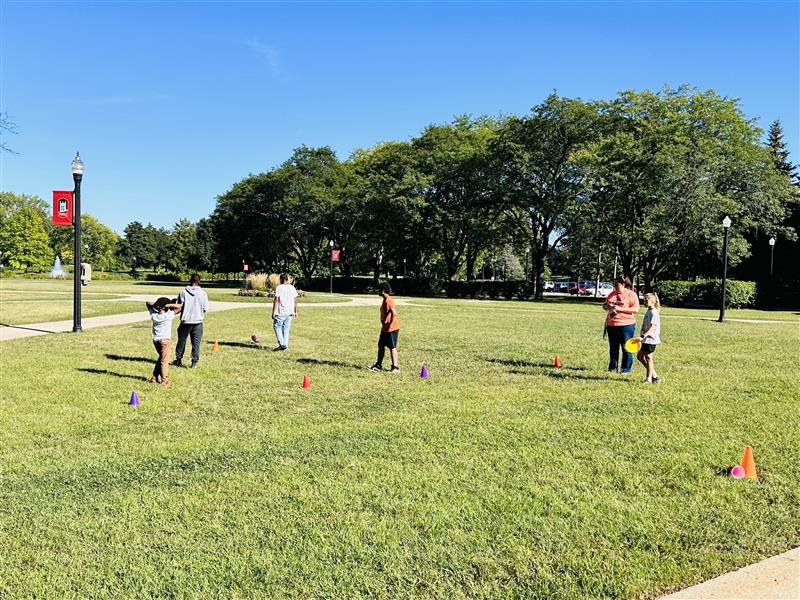
We had another student who was so reserved that she got frustrated when she had to participate in social situations. And now she’s grown to the point where she can present herself with confidence –and she’d even leading extracurricular groups outside of Barb City, applying those social skills and confidence that she learned.
That’s super rewarding because we’re helping them find out who they are and progress from meek to confident.
Jasmine: Another day-to-day experience that’s super rewarding is when we hear the students correcting each other. Usually, if someone tells another person to shut up or is rude, they’ll correct one another. And the way they interact with one another is great. If there’s a student who needs a little more help or direction on a project, another student will often step in and take that responsibility to guide them.
And then do they accept the correction and guidance with grace?
Jasmine: Yes!
Chrissy: They even correct us! We’ve got a rule that you can’t eat on the back lab tables, and I snuck a piece of pizza over there. They reminded me that you’re not allowed to eat there, and they mimicked me – the same teacher look I give them when they eat back there! That was amazing. I was like, “Yes, you’re 100 percent right,” and I moved. So they have an ownership of the classroom and what’s going on there. They’re invested and engaged.
Is there anything else you’d like folks to know about the program?
Jasmine: In addition to community engagement, we also partner with people across the university, like Professor Wright and his Kinesiology students, and the NIU Chemistry Club. We also partner with Kelly Gross in NIU’s School of Art and Design. Her NIU students are getting into art and design education, and they’re so excited to work with our Barbs and get some experience with lesson plans and curriculum. For the past two semesters their projects with our students have been amazing. They’ve worked on media, technology and art-related projects, including stop-motion animation. One of the middle schoolers is just extremely proud every time he produces a stop-motion animation project – his projects are truly cinematic productions, and I love to see that from him. I can see our students begin to understand what it would mean to attend college here and what some of the options are once you get to university.
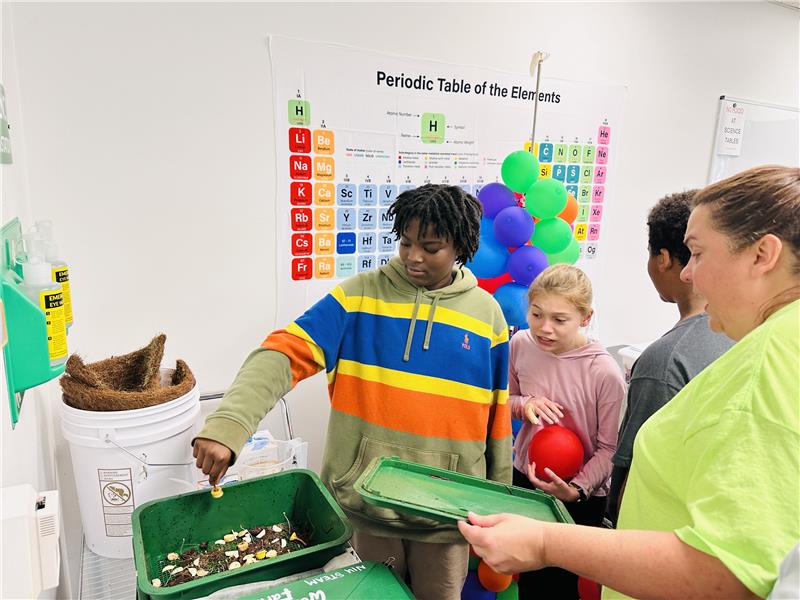
Chrissy: We also partner with NIU’s Edible Campus program. We’re looking to connect our students’ STEAM learning to healthy eating and taking care of themselves. Learning about sustainability in food systems is a great way to do that. We’ve got 26 raised bed garden boxes out by the NIU Stevens Theatre Building, and this summer we’re working with the students to grow produce, herbs and spices so they have access to fresh vegetables and nutritious food, as well as knowledge of where their food comes from. I have to admit that I’m not a vegetable lover myself, so I’ve been going on this journey with the students, tasting different vegetables and learning to appreciate them.
I also want to add that one of the best parts of working with all our campus and community partners is that they don’t treat our students like little children, but instead they take the middle schoolers seriously as artists, scientists and investigators. They make the content accessible for the kids, but they never talk down to them, which gives the students an authentic learning experience.
When and how can people sign their children up for the programs?
Jasmine: Sign up will start in August for both afterschool programs: the Barb City STEAM Team for DeKalb middle schoolers and the STEAM Studio for DeKalb high schoolers. Folks can find more information and sign up links on our website at niusteam.niu.edu/community/. The sessions start September 8. Before that we’ll do our Welcome Week, where families come in, fill out any documentation they might still need and sign up for the app that we use to alert families to the schedule, give updates, etc. We like to talk them through that process and answer their questions, so they’re prepared for the year. We also tell them about our family nights, which all the families are encouraged to come to.
Chrissy: Folks should know that, even though sign up for the afterschool program doesn’t start until August, students can attend our summer camps to get a taste of the STEAM programming that we do. We have camp scholarships for DeKalb County residents, so it’s worth getting in touch to see if those are still available!
We still have several camps open on niusteamcamps.com for elementary, middle and high school students. The elementary camps are day camps, and the middle and high school camps are residential camps where students stay here on the NIU campus and get a taste of the college experience.