The days are hot, and we’re enjoying a summer of fun, exploration, and adventure. But we’re also busy planning for STEM Fest 2023 on Saturday, September 30, 2023, in the heart of NIU’s DeKalb campus.
Once again, we’re thrilled to have Meta as our premier sponsor for this community event. We hope you’ll join us for STEM Fest 2023, brought to you by Meta.
As we’re preparing, we made a list of some of our favorite STEM Fest activities from years past, and a few new ones that we can’t wait to experience. Check it out! And watch our upcoming blog posts for even more highlights to help you plan your day at STEM Fest.
Are you interested in being an exhibitor at STEM Fest? New this year, we have no charge for groups to host a table with a fun, hands-on STEAM activity. Check out the exhibitor registration on our STEM Fest website.
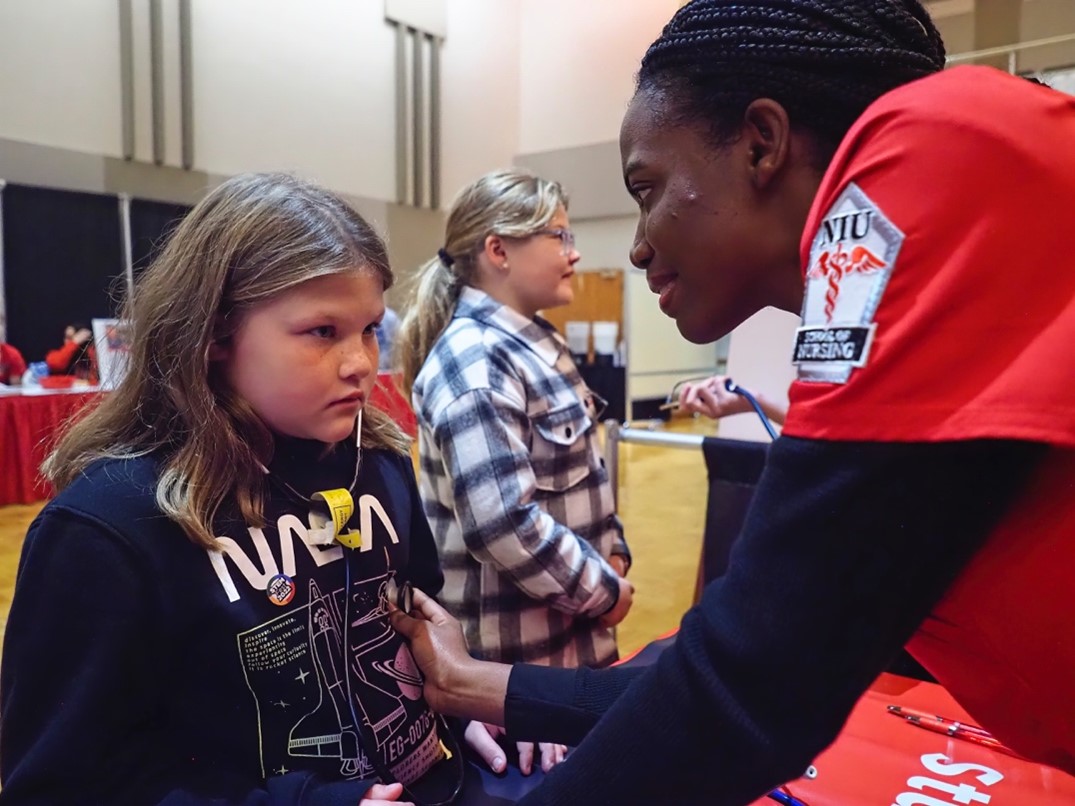
Health and wellness career exploration with departments from the NIU College of Health and Human Sciences, student groups and community groups. This year, we’re thrilled to bring all our health and wellness booths together for our new Health & Wellness Zone!
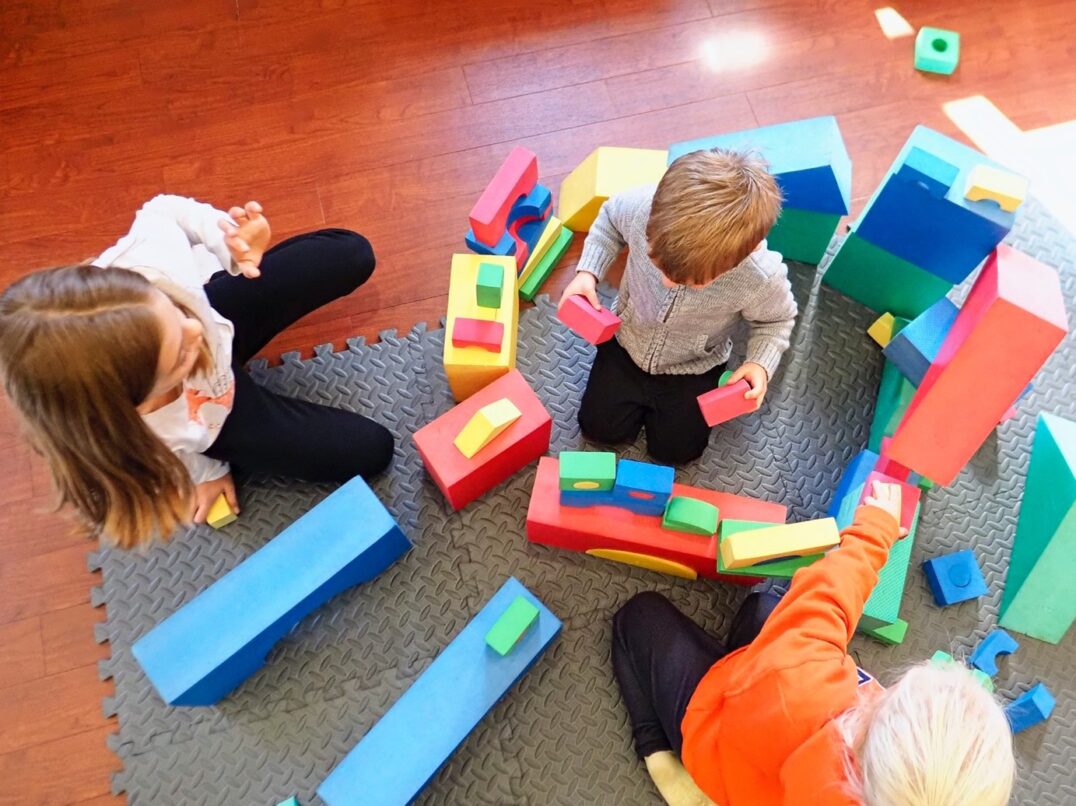
BLOCK Fest® is always a blast for our youngest visitors!
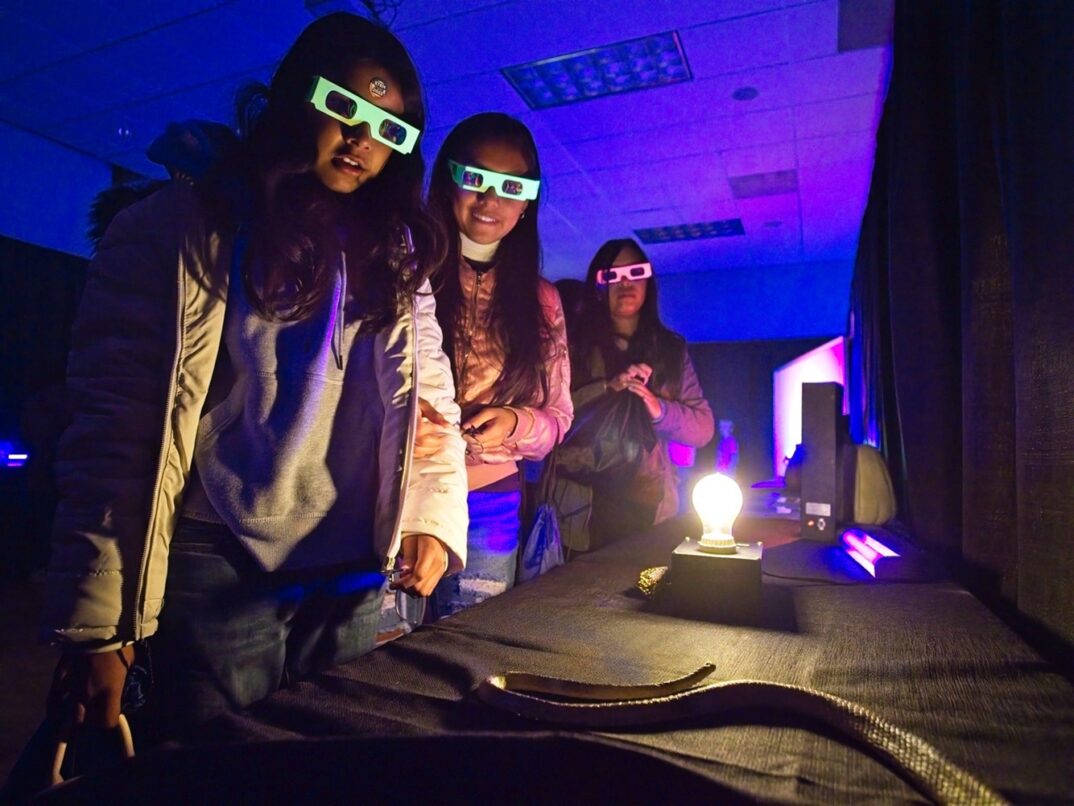
The Haunted Lab. STEM Fest started as “The Haunted Lab,” and this set of fun black light activities is still a crowd favorite.
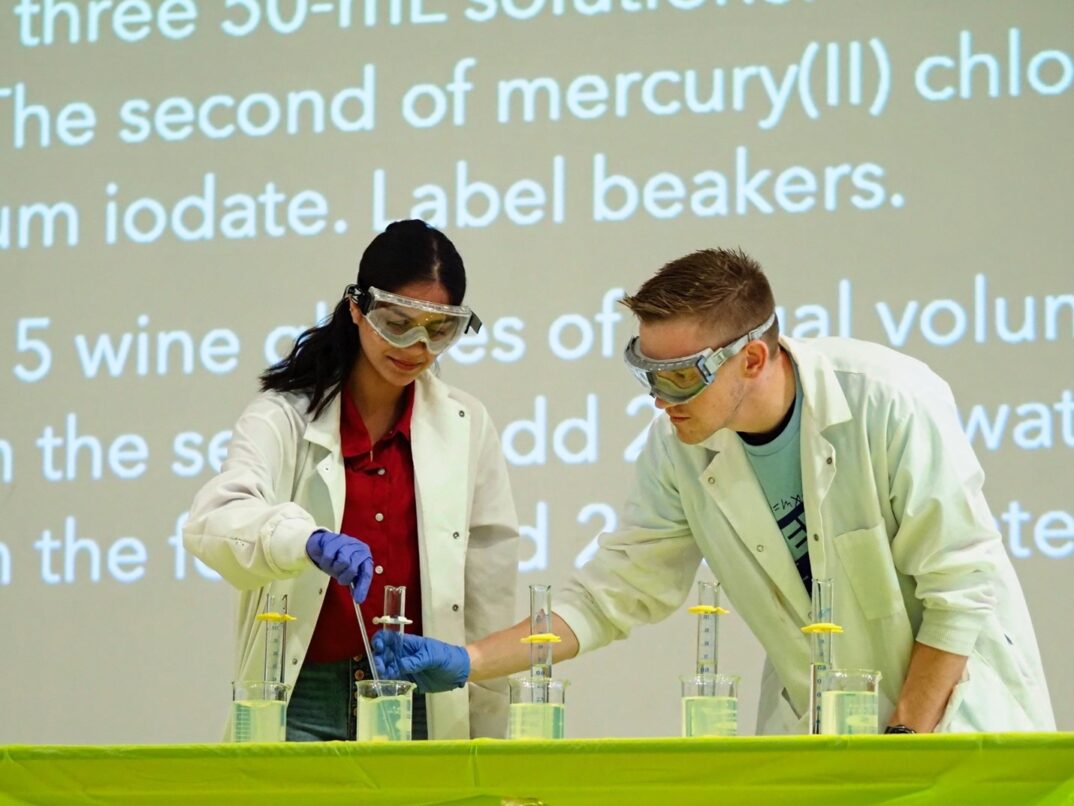
Science Demo Shows! The science demo shows have always been a hit. Watch our website for the stage schedule coming in September.
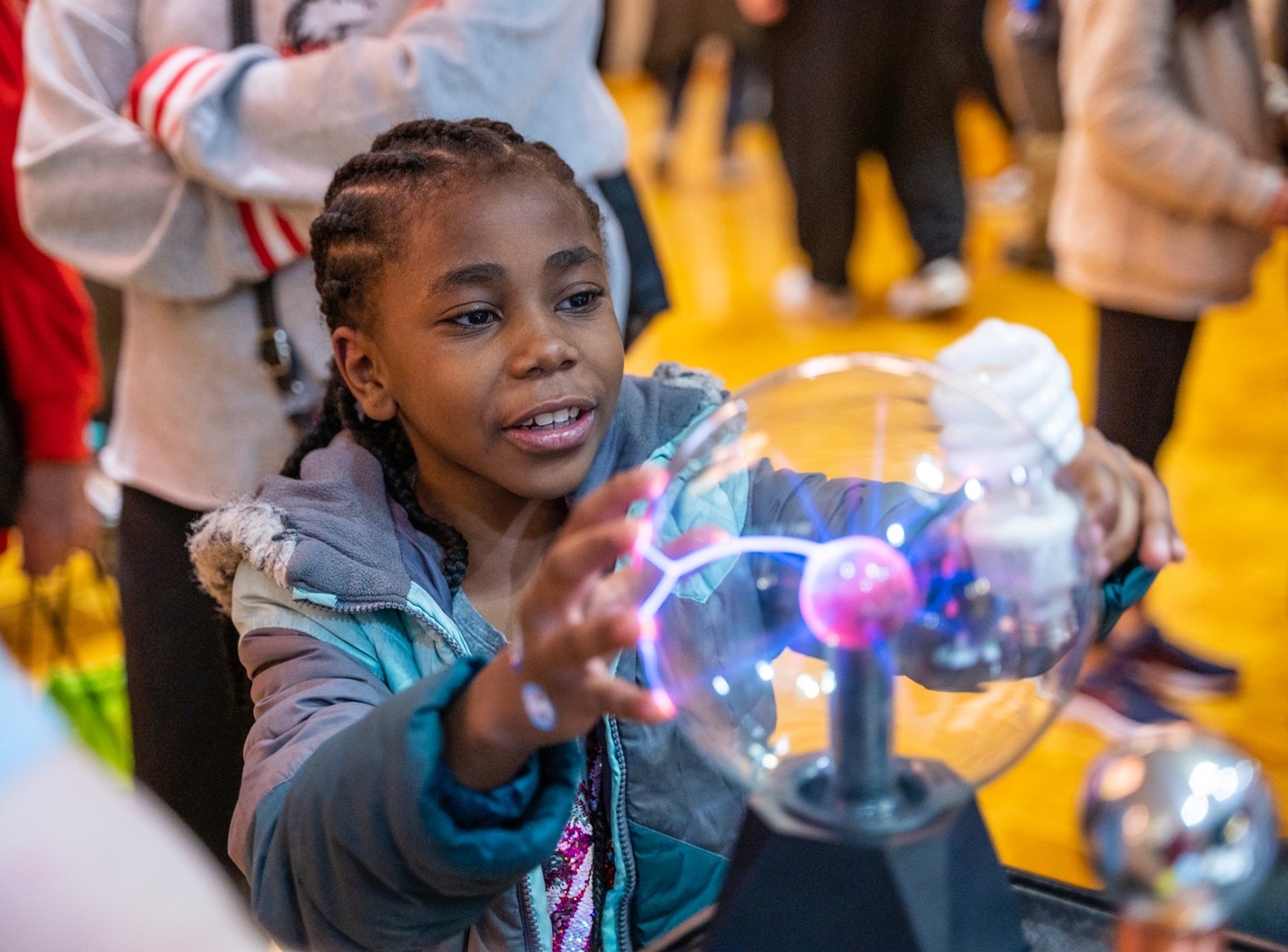
Hands-on fun with STEAM activities. Visitors of every age just can’t resist touching the Plasma Globe to learn about electricity. This is just one of the many stations you can visit.
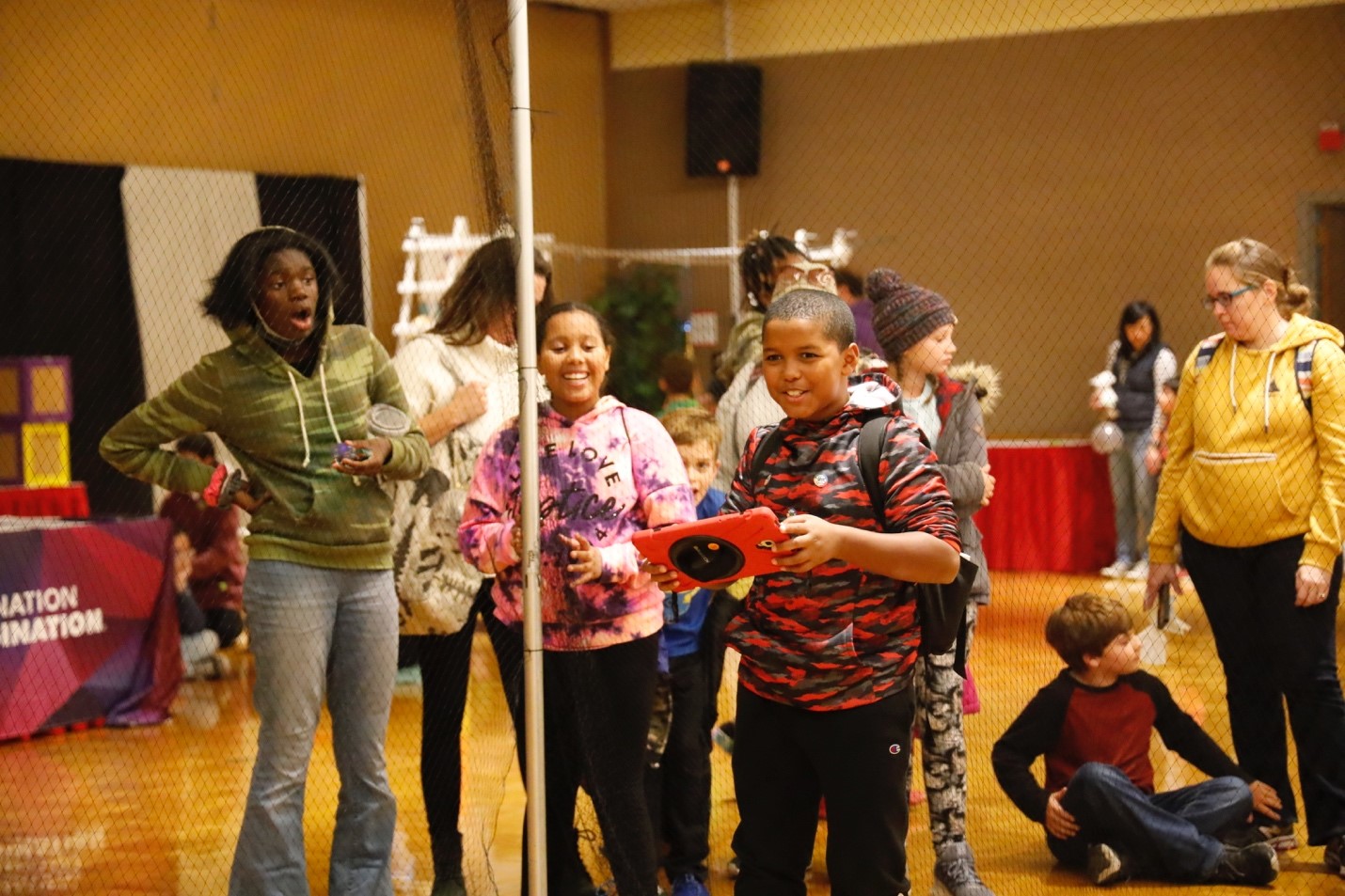
The Drone Zone is a can’t miss activity, especially for elementary and middle school ages.
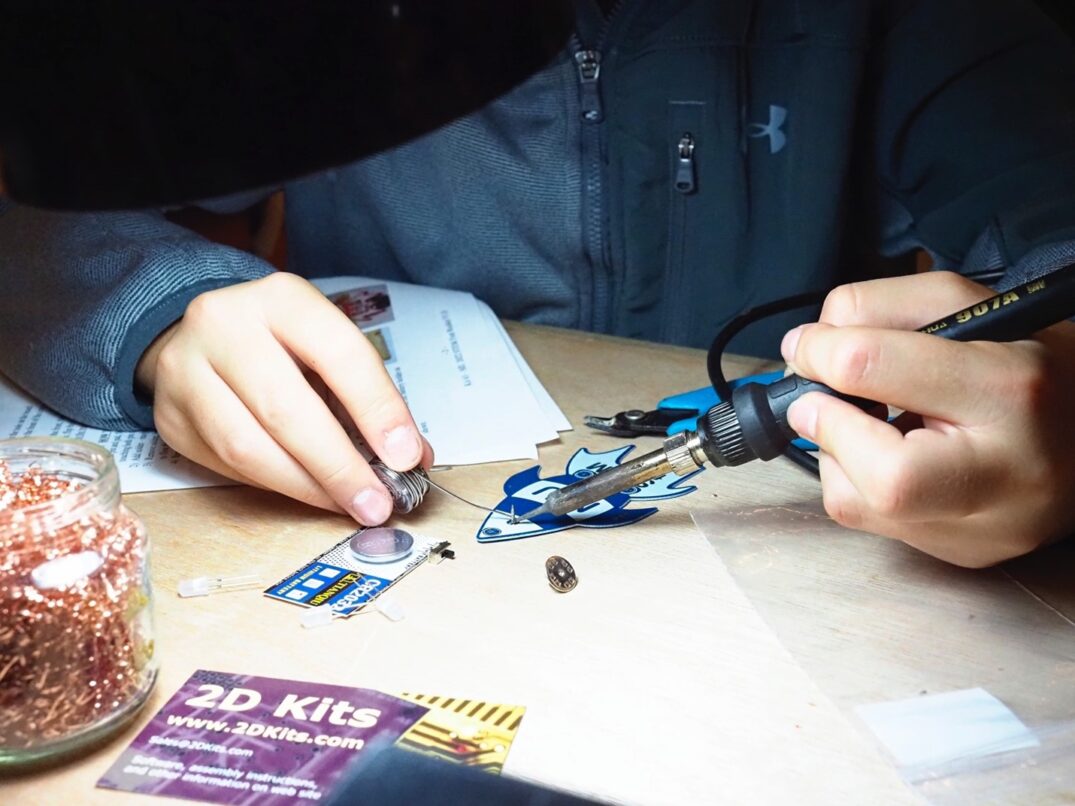
We’re thrilled to offer the Build-A-Blinkie activity for free so visitors can make and take their own light-up STEM Fest souvenir.
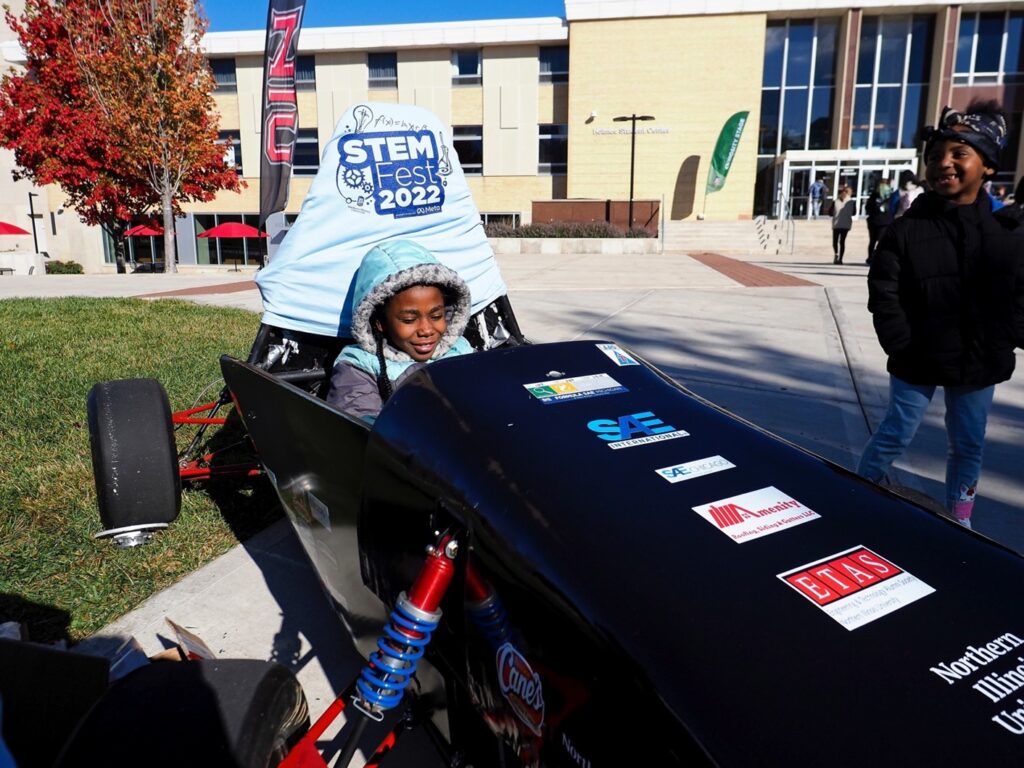
The cool vehicles from the NIU Supermileage Team, SAE Formula Team, and Baja Team are a hit every year! Don’t forget to ask the NIU engineering student volunteers how they design, test and race these vehicles.
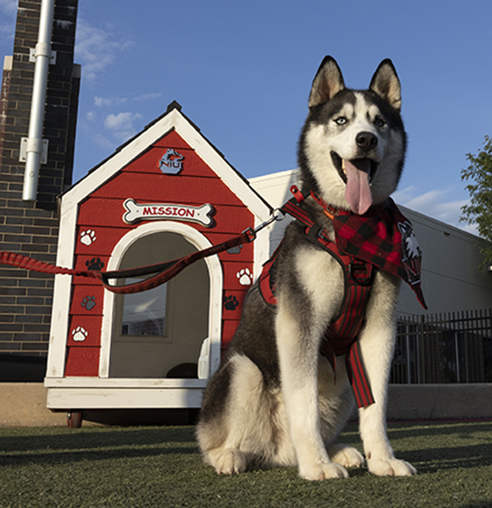
The Huskie has been NIU’s mascot since 1940, and it was chosen to symbolize the strength, dedication, endurance and perseverance of our student body.
National Mascot Day is coming up on June 17. To celebrate, NIU STEAM Educator Judy Dymond, Ed.D. interviewed Lisa Boland, head trainer for the NIU Mission Mascot Program. Keep reading to find out more about the NIU Huskie and what’s involved in choosing and training a live animal mascot!
Lisa Boland, how did you become involved as a handler for NIU mascots?
I was in the right place at the right time! I trained dogs and specialized in Siberian Huskies. I was nearby in Sycamore and assisted with Mission I’s boot camp.
The Huskie dogs need maintenance. They are living creatures, so they change every day and need to work on their skills.
Can you share some of your favorite experiences?
My favorite experiences are sport-related – the Bowl Games. They have a different level of hype and enthusiasm.
Mission Mondays are also great – it makes your whole day. Mission III can restore a good mood. We travel to different locations on campus – I have a list, so we make sure that we get to different locations. We move every hour. I discovered esports through one of those visits on Mission Monday. I didn’t even know we had esports!
What is the job of the mascot?
The job of a Mascot is to participate in NIU’s events. The mascot is a participatory animal – promoting school spirit. Mission III travels around campus on Mission Mondays and for other academic events. He visits STEM Fest and other groups and clubs. He also helps out for recruiting and admissions to welcome new people to campus.
The qualities of our Huskie dogs are that they are live, touchable, adorable dogs! They are engaging.
Recently, Mission III participated in Puppy Pop-up – so the dog could get exposure without being overwhelmed.
The trainer develops a rapport with the dog and looks for cues – knows its body language, when it is uncomfortable. The trainer steps in when necessary – possibly asking the person engaging with the dog to kneel down if they are extremely tall – so sometimes we need to educate the person.
Tell us how a Huskie is selected to become a mascot for NIU. What specific characteristics and traits do you look for?
We look for a dog that is young and stable. Mission III is stable – a puppy in its growing stage.
Mission I was retired at 10 years old and lives in Kentucky. Dogs are considered in retirement age at 11-13 years old. Mission II had to retire early due to severe allergies.
When we were looking for Mission III, we wanted a dog that had a multi-faceted background – one that had rescue experience, day shows, and sports. We are familiar with reputable breeders.
We wanted a dog with a stable temperament and one that likes people. We wanted a dog that is motivated and one that could handle being startled.
NIU Huskies always have blue eyes and are black and white. We look for breeder puppies that will interact with strangers and have good recovery time. We want a dog that is curious and stable, characteristics that can be identified in young puppies.
What specific training is required for the mascot?
Being a mascot is not a simple task. Any dog can’t be a mascot – the dog must love it!
Mission III gets the basic training – sit, stay, down. He also receives practice with special tasks such as photo-taking – so he learns to trust all the cameras in his face.
We try to do something novel every day, such as the Festival in the Park.
Prior to graduation, I wore a graduation gown around the house for several days to help get Mission III ready for graduation happy hour. We want him ready – so he doesn’t get startled. We prepare him for the longevity of his career as a mascot – introducing something novel every day. He changes every day, so as his trainer, I need to continuously train him to integrate him into a lifestyle.
Tell us more about Mission III. Is there anything that might surprise people about Mission III?
He is sweet and has a kind heart. He adores children and is very smart. He wants to work and please.
Mission III is a hardworking dog. He attends all of the football games and runs to the end zone for touchdowns. Mission III works every day in this role, so we try to make it fun and happy!
Megan R.M. Brown, Assistant Professor, Department of Earth, Atmosphere and Environment
This year marks the 50th Anniversary for World Environment Day, and the focus is on plastic. Plastic has been around for over 100 years; the first commercial plastic, Bakelite, was invented in 1907. Since then, plastic has become commonplace in our lives, and half of the plastic produced is designed to be used only once.
Look around right now, and you’ll see plastic. Maybe it’s part of the chair you are sitting in or the device you are reading this on. Maybe you are drinking from a plastic bottle. You probably are wearing plastic, too, at least as part of some item of clothing or shoes. Plastic has made our lives easier and more affordable. It helps make life-saving devices like IV tubes, bulletproof vests and firefighting gear. Further, plastics makes preserving food easier with bags, plastic wrap and reusable containers.
The downside to all this plastic is that these synthetic polymers don’t break down quickly in the environment. A plastic bottle can take around 450 years to decompose! While some plastic can be recycled, most isn’t. It’s estimated that only about 10% of plastic is recycled. Instead, a lot of disposed plastic just breaks into smaller pieces called “microplastics.”
Microplastics are classified as any plastic particle smaller than 5 mm. These particles show up in a lot of different places, including the ocean, streams, soils, the air, organisms like birds and fish, food products, drinking water and more.
Here at NIU, along with students and colleagues, I am working on projects that look at how microplastics move through our environment – specifically in streams and groundwater. Since microplastics are so small, they can move along with the groundwater in an aquifer. As a hydrogeologist, I am interested in how this movement occurs, how microplastics can move between surface water and groundwater, and if the microplastics will change how an aquifer functions. All these topics are being investigated using field studies, experiments in my laboratory and computer models. Since beginning research on microplastics, I have become much more aware of just how much plastic is all around us and how much we really use.
This World Environment Day, I encourage you to do the same. Take a look around you. How much plastic do you use each day? Look at some labels. Where is plastic being used that you didn’t expect? Maybe make a list of all the plastic you encounter and use in just one day and ask your family to do the same.
Then ask yourself, can I make choices that reduce the amount of plastic I use, especially plastic that is used just once and then thrown away?
With the weather warming up, many families are looking for fun activities to do together outdoors. On May 24, take some time to celebrate National Scavenger Hunt Day with an activity that’s both entertaining and educational for all ages. Scavenger hunts provide opportunities for kids to explore and engage with the world around them in a game-like setting that’s hands-on and interactive.
Scavenger hunts are popular with a variety of audiences because they are a lot of fun while encouraging the development of valuable skills. For example, participants can gain team building skills when they work together towards a common goal of finding all the items on a list as quickly as possible. Teams who collaborate and communicate well together find it easier and more efficient to achieve success by sharing ideas and knowledge while planning and making decisions.
Scavenger hunts can also promote problem solving and critical thinking in participants. One way they accomplish this is by helping to promote observation skills. Observant people notice the world around them, encouraging greater curiosity about why things work the way they do and how they might become more efficient or function better, leading to thinking critically about solutions. Scavenger hunt facilitators can further foster problem solving and critical thinking by adding constraints such as time limits or assigning different point values (i.e. more obscure or difficult to find items carry higher point values). Another outcome of participating in scavenger hunts is increased growth and persistence. As participants try a strategy unsuccessfully, they must then reflect, regroup and brainstorm new ways to approach a solution.
Another benefit of scavenger hunts is the physical activity they naturally provide participants. Natural movement is a part of the process of locating the various items on the list. Additional physical activity can easily be incorporated into a scavenger hunt by building in an activity to do each time participants locate an object on the list (i.e. find a log on the ground and do 20 hops back and forth over it). As an alternative, if you’re not able to be mobile and active with your hunt, you can still participate by searching for items while watching a movie, driving in a car or reading a book together.
Scavenger hunts can be inexpensive and simple to plan and facilitate, and they can offer flexibility to engage a variety of audiences. They can incorporate simple themes like letters or shapes or more difficult challenges like the poem written by Forrest Fenn, an art dealer from New Mexico, which led tens of thousands of people on a decade long search for a real treasure chest hidden by Fenn which was filled with gold and gems estimated at $2 million.
To plan a scavenger hunt for your family, first consider the location you will use. Scavenger hunts can be held in any size space, indoors or outdoors. From a room in your home to a larger grocery store, local museum, neighborhood, or park, scavenger hunts can be planned to fit any environment.
Next, think about who you want to invite to participate, the format and the amount of time you want it to take. Scavenger hunts can be run individually or in teams and include many or few people. They can be competitive, offering a prize to the first to complete the challenge or non-competitive where participants simply work towards completing the task of finding all the listed items. The list of items to find can be lengthy or short, depending upon the amount of time for the activity. You’ll want to provide each team or individual with a checklist of items to find, along with a clipboard and pencil. One way to include kids in the planning is by having them brainstorm items for everyone to find on the scavenger hunt.
You’ll also want to consider what evidence participants will use to demonstrate they found an item. If participating in larger groups, cameras or smart phones work well for capturing an image or video of their find. If participants will demonstrate their evidence by gathering or collecting the items on their list, you’ll want to ensure there’s nothing on the list that’s too heavy or unsafe to carry around with them or would damage the environment if removed. You’ll also want to be sure to provide a bag or container in which they can carry their items.
Finally, be sure to review rules and boundaries with participants. For example, one rule in most scavenger hunts is items may only be “found,” no purchasing of items allowed. Other items to consider when setting rules include outlining the space parameters where participants are able to go, specifying any time limits, whether teams must stay together or if they’re permitted to divide and conquer, and some general courtesy expectations for communicating with strangers and other people within the space.
For decades, teams and individuals have come together to compete in the challenge to be the first to collect all the items on a list. Scavenger hunts offer a wonderful learning experience that is both fun and educational. They promote exploration, observation and physical movement leading to valuable skills in problem solving and teamwork. Make plans today to celebrate National Scavenger Hunt Day on May 24 with your own scavenger hunt!
To celebrate National Packaging Design Day, Debbie is sharing a little bit about this often overlooked STEAM career field.
May 7 is National Packaging Design Day, a day first celebrated in 2015 to recognize the work, often done behind the scenes, to bring products to market. Most of us don’t give much thought to the packaging of products we buy, but companies that produce those products spend a great deal of time and effort in creating packaging that attracts our attention and safely delivers the product to consumers.
From a marketing lens, packaging designers play an integral role in creating solutions that stand out in today’s competitive marketplace. Walk down the cereal or laundry detergent isle in your favorite grocery store and you’ll quickly take notice of the vast and growing number of brand and product options available to consumers. The diverse product explosion that has occurred in recent years has increased the need for skilled packaging designers who can capture the interest and draw consumers to their products using elements like shape, size, material, graphics and color.
Creating a pretty package is not the only job of a packaging designer, however. Designers guide the entire process of a product’s packaging from concept to finished product. To be successful, they must balance the aesthetics of a product’s packaging with the practical and functional requirements needed to protect the product, accommodate the demands of transportation, warehousing and storage, and comply with safety and quality standards and regulations. This requires a unique blend of workforce skills, as the work of packaging design evolves and becomes more complex.
At NIU STEAM, one of the ways we work to prepare students for their future careers, such as packaging designer, is by emphasizing the basic skills necessary for success in the work place as identified in Illinois Essential Employability Skills Framework. Two such skills critical to the success of a packaging designer are communication and teamwork.
Strong communication skills require active listening and clear communication. For a packaging designer, this is critical to their ability to plan and implement solutions that address product constraints and client requests. Using an iterative process like NIU STEAM’s Design Cycle, package designers expedite the process when they begin by asking good questions and then listen and respond by planning, designing and refining packaging to meet clients’ expectations.
In addition to solid communication skills, designers also need to demonstrate good teamwork. For example, designers who think critically about the best way to meet their client’s needs offer solutions that incorporate the most cost-effective resources, including materials and technology. They also offer product packaging ideas that address consumer trends and priorities such as the aging US population, active family lifestyles and concern for sustainable resources that minimize waste and don’t harm the environment.
The packaging industry offers a wide variety of careers in roles such as engineering, design, production, sales and marketing and plays an important role in a range of consumer-good industries from foods to pharmaceuticals to home goods and more. Jobs in the packaging industry will likely continue to grow and expand with the number of brands and products in our markets. Students interested in exploring the ever-growing field of packaging design should consider pursuing a post-secondary degree, as most professionals working in the industry hold at least a bachelor’s degree. Check out NIU’s majors in Industrial and Systems Engineering and Visual Communication as well as a minor in marketing to learn more about educational opportunities.
By NIU STEAM Instructors Newt Likier and Lindsay Van Geem
If you ask a kid what their favorite planet is, you’ll likely get a bunch of different answers—some of which might not even be in our solar system! But if you ask us, there’s no place like home – our favorite planet is Earth. There’s nothing like it, at least not in our neck of the universe, and we’re excited to celebrate our wonderful home on April 22, otherwise known as Earth Day.
The theme this year is “Invest in Our Planet,” which pushes for social unity in fighting against climate change, from big corporations right down to the everyday person. According to an EarthDay.org press release, human beings need to create “a 21st century economy that restores the health of our planet, protects our species, and provides opportunities for all.”
That feels like a big mission, especially if you’re just a normal person trying to get by. But every little bit helps protect and preserve our planet. To take a step or two toward going greener, there are a couple things you can do at home: plant a garden and make a compost bin.
Here are our tips for starting your garden at home, and getting kids involved.
For your garden, we’re coming up on the perfect time to start planting. You usually want to wait until just after Mother’s Day before starting to avoid a late frost. Some plants that are easy for beginners and usually produce a nice crop are squash and zucchini, peppers, and potatoes. If you have kids helping you plant, talk to them about the environmental cost of food you can buy at the grocery store, especially if that food comes from very far away. How much gas does it cost to fly or ship a non-local vegetable fast enough so that it’s still fresh for purchase? Encourage your kids to help design the layout of your garden, and then let them have the first bite of the crop you produce.
To push your garden further, use a plastic bin as a compost bin for daily kitchen scraps. If you add earth worms, they’ll help things along by eating your waste and producing healthy fertilizer. It might not smell very good, but your plants will thank you for the nutrition! For families looking for a bigger challenge, try building a compost bin out of lumber. This is also a great chance to talk about what happens to the stuff we throw away and get our learners thinking about recycling and waste management.
Another way to get your learners invested and involved is at NIU STEAM’s summer camps out at the Lorado Taft Field Campus in Oregon, Illinois. We have two middle school camps out there this summer: Nature Studies and Survival Storytelling. Nature Studies has a focus on going green and connecting with our environment, while Survival Storytelling connects learners with essential low- or no-carbon footprint skills to survive the wilderness, and then asks them to write an engaging story about the experience.
By NIU STEAM Instructors Newt Likier and Becky Griffith
Here at NIU STEAM, we’re very aware of how interconnected and interdisciplinary everything in education has the potential to be. Each letter in STEAM (science, technology, engineering, arts, mathematics) can stand on its own but is enriched by the inclusion of one or more of the other letters. In today’s society, there’s a large focus on the hard sciences, technology, and engineering because American culture sees these industries as having a higher earning potential than their creative counterparts.
However, art is an incredibly important part of humanity and learning. Art is a form of communication that can transcend language, and in our increasingly connected learning spaces, knowing how to understand, critique and create art is a core competency.
Try this at home
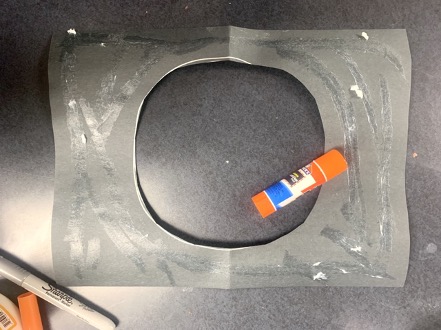
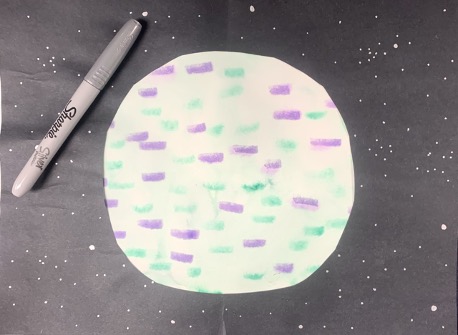
With this in mind, we have an activity you can do at home to practice bringing some art into your science, technology, engineering and math. For this activity, you’ll need white paper, markers and a sponge.
For younger learners, ask if they can guess why Mars is known as the red planet. Science tells us the planet gets its color from the high amount of iron present. You can ask them what happens when they leave their bikes out on the lawn, or if they’ve ever seen what happens to a parent’s tools if they sit for a long time in the garage. When iron is exposed to oxygen, rust occurs. And what color is rust? Red! You can go deeper into the chemistry if you want, but we like to just focus on iron turning red with rust. Mars is so red because the oxygen present makes the iron rusty, giving us the reddest planet in our solar system.
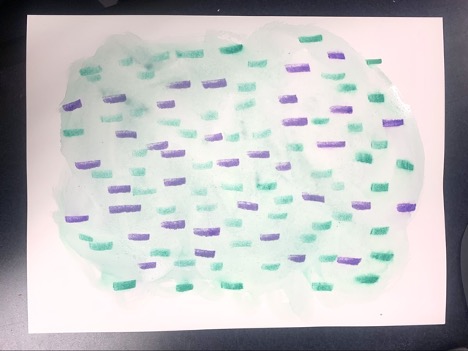
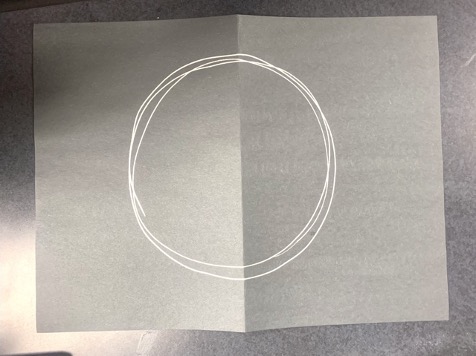
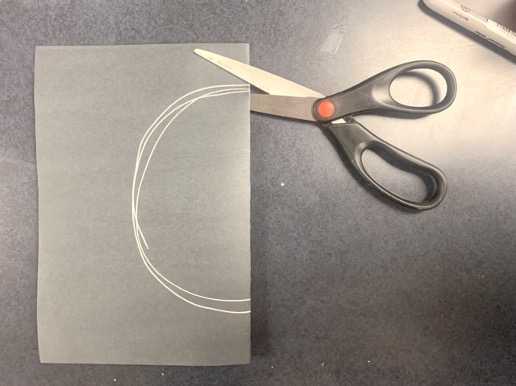
For this activity, we’re going to use markers as a form of watercolor painting! Use a dark-colored marker to draw a circle to represent the planet. Then, use two different colored markers to add designs, like squiggles or lines. Finally, put a bit of water on your sponge and “paint” with the water to release the marker ink in the paper. You’ll create a basic form of watercolor painting on your page!
For older learners, we recommend having them research one of the planets in our solar system with a focus on its chemical makeup. If you have access to a watercolor paint kit, this is a way to engage with the art at a slightly higher level.
Want to do some more out-of-this-world art? Check out NIU STEAM’s summer camp Art Exploration for elementary school students looking to engage artistically. Campers will journey through a variety of art mediums, while learning a little something about the world in which they live.
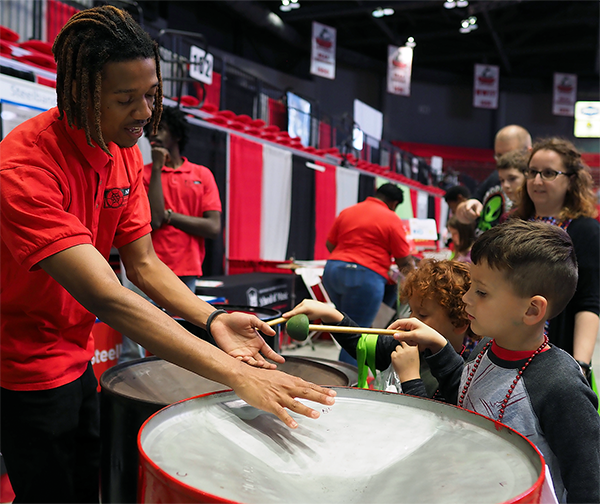
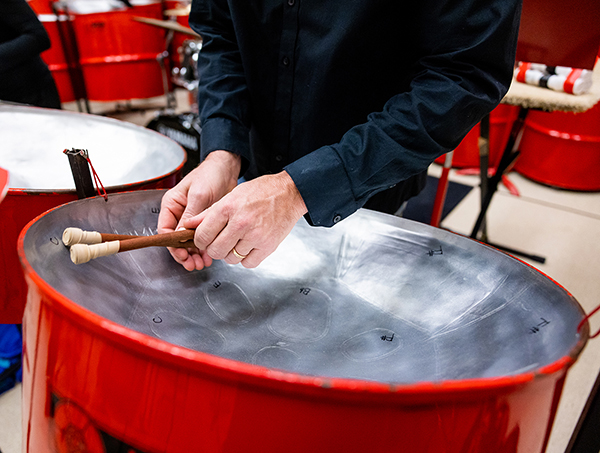
In April, NIU will celebrate the 50th Anniversary of its Steelband. So, what is a Steelband? Traditionally, the steelpan instrument, invented in Trinidad and Tobago, is made from a 55-gallon oil drum that is carefully shaped and tuned to produce specific musical notes. It’s played by striking the surface of the instrument with a pair of sticks or mallets with rubber tips. The steelpan is unique in that it can produce a wide range of musical notes and can be used to play a variety of musical styles. Each type of steelpan has its own unique sound and range of notes, making it possible to form a steel orchestra with a full range of musical tones.
Al O’Connor was the visionary founder of the NIU Steelband in 1973. In the 1980s, Dr. Clifford Alexis, a legendary Trinidadian steelpan performer, composer and craftsperson joined NIU Steelband as co-director and steelpan builder and tuner.
In the 1990s Liam Teague, a world-renowned steelpan performer from Trinidad, came to study at NIU and became an NIU professor in the early 2000s. He is professor of music and head of steelpan studies at Northern Illinois University, where he also directs the NIU Steelband. Teague is also the recipient of an NIU Presidential Research, Scholarship and Artistry Professor Award.
Hailed as the “Paganini of the Steelpan,” his commitment to demonstrating the great musical possibilities of the steelpan has taken him throughout the world, and he has received many awards from his homeland of Trinidad and Tobago, including the Humming Bird National Award (Silver) and the Ansa McAl Caribbean Award for Excellence. You can learn more about Professor Teague on his faculty page.
His students have gone on to become world leaders in steelpan. In 2000, the NIU Steelband earned second place at the World Steelband Music Festival – an outstanding accomplishment. Yuko Asada says, “The NIU program has earned a sterling reputation due to its distinctive qualities, impressive achievements and recognition received by its faculty, staff, alumni and students.”
Yuko Asada, Director of the CSA (Community School of the Arts) Steelband and a Musical Instrument Technician at NIU School of Music co-founded the Pastiche Steel Ensemble, which offered exceptional performances, steelpan education and original works. Yuko co-developed innovative steelpan projects such as Virtual Steelband (2015 and 2017) and Pan in Unity (2020) which featured approximately 700 performers from 23 countries.
Yuko Asada, originally from Japan, was introduced to steelpan at the age of 15 in West Virginia. Originally a piano major, Yuko became captivated by steelpan tuning by Dr. Ellie Mannette and traveled to Trinidad and Tobago to participate in the world’s largest steelpan competition, Panorama. She pursued a master’s degree at NIU specializing in steelpan construction under Dr. Clifford Alexis. She received invitations to present at the Percussive Arts Society International Convention, as well as at the International Conference and Panorama held in Trinidad and Tobago. Currently, Yuko is collaborating with NIU engineering students to develop a mechanized method of constructing steelpans. Yuko was featured in two documentaries: Women in Pan, created in Trinidad and Tobago in 2022, which celebrates women’s achievements in steelpan, and a 30-minute Japanese documentary called “Gutto Chikyubin” in 2017 and 2020.
Yuko Asada has been a regular participant in NIU STEM Fest and will be featured with her students on The Sound of Science on WNIJ in April. Her goal is to work with NIU STEAM to introduce the steelpan to a wider audience and foster a sense of community.