

April Winning Ideas – Earth Day Extravaganza
By Jess Winn, NIU STEAM Educator
In this episode of Winning Ideas, let’s give the planet a hug this Earth Day!
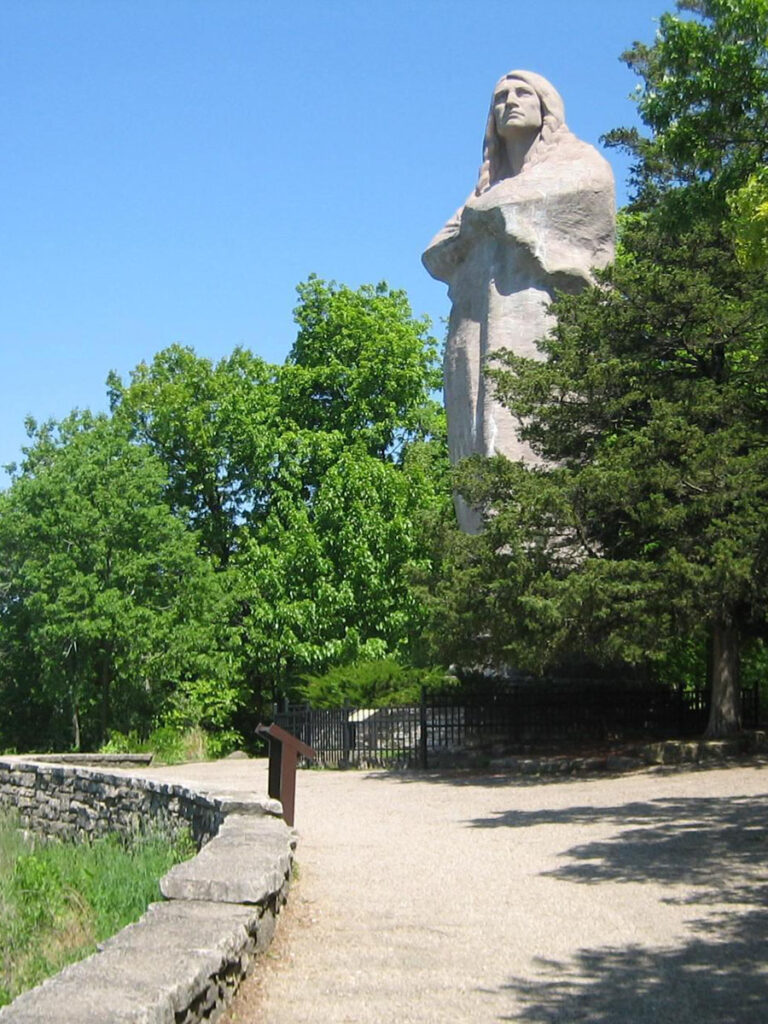
Imagine this – it’s the break of dawn, the sun is just peeking over the horizon, the sky is clear with just a few clouds that turn orange-y pink at the first rays of light, everything is still and quiet. Then, from the trees and fields comes a cacophony of songs and noises – birds, bugs and even the occasional fish jumping out of the Rock River. Everything is coming alive and welcoming you to a new day.
You head to breakfast, sitting in a terrace on a cliff, overlooking the river, turkey vultures floating low, right at eye level, the trees bright and green, and the smell of fresh cinnamon rolls wafting through the cool, clean morning air. You are waking up on your first morning at summer camp! This is no ordinary summer camp, though – this is an NIU STEAM summer camp. You are at Lorado Taft, NIU’s outreach field campus nestled in the woods and sitting atop imposing cliffs overlooking the Rock River.
Once an artists’ retreat during the late 1800s, this peaceful respite from city life has been under the care and maintenance of NIU for nearly 75 years. As the art scene was growing in Chicago, a group of artists sought creative isolation from the hustle and bustle of city life. They escaped and created the Eagle’s Nest Colony on the estate of wealthy lawyer, Wallace Heckman. For decades, artists came and went, creating beautiful art and setting the scene for preservation of wilderness spaces in Illinois. In 1951, then NIU President Leslie Holmes sought to purchase the land and build it into the teaching campus it is today. A sanctuary for birds and wildlife, Lorado Taft is also an opportunity for people to learn how to coexist with nature peacefully. Today, the campus hosts groups, researchers, and students all seeking the peaceful environment, rich in learning and art.

One of the biggest tasks of honoring the land and ensuring its care for future generations has been keeping the land, plants, and wildlife healthy. The work is never ending! The staff at Lorado spend time curating healthy trails, clearing dead brushes, and removing invasive species from the land. But everything looks like it belongs, you may say. What are invasive species? According to the USDA, invasive species are “non-native plants and animals living in areas where they do not naturally exist.” Their presence or introduction will “likely cause economic or environmental harm or harm to human health.” For Taft, that typically means invasive plants that grow really well in the area, but their growth and spread chokes out the native species causing them to die off and change the dynamic of the environment.
While some changes have happened naturally as the landscape has evolved, some come in quickly and take over rapidly. Let me share an example from Alaska, where I lived before moving to Illinois. Students studying at the University of Alaska, Fairbanks, accidentally released bird vetch, a beautiful purple flower that grows like a vine. The bird vetch spread like wildfire – choking out many native species, including fireweed, by climbing the plants and monopolizing the sunshine. Fireweed, an important pollinator and a plant honored by the first people of Alaska as a way to evaluate snow fall, know the changing of seasons, and an important part of the diet, can’t compete with the bird vetch, with its voracious growth and appetite for sunshine. Volunteers and state and federal workers are currently seeking to eradicate the species from as many places as possible, but it’s hard. Once an invasive species takes hold, its removal becomes almost a full-time operation.
At the Taft Lorado Field Campus, garlic mustard and honeysuckle have begun trying to take over the hardwood and pine forests we are working to preserve and protect. To remove garlic mustard, workers are pulling it up, ensuring they have the roots so it doesn’t regrow. That means bending and pulling each plant by hand and with tools. For honeysuckle, campus employees are cutting back branches and trying to remove their roots, or if they can’t get the roots, applying an herbicide (plant killer) to the cut areas to prevent future growth. These are labor intensive jobs – but they are carefully done to protect the native plant species as well as the bugs, birds and other creatures that depend on our forests for a safe space.
The job of nature preservation is incredibly tough! So you may now be asking: how can you help, especially since it’s almost Earth Day? There are a lot of ways people can help! Especially in their own gardens, yards, windowsills, etc. It all starts with knowing what’s local. In the Chicago region alone, nearly 45% of trees that are planted in yards and outdoor areas are considered invasive. Here are some tips to help you avoid those.
- Don’t just select plants that you saw in that one movie from a faraway land – those likely aren’t suited for your environment!
- When you go to the store to purchase a plant for your yard or garden – ask the employees if the plant you want is a native or invasive species. If you shop with local growers, they often can tell you all about the plants you are selecting.
- Before going to the store, do some research on invasive plants in your area. Keep this in mind: most vegetables are considered “non-native,” but because they don’t spread and take over and they are easy to contain, they are not considered invasive.
- If you’re feeling truly inspired to protect our native land, consider volunteering with your local forest or park district.
- You can also look for information on the Chicago Region Trees Initiative, which will help you find volunteer opportunities, removal options, and safe species to plant in your yard.
- If you’re looking for an easy lift – visit your forest preserve website to see what fun events they have planned for Earth Day. Maybe you’re planting a native species tree or out cleaning up the parks. Who knows – you might inspire the next generation of conservationists to help take care of our home – good old planet earth.
Hey friends! NIU STEAM Summer Camps are coming up soon! Take a moment to register your kiddos for camp. We offer day camps for students in grades 2 through 5 and middle school, overnight STEAM camp for middle school at Lorado Taft Field Campus, and college/career focused hands-on resident camps for high school students. Act quickly – early bird pricing ends April 30!


Don’t forget to share your projects with us! Tag #NIUSTEAM and @NIUSTEAM for a chance to be featured in our weekly newsletter. And as always, do good things, be good people, and make yourself better than the day before.
References
About – niu – lorado taft. Northern Illinois University. (n.d.). https://www.niu.edu/taft/about/index.shtml
Bird Vetch. UAF Cooperative Extension Certification Course. (n.d.). https://birdvetch.open.uaf.edu/
Invasive species hub. Chicago Region Trees Initiative. (2022, April 26). https://chicagorti.org/program/stop-invasives/#overview
U.S. Department of the Interior. (2021, January 14). Fireweed wayside at western arctic national parklands (U.S. National Park Service). National Parks Service. https://www.nps.gov/places/fireweed-wayside-at-western-arctic-national-parklands.htm
Walk, B. (2020, March 17). Lorado Taft field campus is established (1951). NIU 125 Key Moments. https://125keymoments.niu.edu/lorado-taft-field-campus-is-established-1951/
What are invasive species?. What are Invasive Species? | National Invasive Species Information Center. (n.d.). https://www.invasivespeciesinfo.gov/what-are-invasive-species