

From Fish Schools to Robot Swarms: The Unexpected Science of How We Move Together
What if the secret to designing a better robot was hidden in the swirling dance of a fish school? Or the chaotic, humming cloud of a mosquito swarm? What if understanding these natural patterns could even help us design safer buildings and manage crowded spaces?
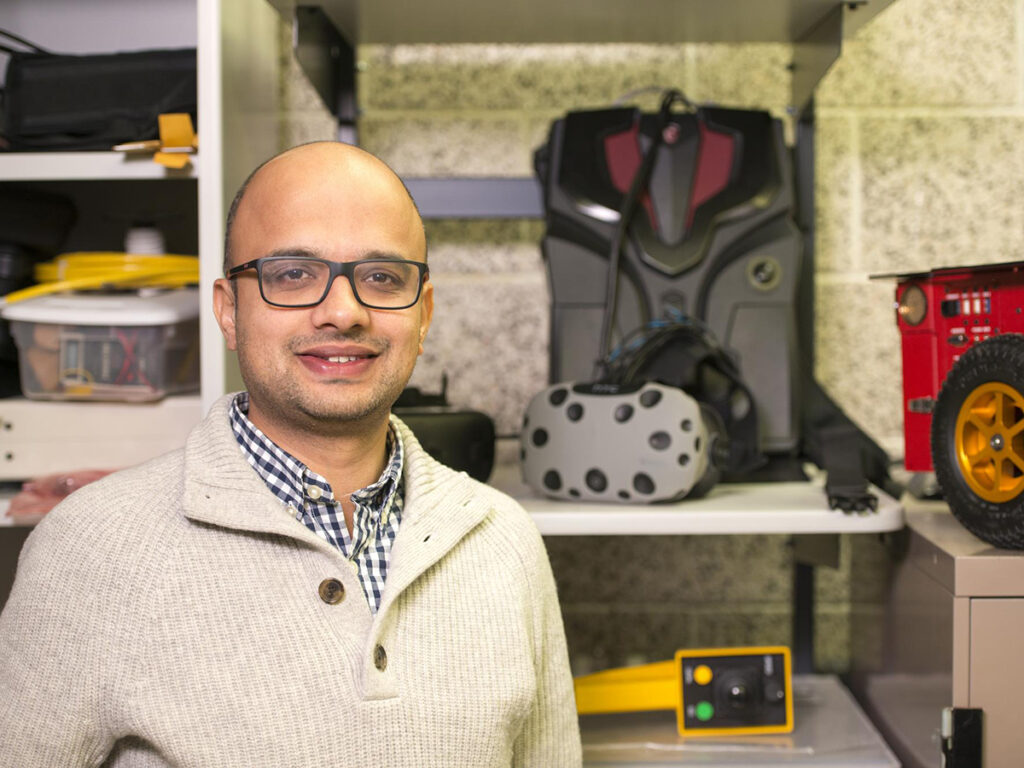
It sounds like the premise of a sci-fi novel, but for Sachit Butail, PhD. an Associate Professor of Mechanical Engineering at NIU, it’s just another day at the office.
On the latest episode of STEAM Studio Spotlight, we sit down with Professor Butail for a conversation that truly embodies the spirit of interdisciplinary discovery. If you’ve ever thought that engineering was all about gears and equations, this talk will open your eyes to a world where biology, psychology and robotics collide in the most fascinating ways.
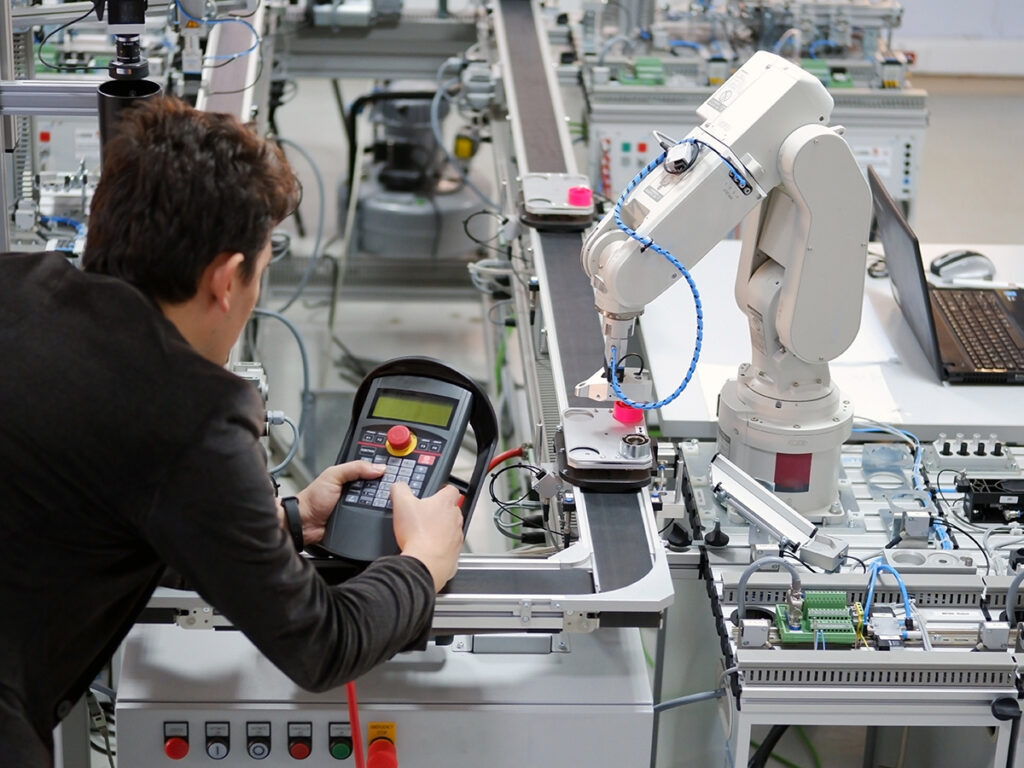

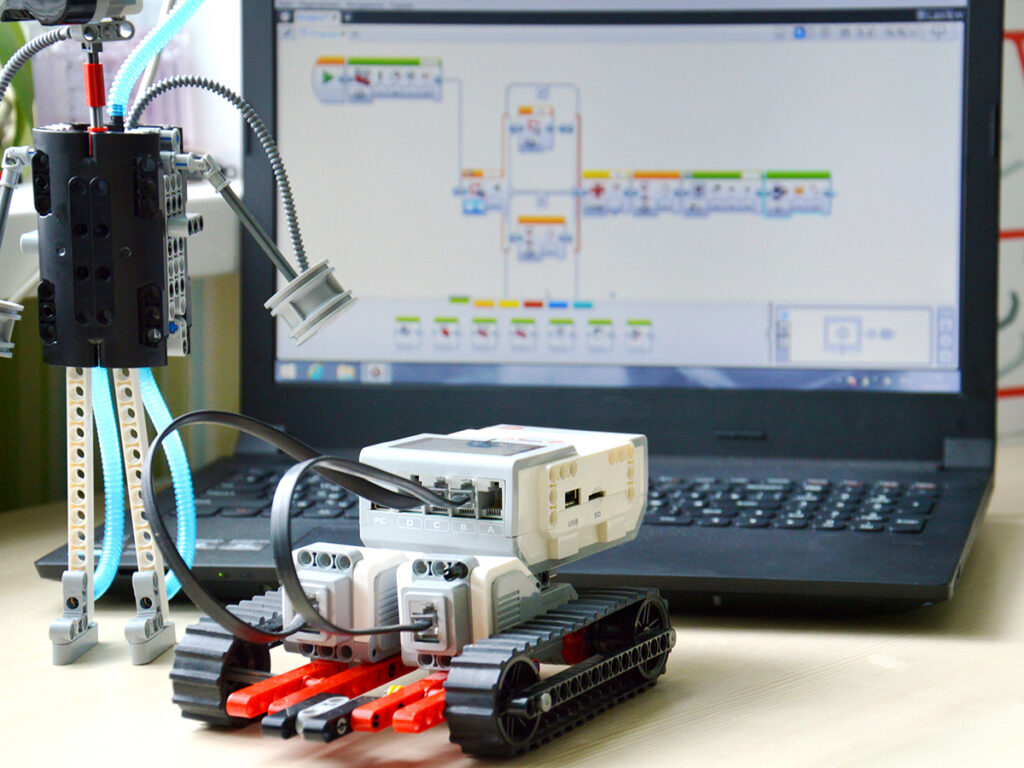
Professor Butail’s journey is anything but linear. It’s a riveting tale that begins with a fascination for spacecraft formation flying and takes a sudden, deep dive into the underwater world. He found himself asking a simple but profound question: How do fish move with such incredible coordination and agility? And more importantly, could we ever program robots to do the same?
His quest for answers led him from tracking fish in massive tanks to a unexpected collaboration that sent him all the way to Africa to study the swarming behavior of malarial mosquitoes. The connection? The same mathematical models used to decode the movement of a fish school could be adapted to understand the complex patterns of a mosquito swarm. It’s a stunning example of how a tool developed in one field can unlock mysteries in another.
But the story doesn’t end there. When Professor Butail arrived at NIU, he changed his focus to a species even more complex and familiar: us.
He now applies those same principles of collective behavior to human crowds. Using advanced virtual reality simulations and intricate mathematical models, his lab explores how we behave in crowded spaces, from a busy mall to a high-stress emergency evacuation. The goal is serious: to use this knowledge to design safer public spaces and more effective emergency protocols.
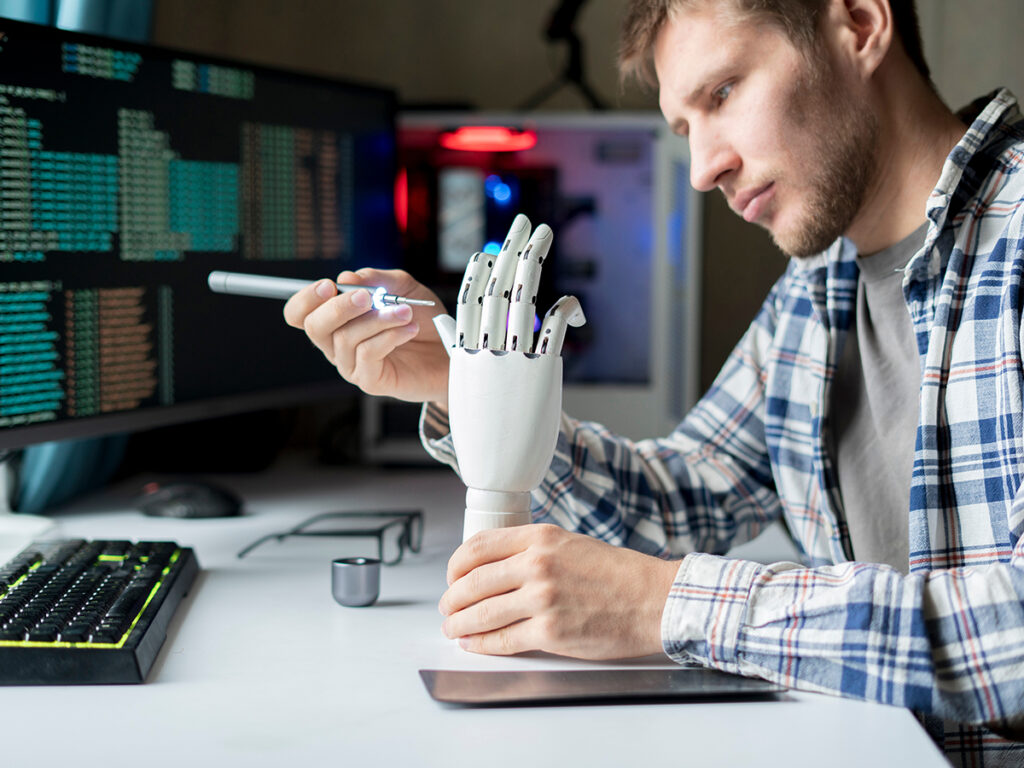
And then, of course, there are the robots. Professor Butail’s work comes full circle as he explores human-robot interaction. Imagine a future where a robot could detect stress in a crowd during an emergency and subtly help guide people to safety. Or where a swarm of search-and-rescue robots could assess a human operator’s awareness and decide to step in and help—all through non-verbal cues. This isn’t science fiction; it’s the cutting-edge research happening right now.
Professor Butail is a brilliant and wonderfully conversational guide into this complex world. He breaks down sophisticated concepts into engaging stories, reminding us that the most innovative ideas often come from connecting dots between seemingly unrelated fields.
This episode is a must-listen for anyone curious about the hidden patterns that govern our world, the future of robotics, or the simple power of asking, “What if?”
Listen to the full episode of STEAM Studio Spotlight with Professor Sachit Butail wherever you get your podcasts.