

Lemon Lessons: Food as a Teaching Tool
Debbie Kerman, NIU STEAM Assistant Director
When life gives us lemons – we make science!
August 29 is National Lemon Juice Day, not to be confused with National Lemonade Day, celebrated annually on May 5. Lemon juice is the liquid extracted from a lemon when the pulp of the fruit is smashed. While in the U.S., lemon juice is probably best known as an ingredient in lemonade, it’s used for a variety of other purposes, including culinary, health, hygiene, and cleaning.
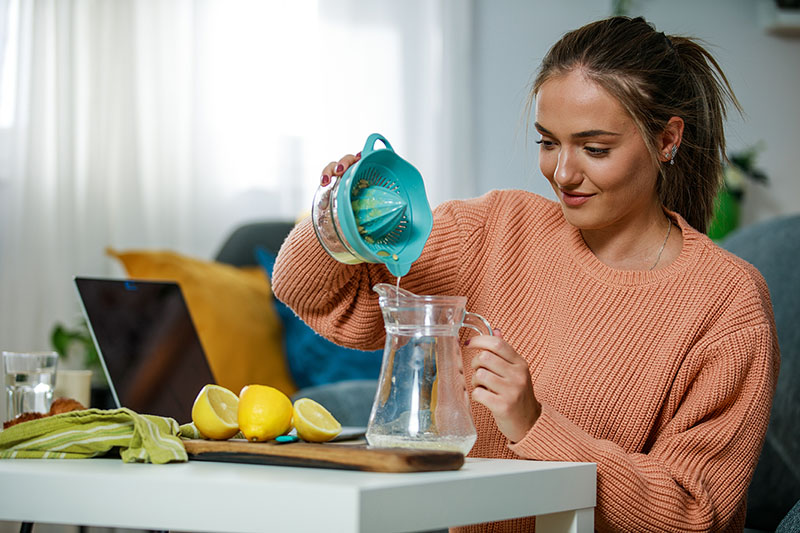
But our favorite use of lemon juice, of course, is as a teaching tool! Here are some fun lessons to teach about acids and bases, chemical reactions, and more.
- Lemon Science Experiments: These experiments are great for home or the classroom, and they only take five to ten minutes. Designed for preschoolers, the lessons are also fun for older kids.
- Lemon Juice and Baking Soda Reaction Project: This lemon fizz project uses simple home ingredients but makes an impressive show!
- Lemon Juice Invisible Ink: Is there anything more fun than writing secret messages in invisible ink? If you have an iron and a lemon, you can practice this spy technique.
- Oxidation Transformation: This middle school lesson from our FoodMASTER curriculum uses lemon juice to teach students about enzymatic oxidation. Keep reading to learn more about this lesson and FoodMASTER!
FoodMASTER: Using Food to Teach Applied Mathematics and Science
Lemon juice is just one of the ingredients found in the FoodMASTER curriculum, an education program designed to bring real-world learning opportunities to students by combining food with math and science concepts. Students in grades 3+ learn about measurement, numbers and operations, algebra, geometry, biology, chemistry, nutrition and health, problem solving and more while having fun with food.
One of my favorite FoodMASTER lessons, Oxidation Transformation, is a middle school lesson in which students use lemon juice to learn about enzymatic oxidation. Have you ever sliced an apple for a child and watched it turn brown before he or she got the chance to eat it? It sure doesn’t look very appealing when enzymatic browning sets in. With this lesson, students learn about enzymatic reactions and how they can use antioxidants like vitamin C (found in lemon juice) to reduce the browning damage that causes an apple to look unappetizing. Students also explore the idea if antioxidants can help prevent damage in an apple, can it also similarly help prevent damage in humans.
FoodMASTER is a STEM curriculum that was created by two educators who saw the need for an authentic, interactive approach to engaging underserved youth in math and science. Because students use food daily, they are able to build on background experiences while learning new and relevant skills and content in fun and hands-on ways. FoodMASTER is available for grades 3-5, 6-8, high school and higher education. Curriculum is available without cost thanks to the generous funding support of program sponsors. As you head back to school this fall, we invite you to visit the FoodMASTER page to learn ways to incorporate lessons with your own students or family! If you try a lesson, we’d love to hear your feedback at NIUSTEAM@niu.edu.