
From Hot Glass to the Large Hadron Collider: A Conversation with Particle Physicist Jahred Adelman
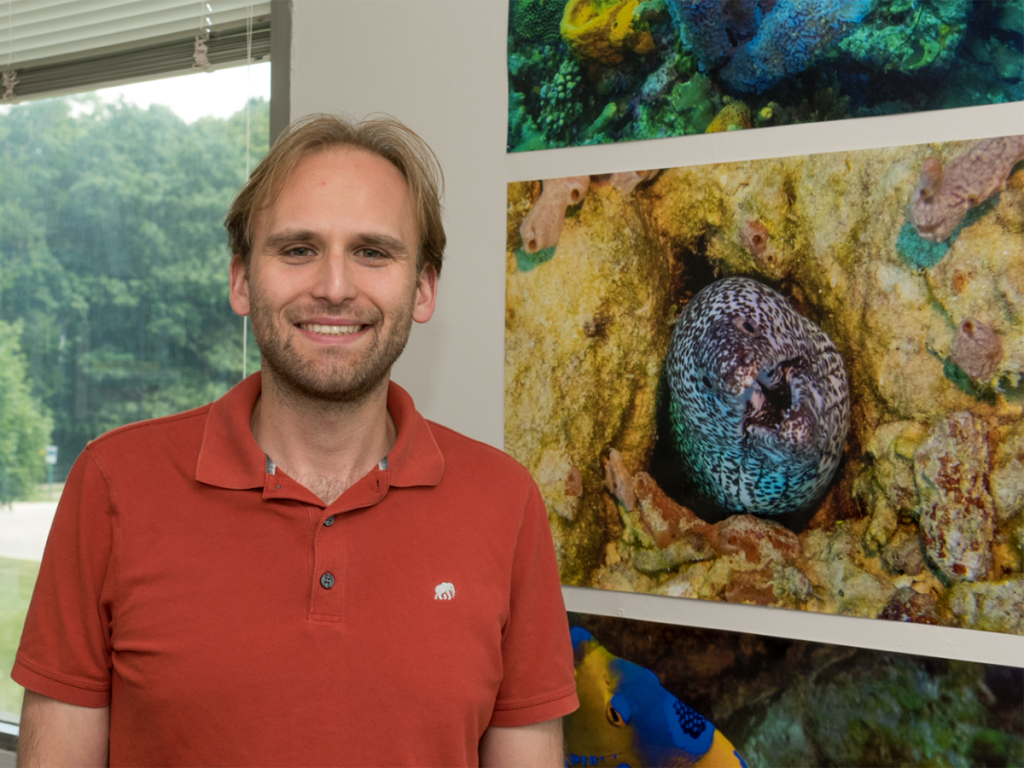
Of all the tools in a physicist’s arsenal, perhaps the most humbling is a hot piece of glass. Just ask Professor Jahred Adelman Ph.D.
In the latest episode of the STEAM Studio Spotlight podcast, the NIU physics professor recounts his early academic detour into chemistry—a path that ended abruptly in an organic chemistry lab. The assignment was simple: heat a glass pipette over a flame and pull it into a fine point. The problem? Glass, as the aspiring physicist soon learned the hard way, is a terrible conductor of heat.
“I wasn’t having any success,” Jahred recalls with a laugh. “The professor came over and said, ‘Can I take a look? Is it hot?’ I said, ‘No,’ because the part I was holding wasn’t hot. I gave it to him. He touched it, screamed, and dropped it.”
It was a pivotal, if slightly painful, moment of clarity. Chemistry wasn’t for him. But a casual invitation from a professor to do some undergraduate work on a particle physics experiment at Fermilab? That clicked. He was hooked by the blend of profound questions and the computers used to answer them. “I sort of never looked back,” he says.
That winding road led Jahred to where he is today: a professor for over a decade, deeply embedded in one of humanity’s most ambitious scientific endeavors. His primary research home is the ATLAS experiment at CERN, the European particle physics laboratory that houses the Large Hadron Collider. ATLAS is, in his words, a “giant digital camera” surrounding a point where protons scream into each other 40 million times per second. The goal is to capture what flashes into existence in those collisions, testing our fundamental understanding of the universe.
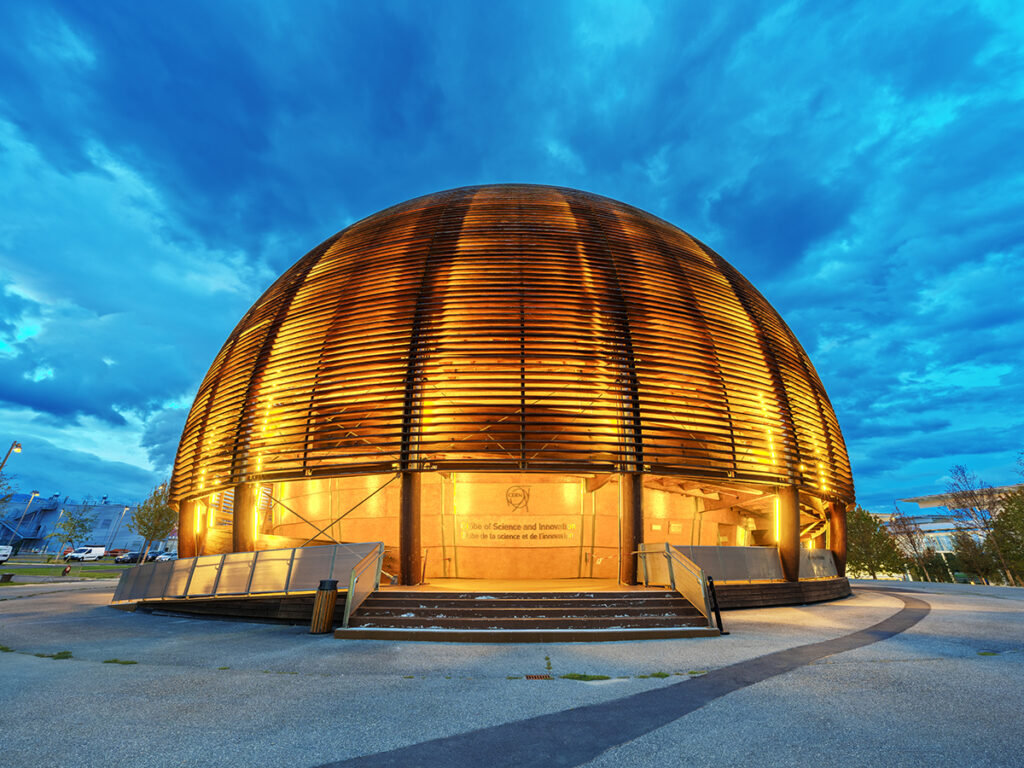
The conversation is a refreshing departure from the stereotype of the lone scientist toiling in isolation. Jahred paints a picture of modern science that is vast, collaborative, and deeply human. The ATLAS collaboration, for instance, publishes papers with thousands of authors. This is big science in every sense: big teams, big data, and very big machines (the collider itself is a 17-mile ring).
But what does the day-to-day of a particle physicist look like? Far less time staring at equations on a chalkboard than you might think. A huge portion of the work, Jahred explains, is computational sifting through “insane amounts of data.” Particle physicists were among the original “big data” scientists, and the skills cultivated in the field—data analysis, machine learning, software development—are directly transferable to countless industries. “That’s basically what our analyses are,” he notes, “sorting through huge amounts of data to understand what we see.”
The episode gets wonderfully meta when the discussion turns to communication. Jahred highlights the critical, often underappreciated, skill of translating complex ideas for different audiences. Talking to a fellow physicist is one thing; explaining the nuances of mass versus weight to an intro physics student, or the wonder of particle collisions to the public, is another challenge entirely. It’s a skill he’s actively honing for an upcoming STEAM Cafe talk where he’ll use the physics of Olympic sports—like the angular momentum of a figure skater’s spin—to make foundational concepts accessible and exciting.
Perhaps the most relatable moments come when Jahred pulls back the curtain on the unglamorous, universal truths of a career in research. No one warned him, he admits, about the sudden, vital need for organizational skills and to-do lists as a grad student. And as his career has progressed, he spends more time on the necessary logistics of science: writing grants, managing budgets, and yes, wrestling with spreadsheets. “The further you progress,” he says, “the further you get away from the actual science sometimes… I still can do [analysis], but every year I do less and less of that and more and more of writing grants and dealing with spreadsheets.”
It’s an honest and humanizing look at a field often shrouded in abstraction. This episode isn’t just about the Higgs boson or the mysteries of the quantum realm. It’s about finding your path through trial and error (and hot glass). It’s about the collaborative heart of modern discovery. It’s about how the quest to understand the smallest bits of the universe teaches you skills that shape the wider world.
So, if you’ve ever wondered how someone ends up working on a mega-experiment in Switzerland, or what particle physicists actually do all day, or you just enjoy a good story about a career path that began with a failed bicycle brake assignment, give this conversation a listen. You’ll come away with a new appreciation for the scale, the teamwork, and the very human stories behind our biggest questions.