
Impact of Development on Groundwater Quality and Resources in Cambodia
By Melissa Lenczewski, Professor of Contaminant Hydrogeology, Northern Illinois University Department of Earth, Atmosphere and Environment, and Institute for the Study of the Environment, Sustainability and Energy
For World Water Day on March 22, we’re sharing a series of blog posts diving more deeply into this vital resource.
Dr. Lenczewski is a Fulbright ASEAN Research Scholar currently conducting water research in Cambodia funded by the Fulbright U.S.-ASEAN Visiting Scholar Initiative Program. In celebration of World Water Day, we asked her to share a bit about her research.
As the Earth is changing, so is our relationship to water. Whether for agriculture, industry or personal consumption, our current use of fresh water is unsustainable. In many parts of the world, especially the Southeast Asian country of Cambodia, access to clean, safe drinking water is unavailable. Climate change, difficulties in collaborating with neighboring countries and increasing populations will have significant impacts on groundwater quality and availability, with demand for water increasing dramatically in the coming decades.
Groundwater is the water that exists underground, in soil or in crevices or pores in rock. Groundwater cannot be seen. Therefore, it is often forgotten, leading to overexploitation or pollution from surface activities. Worldwide, 2.5 billion people rely solely on groundwater for drinking water. Agriculture uses groundwater, especially in times of drought or changing climate patterns, while industry uses groundwater for production of goods. Activities on the Earth’s surface, especially in urban, high population areas, can increase pollution, while in rural areas a lack of wastewater treatment threatens this resource. In addition, natural pollutants such as arsenic, fluoride or salt can be exacerbated by changing water use. Understanding the current and changing state of the quality of local groundwater resources can aid in planning for the future even with climate change.

Phnom Pehn, the capital city of Cambodia, is experiencing rapid growth and development with little regard to groundwater and surface water quality. Boeng Tompun and Cheung Ek wetland located south of the city is a large wastewater treatment wetland that services approximately 90% of the combined storm water and untreated municipal wastewater from the city. That’s right – the natural processes of these wetlands can actually filter out contaminants and improve water quality! Currently, nearly the entire wetland is being filled in to make room for more malls and high-rise buildings – which could be disastrous for water quality in the region.
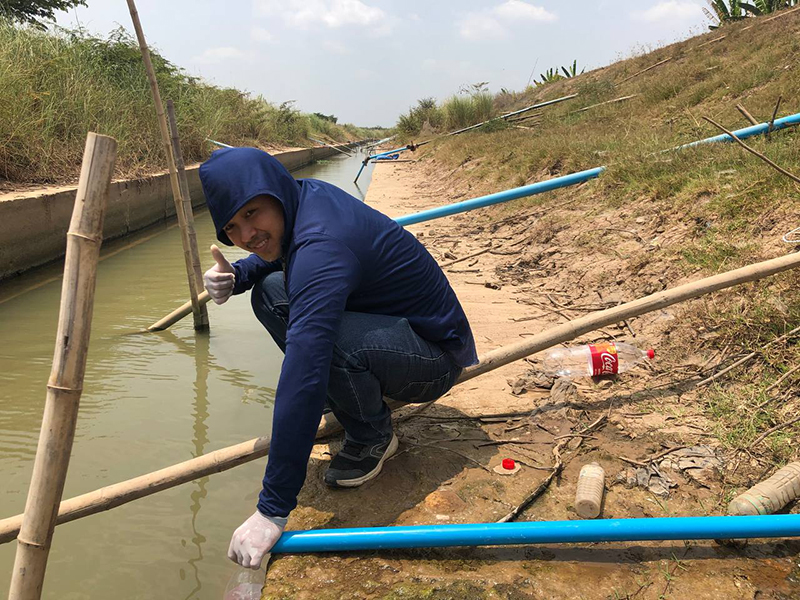
During my Fulbright to Cambodia, I have been working with two universities on water related issues. With the Royal University of Phnom Pehn (RUPP) we sampled groundwater and surface water in the Boeng Tompun region from where the raw sewage enters the lake to where it discharges into the Bassac River. Two students from RUPP who are majoring in Environmental Studies went with me to sample around the lake.
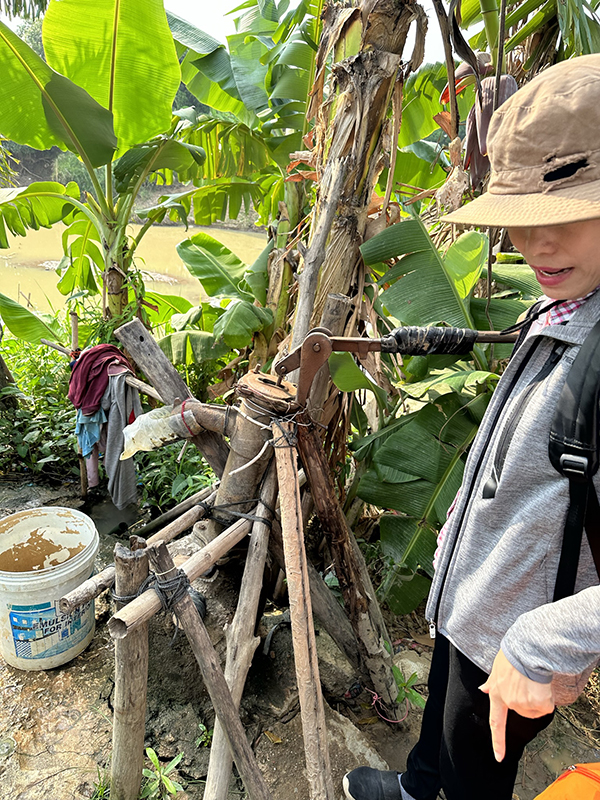
Another issue associated with development is changing water levels due to damming up the Mekong River. In a region called Koh Thom, irrigation canals bring river water to the important rice, mango, corn and banana fields. This region helps feeds the citizens of Phnom Pehn. With the new development, water resources and quality are changing, which will have a major impact on agriculture and food production. Researchers from Institute of Technology of Cambodia (ITC) examine groundwater from shallow and deep wells to determine changes to the geochemistry of the water – in other words, the chemical properties of the water. The deep wells are not currently used due to high iron and other noxious minerals in the water, but with decreases in the amount of water available to irrigate the fields, soon this water might be needed to help keep up food production and provide water for the farmers.
Cambodia is a beautiful country and has so much to offer the world. Water is important factor in the lives of all Khmer people. We hope that with a better understanding of the water cycle, the country will be able to thrive in a changing world.