
Celebrating Valentine’s Day with STEAM!
By Becky Griffith, NIU STEAM Instructor
At NIU STEAM, we love to combine holidays with learning! Grab some Valentine candy hearts for a fun and exciting science activity to explore the concept of solubility. This sweet sugary treat is perfect for testing how quickly they are able to dissolve in different types of substances. (Just make sure you save some candy for yourself to snack on!)
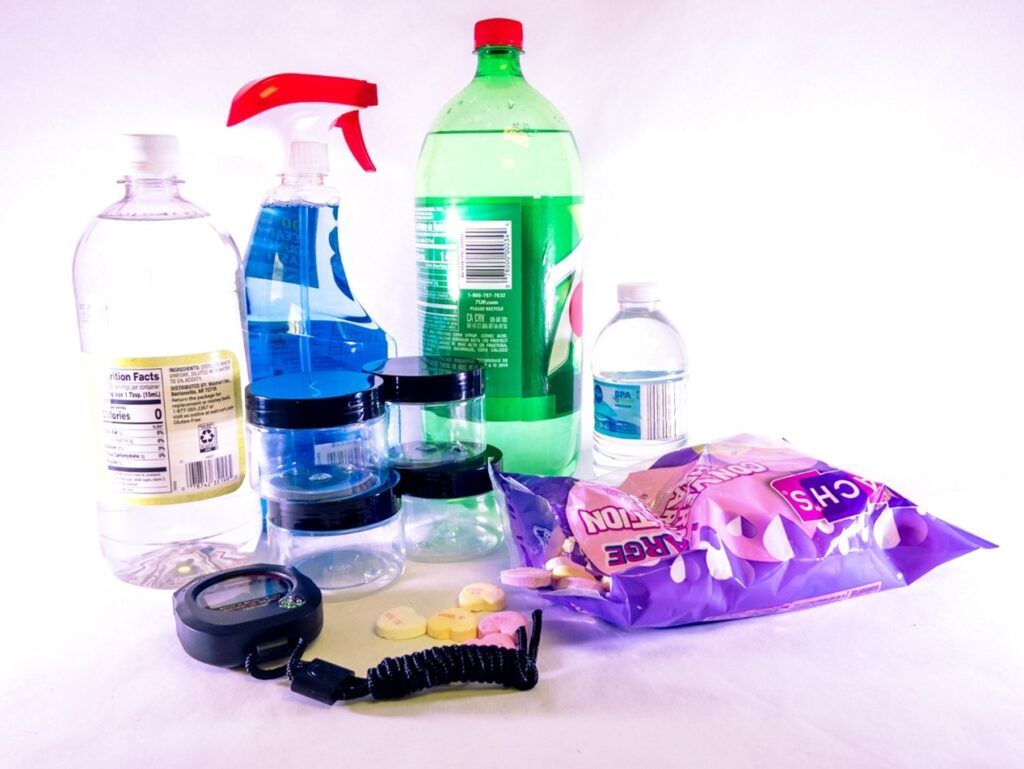
Before you begin, make sure you have an adult to help you gather all of the supplies you’ll need to conduct and carry out this investigation. You’ll want to use a variety of different liquids for this activity. We recommend using water, white vinegar, household cleaner, and clear soda. You could also try other options such as dish soap, oil, juice, hydrogen peroxide, or rubbing alcohol. Whatever liquids you choose, note, it will be easiest to capture the dissolve rate in a clear or a lighter solvent.
In addition to the various liquids, you will also need:
- Candy hearts
- A stopwatch
- 4 small jars or bowls, cleaned and dried
- Paper
- Pencil
Step 1:
Set out your jars/bowls to prepare them for your different solvents. Fill each jar/bowl about halfway with a different solvent. Use paper and tape to label each jar with the solvent inside.
Step 2:
Place your stopwatch nearby and set it to zero.
Step 3:
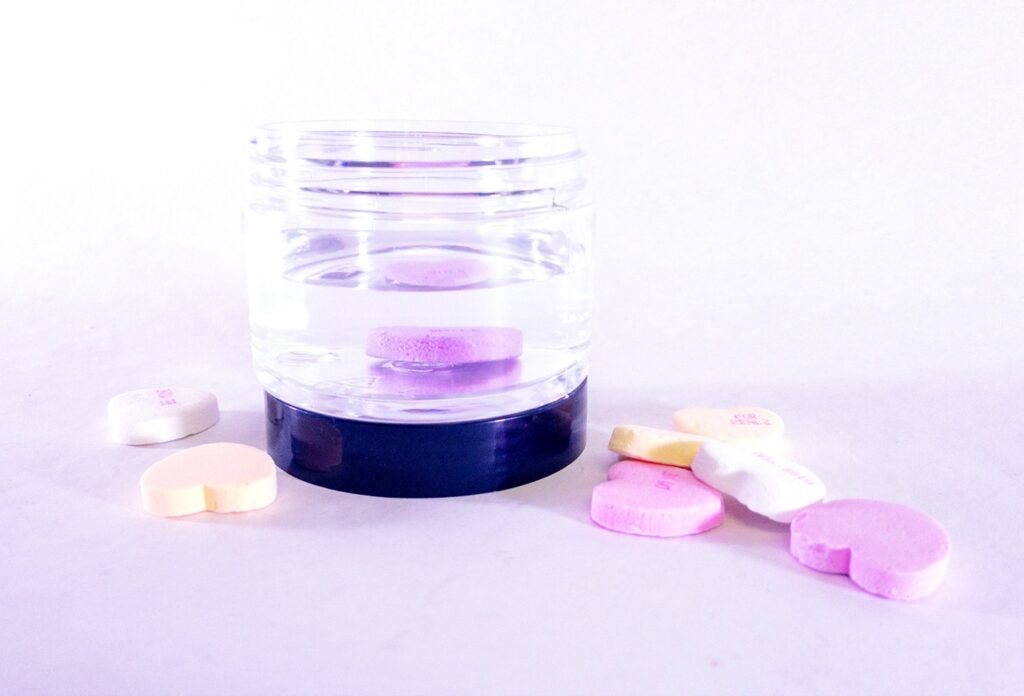
Drop your candy heart in one of your solvents. Press “start” on the stopwatch as soon as the candy heart hits the liquid.
Step 4:
Observe the candy heart as it dissolves in the liquid. Press stop on the stopwatch as soon as the candy heart has disappeared completely. Note: it can take some time for the candy hearts to dissolve in some liquids, such as water.
Step 5:
Document your data. Use your paper to record the name of each liquid and the total amount of time it took for the candy heart to completely dissolve in the liquid.
Step 6:
Reset your stopwatch to zero and repeat steps 3 – 5 with your other solvents.
Step 7:
Reflect on your data.
Did you press start and stop at the same events for every experiment?
In which solvent did the candy heart disappear the quickest? Why do you think this was the case?
Which solvent took the longest to dissolve the candy? Why do you think this was the case?
Were you surprised by how quickly or slowly the candy dissolved in any of the solvents?
Do you think the candy color or message impacted the data? Why or why not?
Visit our social media channels to let us know if you tried this activity. We’d love to see your pictures and learn about your results!
Happy Valentine’s Day from all of us at NIU STEAM!