

Who Needs Sleep – A Short Reflection
By Chrissy Swartz, NIU STEAM Educator
About 10 years ago while talking with a friend, I was given an ultimatum. “You need a bedtime. I don’t care if it is 7 p.m., or 10 p.m., or one in the morning. You need to pick a time and go to bed at that time every night. You drive me absolutely nuts when you are sleep deprived. If I am truly your friend, and you truly value our friendship, just go to bed at the same time!” Ok, so maybe I am moody when I am sleep deprived. And perhaps a little angsty and overwhelmed. And maybe I grab on with both hands to things that would normally roll off my back and obsess about them until a bean bag chair, a blanket and soft teddy bear intervene. But it can’t just be me, right? There must be some physiological truth to getting enough regular sleep to not make me lose friends, neighbors and coworkers.

November is National Sleep Comfort Month, so what better time to talk about sleep regularity than right now! I used to listen to life productivity experts who would tell us that the more hours you have in the day, the more you get done in a day. Those that get ahead, work while others are sleeping. And as someone who always feels two steps behind, this resonated with me! In 1993, on the album Keep the Faith, Bon Jovi released an entire song entitled, “Sleep When I’m Dead,” so it’s got to be a thing! For some people it might be, but what does the Science say?
There are some crucial physiological processes that occur while a person is getting their 40 winks. The brain participates in memory consolidation where it strengthens pathways to new memories, ideas and learned material and makes them easier to recall. Sleep also helps the brain purge ideas and memories that are unwanted, not useful, or are not tied to other stored information. This is essential to preventing cognitive overload.
Neuroplasticity is defined as the brain’s ability to change through growth, reorganization and the rewriting of neural pathways. Adequate sleep is essential to the maintenance of brain organization and building new pathways as a function of learning and processing new information, recalling memories, and internalizing life experiences. It is far more difficult to make new wrinkles in that grey matter if it’s sluggish and sleep deprived.
Getting enough quality sleep affects other systems of the body as well. Your immune system relies on your time asleep to produce cytokines which are proteins that prevent inflammation. Natural Killer Cells, a type of white blood cell that is part of the immune system we were born with that target viruses, bacteria, parasites, and cancer cells, can be severely compromised with a lack of shut eye. Other white blood cells that aren’t specifically “employed” but spring to action when an invader is detected, could be lacking in number when your immune system is called upon to keep you feeling as well as possible. This would be akin to launching a battle against 1000 soldiers with only 100 troops of your own.
I can go on about chemical processes like increased cortisol concentration, impaired glucose tolerance, insulin resistance, prediabetes, deposits of protein plaque in the brain and other endocrine concerns raised by lack of sleep, but you all get the picture. Our bodies participate in essential maintenance and growth while we sleep.

So now that we know sleep is important, how to maximize our ability to sleep? One of the most important steps you can take is what my friend Robyn alluded to a decade ago: establish a consistent sleep schedule. Go to bed and wake up at the same time every day, including weekends. You can gradually adjust your sleep schedule until you find the ability to be consistent.
Quality of sleep is just as important as quantity of sleep. Lying in bed staring at the ceiling, thinking about the silly comment you made at a work dinner 5 years ago, doesn’t earn you sleep brownie points because you are lying in bed. Try to create a conducive environment in which to sleep. Make the room in which you sleep as dark as possible; use blackout curtains or shade to minimize external light. Set the thermostat between 60- and 67-degrees Fahrenheit, so that your body temperature can slowly decrease – a message to your brain that it is time to sleep. Keep your bedroom clutter free and free of distractions.
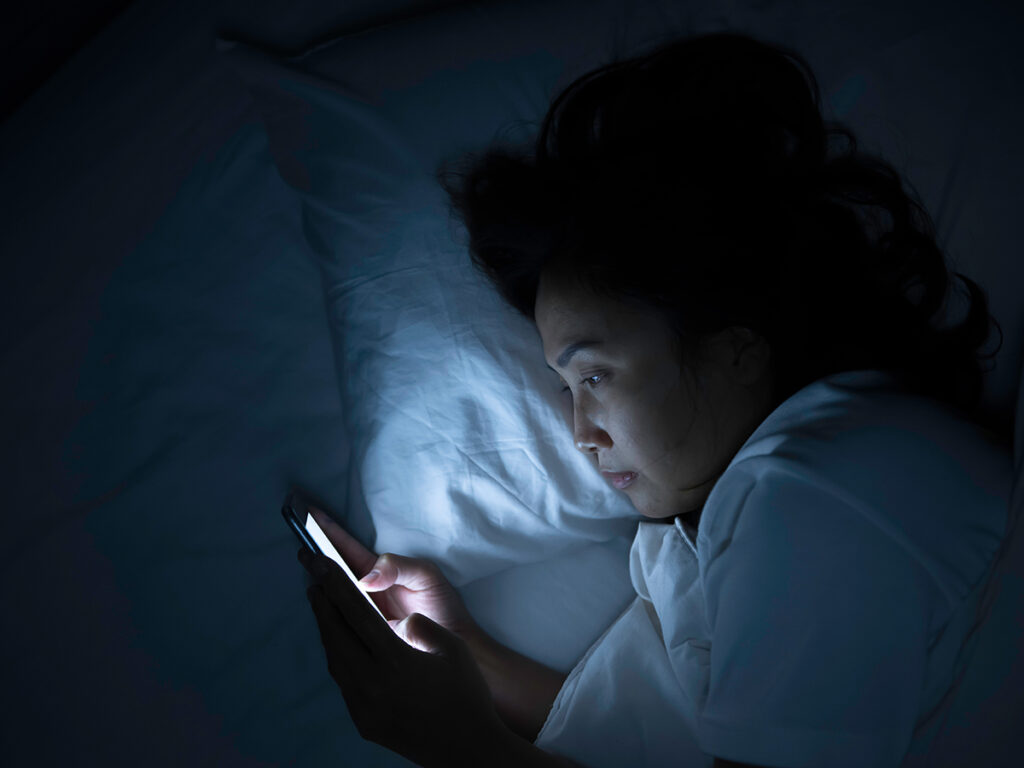
Finally, there are behaviors you can adjust to reap the benefits of good sleep. Avoid electronics and other activities that stimulate your brain at least an hour before bedtime. We talk about this in our Sound of Science episode: Light’s Spectrum and its Effects on Sleep. Cut off caffeine and other stimulants midday, stop eating 3-4 hours before bedtime, and limit naps to 20-30 minutes so that hormones and other signals your body gives to induce sleep aren’t disturbed. Engage in activities that promote relaxation and reduce stress that you have experienced during the day. Build a nighttime routine that helps you wind down and signals to your body that sleep is on the way. Also, if you know you have an underlying health condition that interferes with your sleep, address it right away with professional guidance.
Some of you may read this and have a new baby (or a teenager) in the house, the necessity to work multiple jobs to make ends meet, insomnia, schedules that vary greatly from day to day…you know, life. And all this information is all well and good, but sometimes hard to practice. Of course, individual needs and preferences vary so there is no one-size-fits-all approach. Adjust the parts of your sleep hygiene that are most in your control to ensure that that the quality and quantity of sleep that you are getting is maximized. And if you are someone who has this sleep thing figured out to a Science, please have patience and give grace to those of us that are still trying. We’re just working on trying to find a bedtime.