

Spreading Holiday Cheer, Not Spreading Cookies!
By Becky Swiontek, NIU STEAM Educator
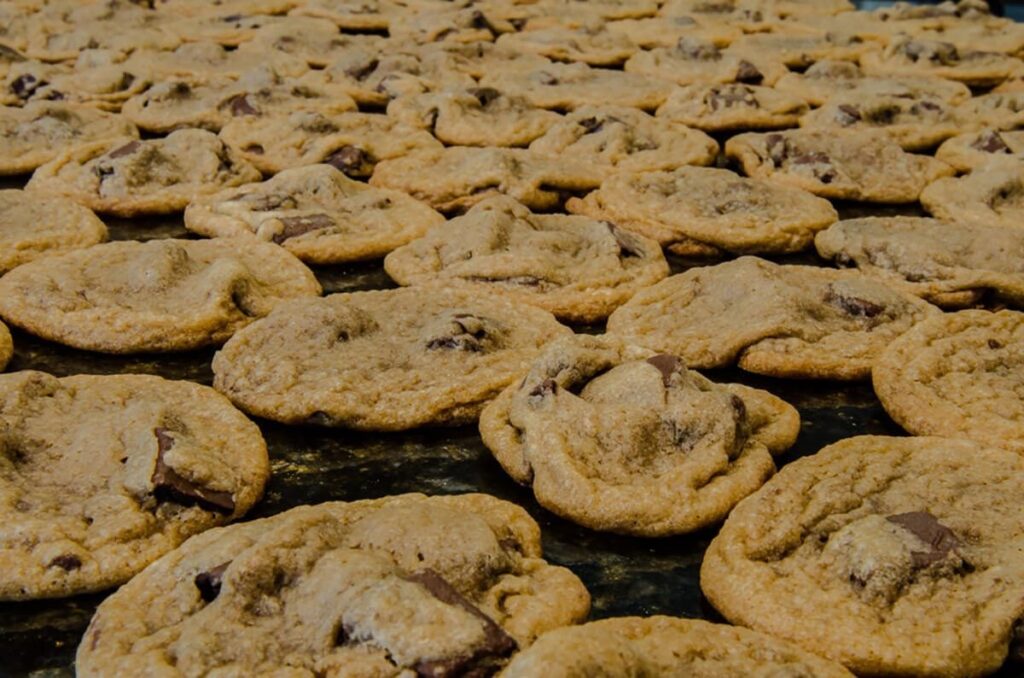
Holiday Baking Championship or Christmas Cookie Challenge anyone? This time of year, I always look forward to the latest baking competitions that are streaming on various platforms. Time after time we see bakers who are super stressed and, when they take their precisely measured/shaped cookies out of the oven, they discover the cookies have spread and become misshapen. If you’re either a science nerd and/or home baker like me, you may be wondering why?
During the process of making your cookie dough, the recipe likely instructed you to cream together room temperature butter with sugar. We know when we take a stick of butter straight out of the refrigerator it’s a very firm solid, which makes it much more difficult to combine with sugar. When the butter is removed from the fridge, thermal energy from the air in your kitchen (or if you’re in a pinch from the soften/melt setting on your microwave) is transferred to the butter molecules. This transfer actually speeds up the movement of the molecules, which results in the butter particles moving a little more freely next to one another. In everyday terms, we now have softened butter.
You may recall from school learning about the differences between solids, liquids, and gases, as well as about changes in state of matter. Both refrigerator and room temperature butter are in the solid state, but room temp is closer to 82-97°F, which is the melting point of butter. Because cookies are generally baked at 350-400°F, the butter will certainly melt and become a liquid during the baking process. However, if the butter reaches the liquid state too early while its baking, the cookie dough will begin to spread.
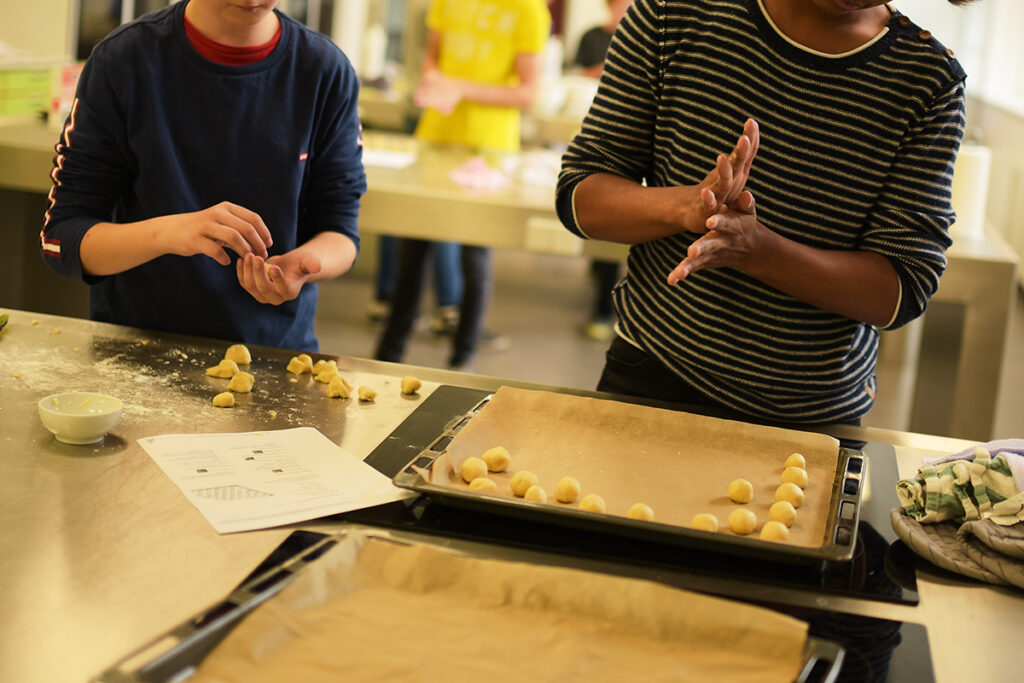
Why does the timing matter? Because of chemistry, of course! The thermal energy from your oven will reach the surface level dough molecules first, causing them to start speeding up. As this transfer continues, the butter molecules closest to the edges will reach their melting point, and the dough in this area will start to spread. This allows for the crystallization process to begin, creating the all-important “cookie dam crust.” As the rest of the butter molecules change to the liquid state, the dough will be held in place by this “dam,” much like a glass or bowl keeps liquids inside from spreading.
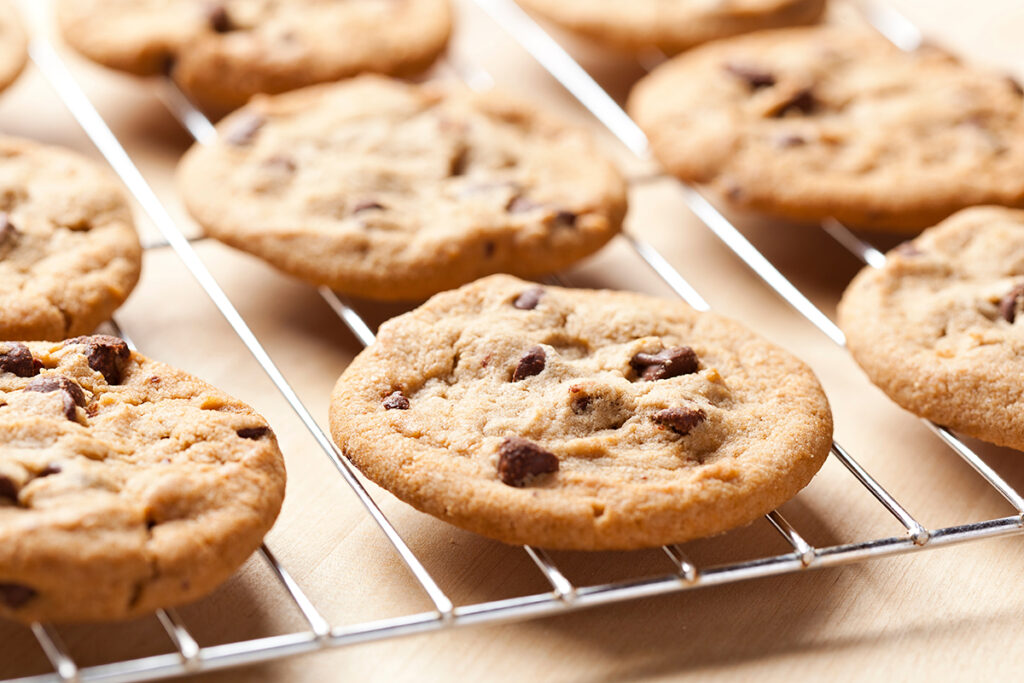
When we put all these ideas together, the solution is to chill your dough in the refrigerator after you’ve formed your cookies. This will bring the temperature of your butter back down to the temp of the fridge and further away from its melting point. As a result, the magical “cookie crust dam” will form before the majority of the molecules reach the melting point. This keeps the dough in the shape and space of where it was placed, resulting in dough that hasn’t spread.
So, the next time you’re watching a holiday baking competition where the contestants are under the time crunch, you can do what I do…yell at any contestant whose goal is to create specifically shaped cookies and skips the dough chilling step because they’re running out of time. “Don’t be surprised when your butter melts too early and your cookies come out in different shapes and sizes!”