

How a Kitchen Computer Sparked a Revolution in Tech Education
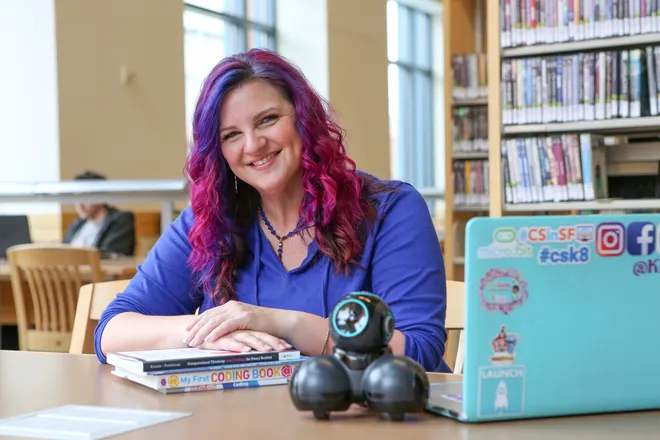
When Kiki Prottsman was a kid, her dad had an unusual rule: A woman’s place is in the kitchen. But this wasn’t some outdated stereotype—it was because that’s where the family computer lived. In an era when most households didn’t even own PCs, Kiki’s father turned their kitchen into a tech lab, encouraging his daughters to experiment, fail, and discover the magic of making things work with code.
That early spark ignited a lifelong passion that would eventually lead Kiki to become one of the most dynamic voices in computer science education today. From developing curriculum for Microsoft MakeCode to writing books that make coding irresistible for kids, she’s on a mission to prove that programming isn’t just for engineers—it’s for anyone who wants to think creatively and solve problems in a world shaped by technology.
Coding as Creative Expression
For Kiki, coding was never just about typing commands into a screen—it was a form of self-expression, like writing poetry or painting a picture. She remembers the thrill of writing her first program in BASIC as a child: a simple quiz that guessed which family member you were based on hair and eye color. “I was so proud,” she laughs. “It was like showing my mom a drawing—except she couldn’t hang it on the fridge.”
That sense of playful creativity still drives her work today. Whether she’s designing unplugged coding activities (think board games and craft projects) or helping teachers bring computational thinking into classrooms, Kiki believes the key is making tech feel fun first. “If kids love it, they’ll dig deeper on their own,” she says.
Why AI Makes Coding More Important Than Ever
With artificial intelligence transforming everything from homework to healthcare, Kiki argues that understanding tech is no longer optional—it’s essential. But she’s not worried about robots taking over. Instead, she sees AI as a tool that could democratize coding, letting people focus on big-picture problem-solving while leaving the syntax to machines.
“The real skill isn’t memorizing commands,” she explains. “It’s learning how to break down problems, spot patterns, and communicate clearly—whether you’re talking to a computer or a coworker.”
The Unexpected Path to Microsoft (and Why You Should Say ‘Yes’ to Scary Opportunities)
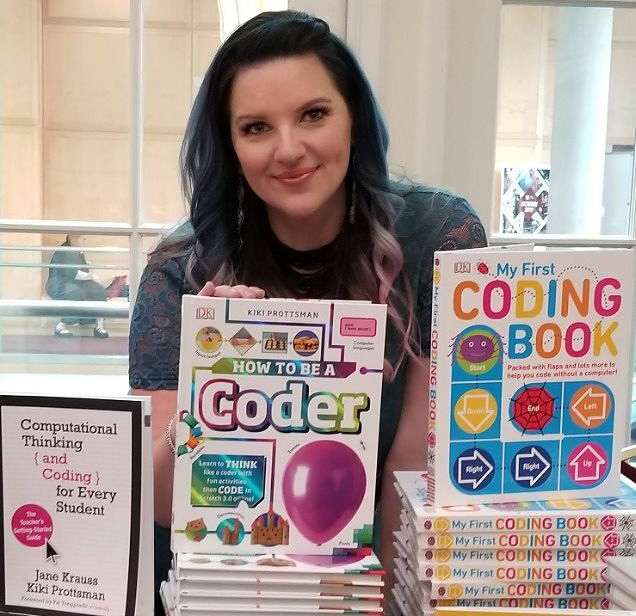
Kiki’s career has been anything but predictable. After dropping out of computer science to study art, then spending years as a stay-at-home mom, she stumbled back into tech almost by accident. A chance encounter at an education conference led to writing a book—which led to another book—which eventually caught the attention of Microsoft.
Her advice for anyone hesitant to take a leap? “The worst that can happen is you actually get the opportunity—then you have to do it,” she jokes. “But that’s also the best part.”
This episode is a must-listen for teachers, parents, and anyone who’s ever thought, “Coding isn’t for me.” Kiki’s infectious enthusiasm and real-world insights will leave you seeing technology—and your own potential—in a whole new light.
“It’s like art, but then it does things. That’s the magic of code.” — Kiki Prottsman
Listen to the full conversation on Spotify, Apple Podcasts, or anywhere you get your podcasts