

How to Build a STEAM Maker Space That Actually Works (And Doesn’t Collect Dust)
By April Startzel, NIU STEAM Educator

Picture this: A classroom buzzing with students laser-cutting geometric art, tinkering with 3D printers, and scribbling prototype ideas on dry-erase tables. It’s the kind of hands-on, creative chaos that makes educators’ hearts sing. But here’s the reality check—without the right planning, that dream maker space can quickly turn into a cluttered graveyard of expensive gadgets and half-finished projects.
That’s exactly why we loved talking with April Startzel, a STEAM Program Coordinator and artist, on the latest STEAM Spotlight episode. She’s the kind of educator who geeks out over CAD design just as much as safety data sheets—because she knows that the magic of a great maker space isn’t just about the tools. It’s about intentional design, accessibility, and a little bit of tough love when it comes to organization.
“Wait, We Need Ventilation? And Other Overlooked Essentials”
April laughed when I asked about the biggest surprise people encounter when setting up a maker space. “Everyone gets starry-eyed about the laser cutters and robots,” she said, “but nobody’s ready for the oh right, this thing could literally catch fire moment.”
She’s not exaggerating. One of her first tasks when designing a new space? Getting down on the floor with a tape measure—not just to map out where the 3D printers would go, but to ensure the room could handle electrical loads, ventilation for fumes, and even emergency exits. “You can’t just shove a laser cutter in a corner and call it a day,” she explained. “Those fumes need somewhere to go, and if you’re working with kids, you definitely need an eye-wash station.”
The Myth of the “Perfect” Maker Space (Hint: Start Small)
Here’s a hard truth: Most schools don’t need a $100,000 maker space to make an impact. April’s advice? Begin with tools that are forgiving, versatile, and hard to break.
“Start with a Cricut instead of a laser cutter,” she suggested. “Or a basic 3D printer that doesn’t require a PhD to troubleshoot. The goal isn’t to impress with tech—it’s to get students making fast.”
Her favorite low-tech upgrade? Whiteboard tables. “They’re cheap, they’re durable, and suddenly every kid who ‘hates drawing’ is sketching out prototypes. It’s like magic.”
The Secret Sauce? Systems (Yes, Really)
Let’s be honest: Maker spaces get messy. April’s solution? Ruthless organization.
“We switched to clear bins for everything—no more ‘mystery tub of broken parts,’” she said. A simple checkout system for tools cut down on lost supplies, and a “just-in-time” inventory approach kept them from drowning in popsicle sticks.
But her real pro tip? Train everyone—even the skeptics. “If only one teacher knows how to use the 3D printer, it’ll become a very expensive paperweight,” she said. “We run ‘no-stress’ workshops where teachers can mess up, ask dumb questions, and finally understand why their kids love this stuff.”
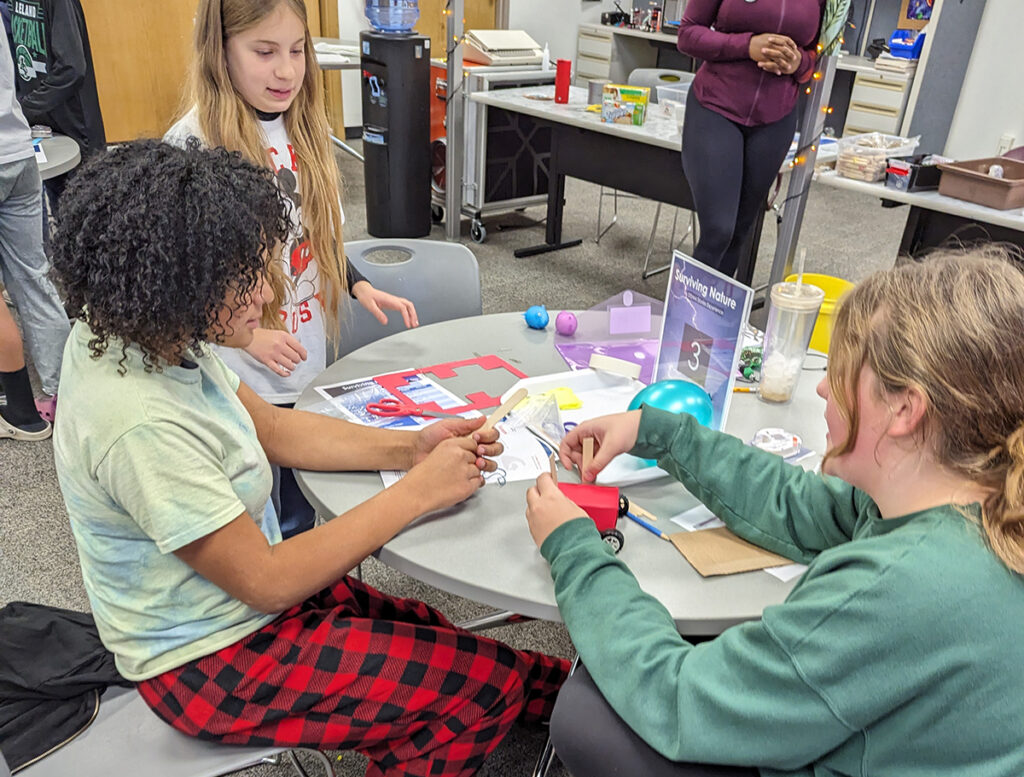
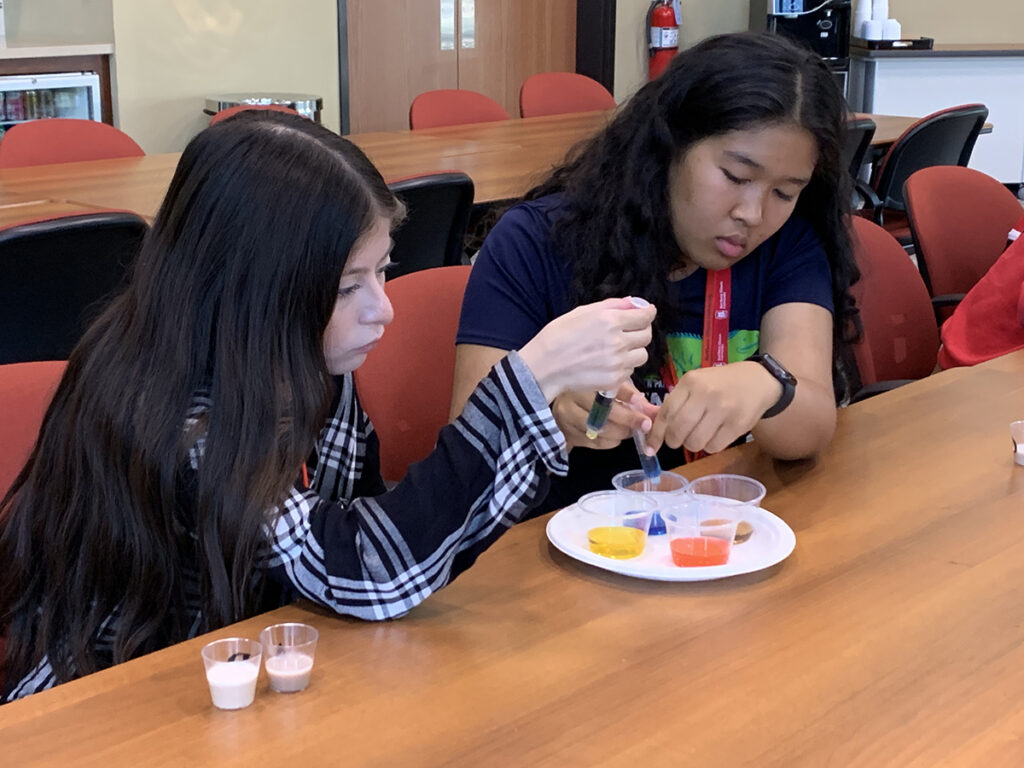
Why Art Isn’t Just the ‘A’ in STEAM
As a working artist, April sees maker spaces differently. “People think ‘art’ means painting next to a robot,” she said. “But really, it’s about teaching kids to think in 3D—to prototype, fail, and see problems from new angles.”
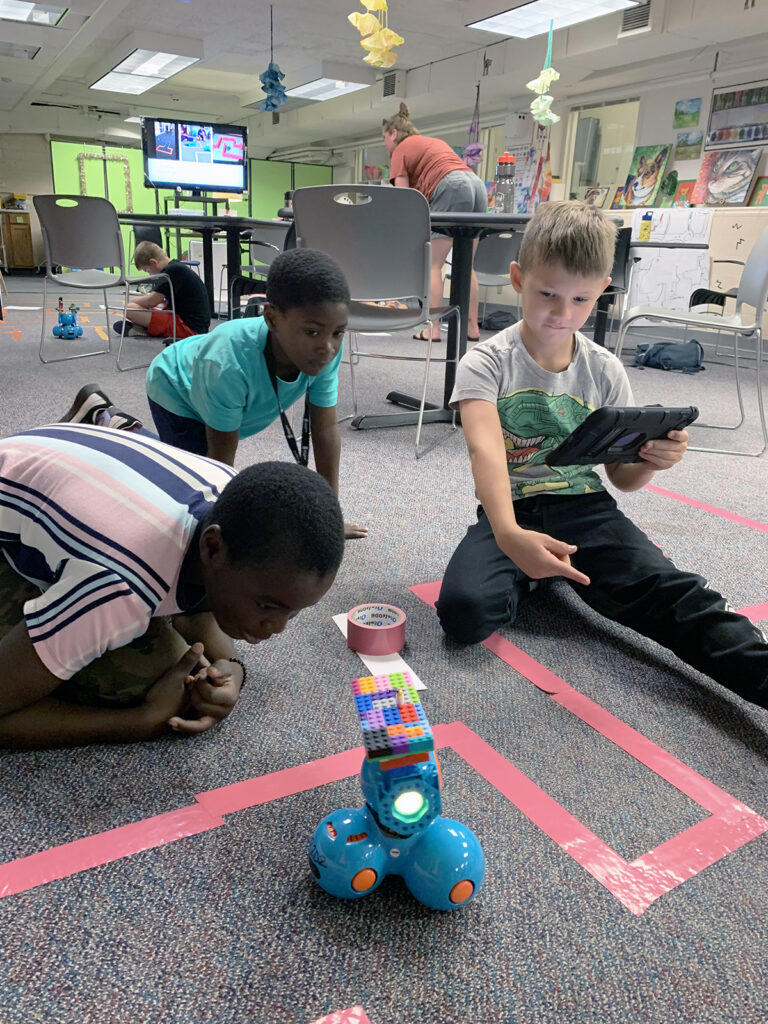
She told a story about a student who designed a sculpture digitally, then painstakingly assembled it from laser-cut pieces. “That kid wasn’t just ‘doing art’—they were learning engineering, spatial math, and persistence. That’s the power of STEAM.”
This is just a taste of April’s wisdom. In the full episode, we also cover:
- The one tool she’d rescue in a fire (it’s not what you’d guess).
- How to convince admin that maker spaces aren’t “just playtime.”
- The hilarious truth about what students actually do with 3D printers.
🎧 Listen to the full conversation on Spotify, Apple Podcasts, or anywhere you get your podcasts— and let us know: What’s your maker space win (or disaster)?
P.S. If you’re secretly hoarding 10,000 popsicle sticks “just in case,” April judges you. (But she’s been there too.)