
Nature’s Colorful Magic Show
By Becky Swiontek
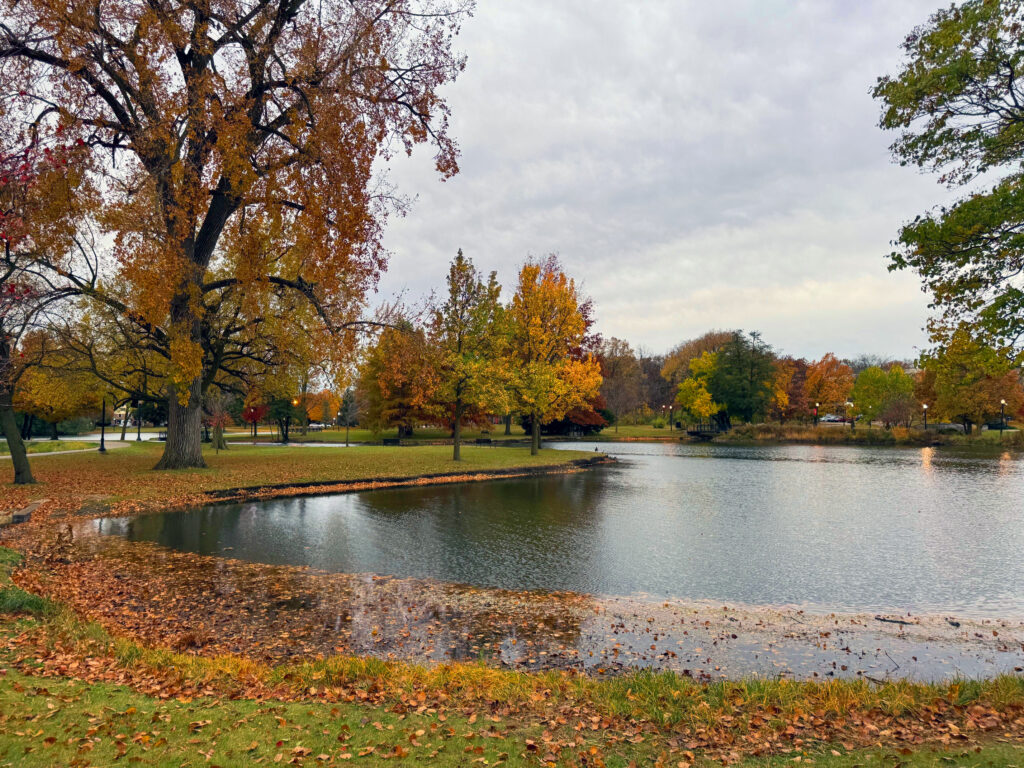
Have you been enjoying the beautiful, colorful tree displays this fall like I have been? I was thinking back to a year ago when we had a very abbreviated season due to storms coming though and knocking the leaves off the trees just as they started to change color. It’s helped me appreciate this season even more!
This got my biology brain working into high gear thinking about different pigments found in nature. Did you know that many of the colorful pigments we see in leaves this time of year were actually there all along, but they were “hiding” behind the green pigment (chlorophyll) during the spring and summer? Well, they aren’t really hiding. It’s more of a numbers game than anything else.
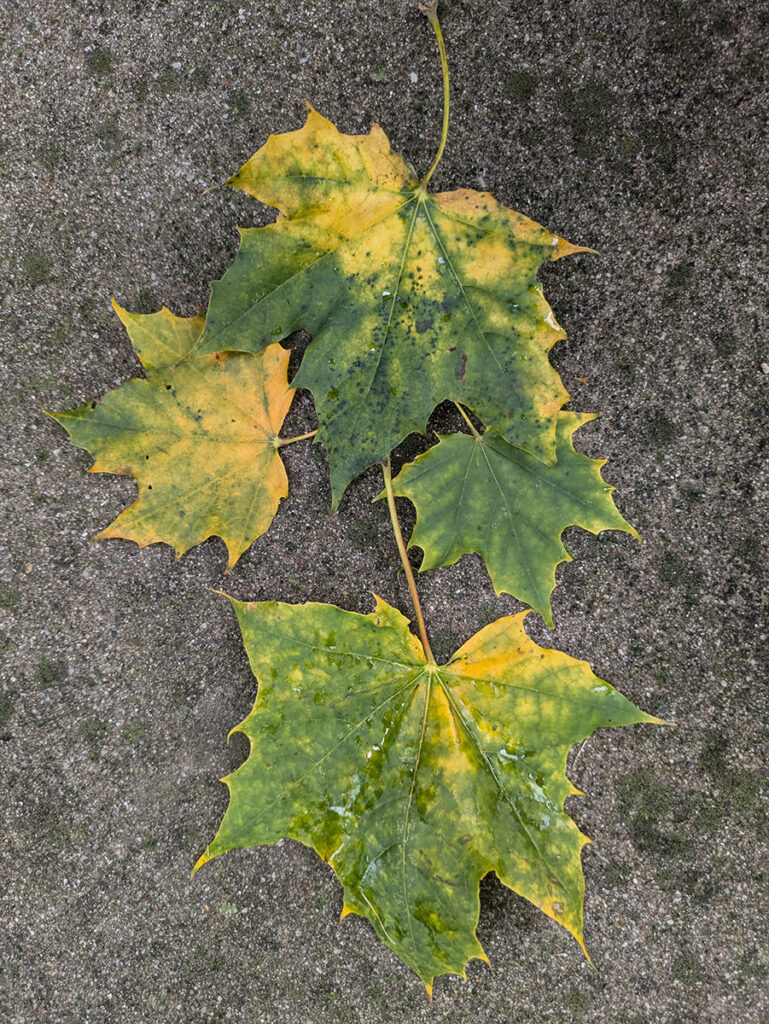
Back in the days when I was a biology teacher, whenever we’d be discussing plants, kids inevitably would shout out “photosynthesis!” as part of their background knowledge. You probably learned that plants make food by capturing light energy, but you may not have gone into too much detail about how they capture light. Plants have different kinds of pigments that can absorb different wavelengths of light. Depending on what wavelength is absorbed, different colors are reflected and seen by our eyes.
The majority of the light capturing that takes place during photosynthesis is done by the green chlorophyll pigments, so plants produce lots and lots of chlorophyll to maximize the amount of food they can produce. However, the yellow, orange, and red pigments are there all along too in supporting roles. It’s just that there is so much more chlorophyll, we don’t see the other colors during spring and summer.
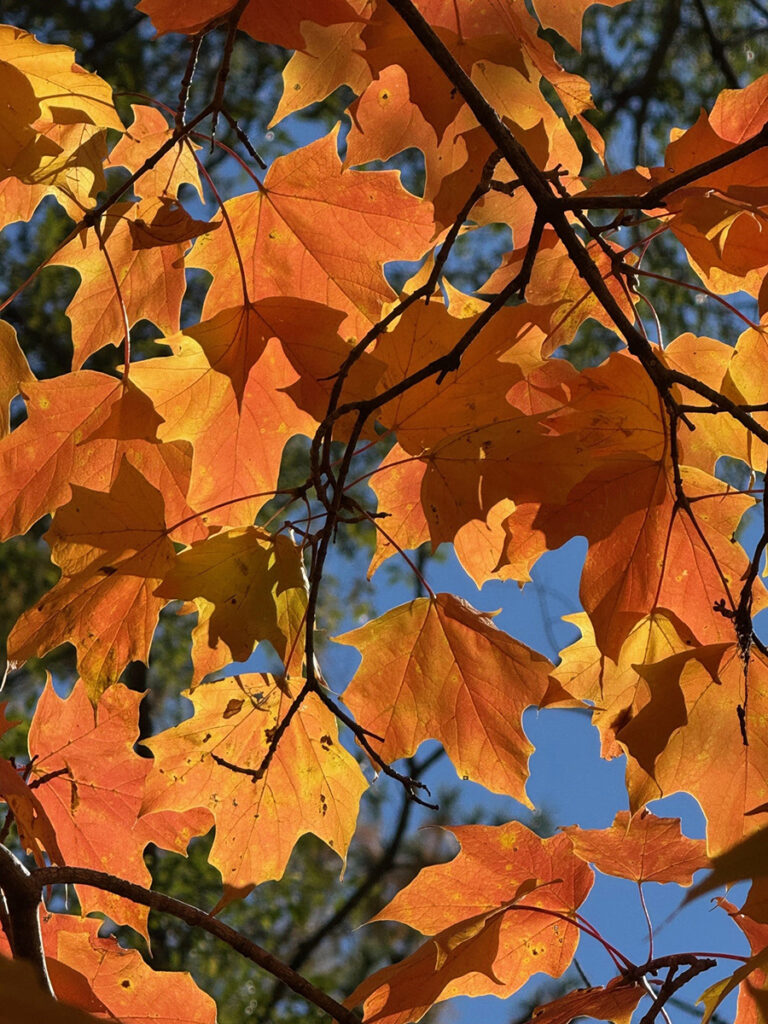
As trees prepare for winter this time of year, and the amount of daylight hours decreases, trees produce and use less and less chlorophyll. It even starts to break down some of the chlorophyll while it’s storing food in the other parts of the tree to make it through the winter months. During this brief window of time each year, the ratio of chlorophyll to other pigments switches, allowing us to see the other colors that were there all along!
We have a similar phenomenon that happens in some people too. Have you ever known or had someone tell you about a baby that was born with blue eyes, but then their eyes changed color as they continued to grow? What’s really happening is that eye color has a lot to do with the production of a pigment called melanin. It’s the same pigment involved in skin color…the more melanin present, the darker the skin color.
When some babies are born, their cells haven’t started producing melanin yet, so their eyes appear blue. As more melanin is produced, the blue appearance starts to get covered up. As a result, eyes start to appear as green, hazel, brown, and lots of shades in between. The more melanin produced, the darker the eyes appear. Some people’s cells never start producing melanin in the eye, so their eyes remain blue throughout their lifetime. Not me though! My eyes were a dark brown from the moment I arrived!
So, the next time you’re observing different colors in nature, ask yourself, I wonder what’s going on with pigments here? Are there any pigments I can’t see because they’re blocked by other pigments? Will the pigments produced change over time resulting in different color appearances? There’s so much science happening everywhere to think about!