
STEAM Sparks – Meet the NIU STEAM Professional Development Team
Many of us still remember those moments of learning and creation that were our childhood “STEAM sparks.”
We’re always learning here at NIU STEAM. Recently, we decided to learn how to make our blog writing even better. So we called up Beth Schewe, a writer here in the NIU Division of Outreach, Engagement and Regional Development, to run a blog-writing workshop. We brainstormed, we looked at good blogs, we decided we wanted our blogs to be authentic, to capture our unique voices and points of view, while also sharing our expertise and giving insight into the learning process.
We thought it would be a good learning experience to write a blog post together, but where should we start? It turns out we each had a story of a moment we felt a STEAM spark – that moment we were inspired to become an artist, an engineer, scientist, educator or creator. These memories reminded us why we do this work – because learning experiences, both positive and negative, can impact a young person in ways that reverberate all through their lives.
Papier-mâché, by Stephanie Dietrich, NIU STEAM educator
I am 6. I’m in my neighbor’s kitchen with friends from my school. It’s our monthly Brownie meeting. Today we are doing papier-mâché. I am so excited. I’ve seen the bowl that Molly’s mom made. Molly is my best friend. We are all surrounding the kitchen table. The chairs have been moved so we can stand at the table. In front of each of us is a balloon and a bowl of glue. Paper strips crowd the center of the table. The kitchen smells like glue and Molly’s mom’s perfume. She wears a lot of it.
I’m dipping strips of paper into the bowl of glue. My hands are slippery with glue, but it doesn’t bother me. I like it. It makes me happy to pull the strip out and let the drips of glue drop back into the bowl. Then I carefully place the strip along the balloon and smooth it out. I don’t like when there are wrinkles in the paper…I like it when it’s completely smooth.
We’re laughing. This is a messy process, there is glue everywhere, including on Molly. We try to wipe our faces with the backs of our hands because the glue will get in your hair, and that doesn’t feel good. I grab another strip of paper, slowly dip it into the glue, and slowly pull it back out. One of the girls doesn’t like the feel of the glue on her hands. She starts to cry. Molly’s mom helps her to the kitchen sink to wash her hands. She won’t finish her project. But I know I will finish mine. I can’t wait to see what it looks like when it dries and I can pop the balloon. I know I will keep it on my dresser in the room I share with my two sisters, but I don’t know what I will keep in it. This is the first memory I have of making something with my hands.
I’ve never stopped creating since then.

In Spite Of, by Jess Winn, NIU STEAM educator
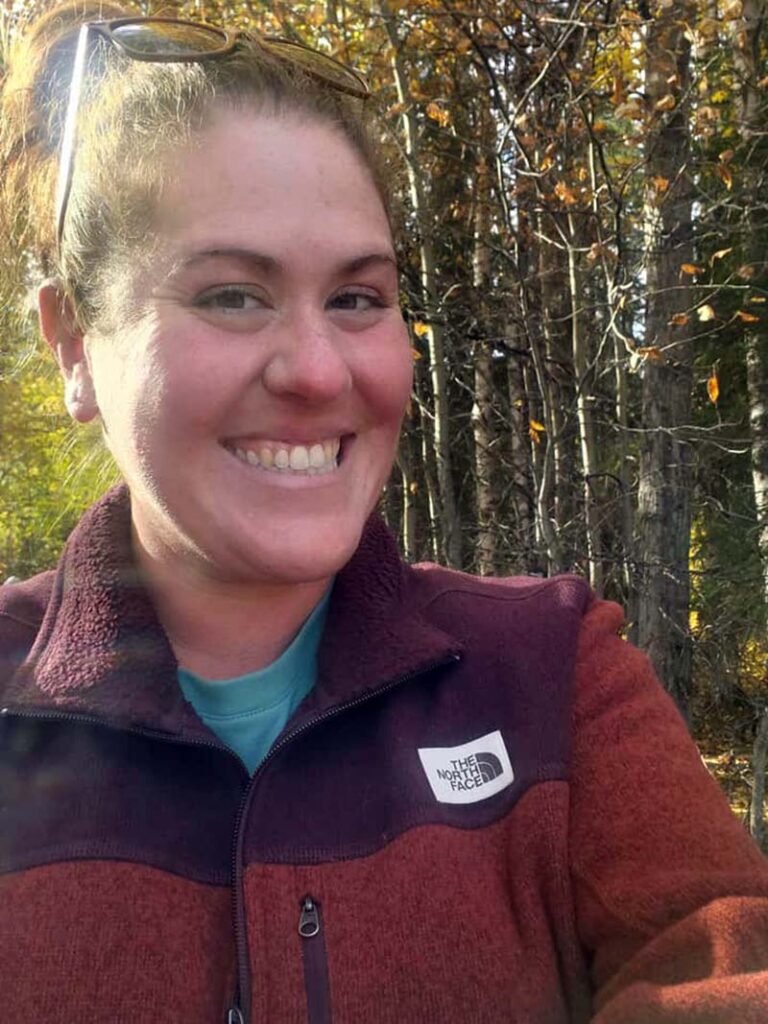
“You will never be good at science.” The burn of being told at a young age that you WON’T be good at something can impact students in one of two ways. Direction one: you close students off from engaging with something that they potentially could truly love. You stifle that engagement from a young age, forcing them to think negatively of themselves and a whole realm of understanding. Direction two: students become “in spite of” students and they develop a passion to be better. So where did I find my STEAM Spark? I was an “in spite of” student. I dove in headfirst and developed a passion for science, technology, math, art, and engineering because I had been told I would never be good enough.
Fast forward 10 years – my first time in the classroom facing a large group of 7th graders. I hear comments like, “I’m not good at science” and “I hate science” and I’m transported back to my first day of science class. I have an opportunity to change their minds and show them they’re good enough.
That first day we talked about measurement and made fudge. We engaged in deep conversations about the benefits of the imperial vs. metric systems. As the year went on, students came to class asking about topics they had heard in the news and social media. We investigated everything from genetically modified animals to green energy. Suddenly, the conversations changed from “I’m not good at science” and “I hate science” to “I want to study ___ when I grow up.” We changed the narrative without condemning them to be “in spite of” students. In a world full of impressionable students who might remember our words for years to come, be the spark for students to develop their loves and passions on their terms.
Get on the Boat, by Beth Schewe, writer in the NIU Division of Outreach, Engagement and Regional Development
I remember building a boat in high school physics class, out of nothing but cardboard and Elmer’s glue. Then we put that boat in the school swimming pool, climbed in, and rowed back and forth. When we first heard about the assignment, it seemed impossible. No tape, no paint, no plastic or metal. Only cardboard and water-soluble glue. My partner and I had not done so well on our previous project and knew we had to ace this one. So we recruited my next door neighbor, who was an engineer, to help us out.
He guided us though the process with questions: What shape do boats usually have? Which cardboard box could you start with that already looks a bit like a boat? Why do you think that shape works well for boats? We got a large refrigerator box, make as few cuts as possible, folded the sides to double up the cardboard for added strength, and glued that cardboard in place. We did the water displacement calculations, then tested it out in the pool – and it floated! Our rowing was a little rusty, but our boat lasted ten minutes in the water without a single leak, and we rowed the second most laps of all the teams.
As we watched many of the teams’ boats sink immediately upon being placed in the water, physics and engineering lessons hit home that stay with me today, such as: form needs to follow function. Just because it looks cool doesn’t mean it will work. Calculate, create, test, and refine – we tested our boat before the big day, and that paid off. It was the engineering design cycle in action. It doesn’t surprise me that one of my team members became an engineer after that experience! Even though I pursued a career in English and writing, the lessons I learned from that project are things I use today.
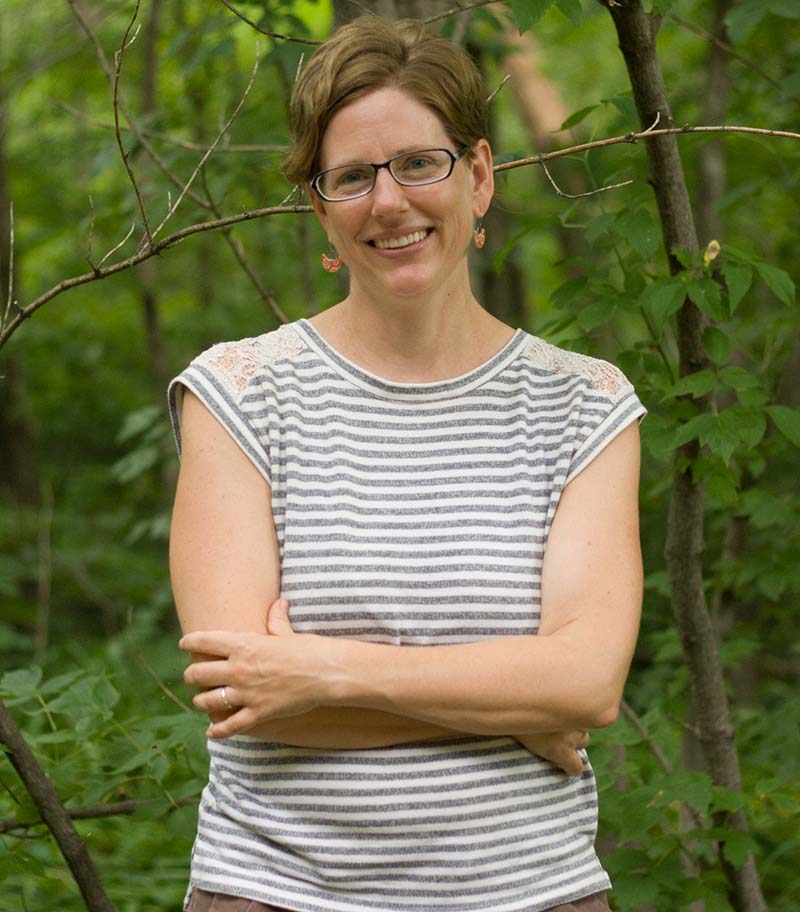
Fearless Childhood, by Dr. Kristin Brynteson, NIU STEAM director
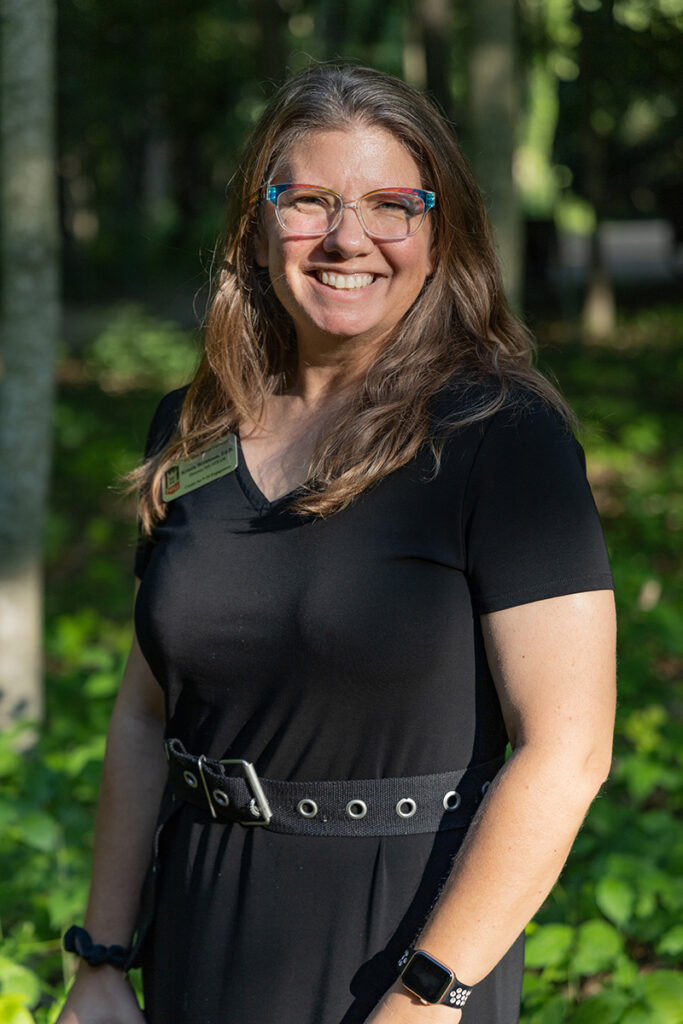
I remember exploring on family camping trips. Every summer since as early as I can remember my family went camping up in northern Wisconsin. Six of us packed into an old station wagon pulling a pop-up camper. We spent weeks out in the woods and on the water. As feral children in the camp sites, we were left to our own devices to explore, play in the mud, climb on the rocks, swim in the lakes and rivers, and build strange contraptions. All of these experiences, from seeing the aurora after a Fourth of July fireworks show to listening to park rangers talk about turkey vultures, made me voraciously curious about the world around me.
This continued as I got older. The camping trips may have ended, but the summer of feral children continued. As latch key kids, my siblings, friends and I continued to explore and experiment. In our neighborhood, we were the kids building haunted houses and hosting talent shows with props and special effects. We invented crazy concoctions in the kitchen because plain old peanut butter and jelly sandwiches were boring.
As I look back, it is hard to point to one clear event that sparked my interest in STEAM or led me down this path. Instead, it was a childhood lived full of fearless curiosity and experimentation coupled with the freedom to explore, make mistakes and get messy.
What’s your STEAM Spark story?
Email us at NIUSTEAM@niu.edu and share a story of how your interest in STEAM was sparked. We might just share it in a future blog.