
STEAM Camp Summer Highlights: Sustainability and Food Systems Camps
An Interview with Chrissy Swartz, NIU STEAM Educator
Can start out by sharing some highlights of the camps you taught this year?
This is my second year of doing STEAM Summer Camps, and it was a great experience. The camps I directed this year were all sustainability related. One was a high school Sustainability Camp, one was a middle school Sustainability Camp and the final one was a high school Food Systems Camp. They all intertwined with one another and shared a lot of common themes.
Were those all residential camps?
Yes, all three were residential. The residential middle school camp is something we haven’t done for several years at NIU DeKalb, so that was a new experience we brought back this year. All the students stayed on campus in Neptune Hall and ate in the dining halls, so they had that full college experience.
Can you walk us through some of the activities you did with the students, as well as the campus and community partners that you worked with?
Yes! Those partnerships are so important to NIU STEAM because we want to make sure the students have a good college experience while they’re here on campus, and also a good STEAM experience, where they’re seeing different career pathways and working on hands-on, real-world projects.
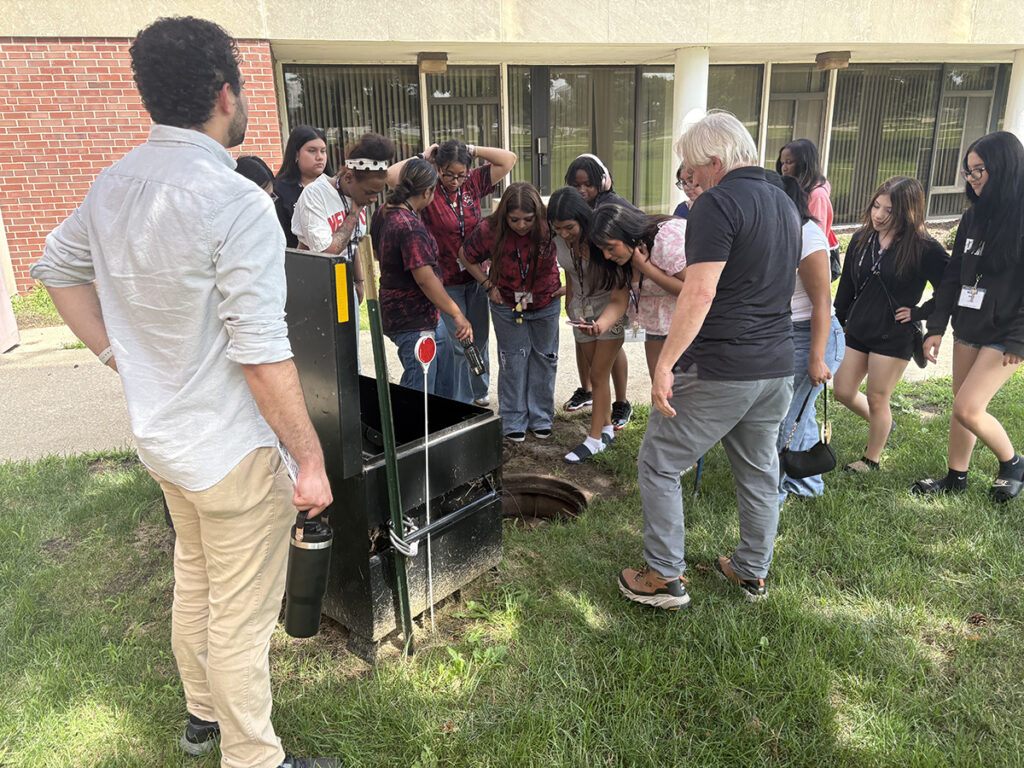
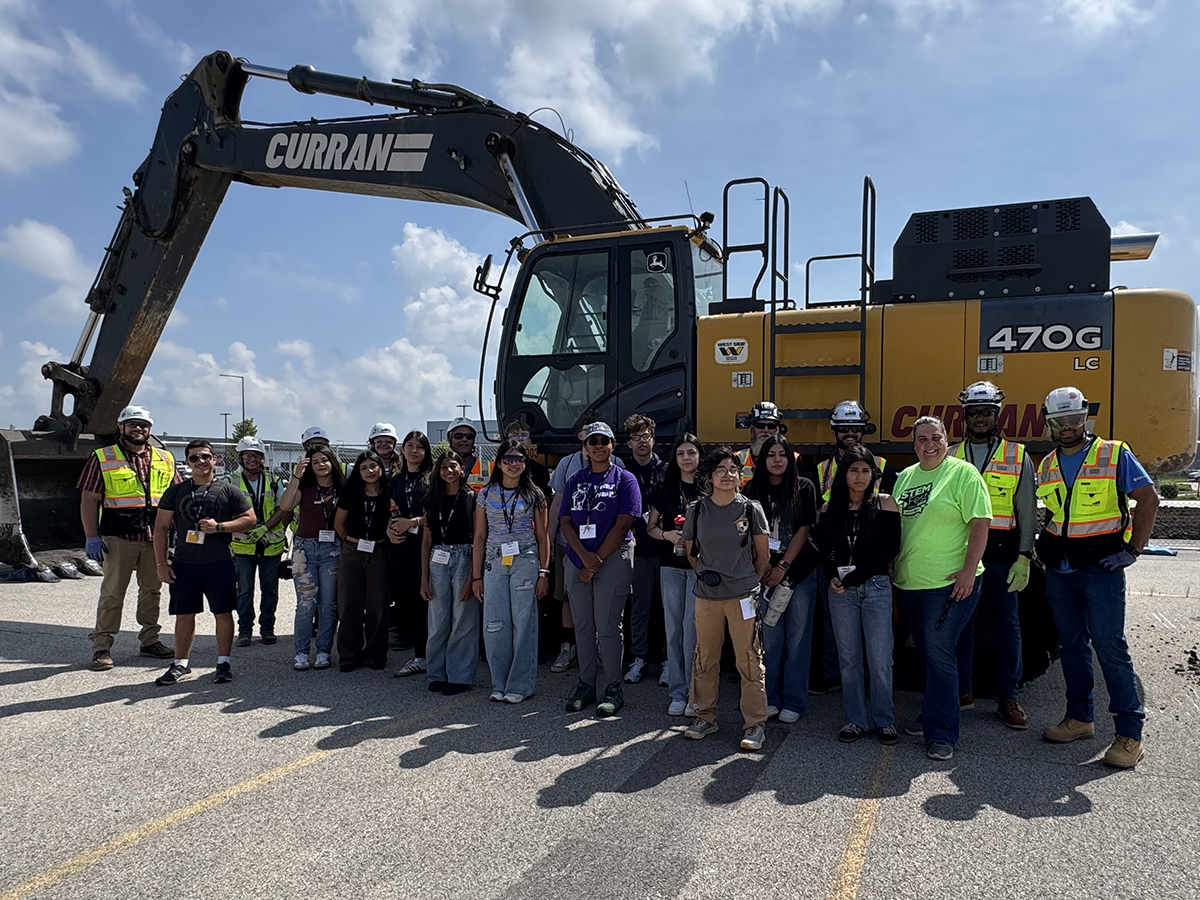
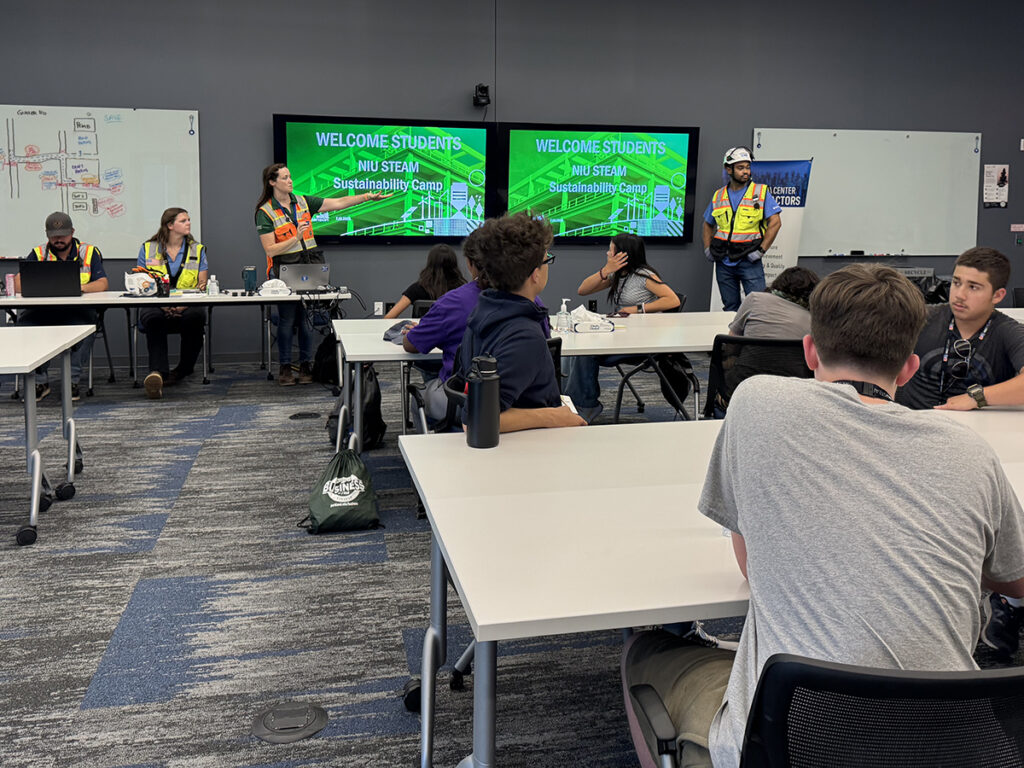
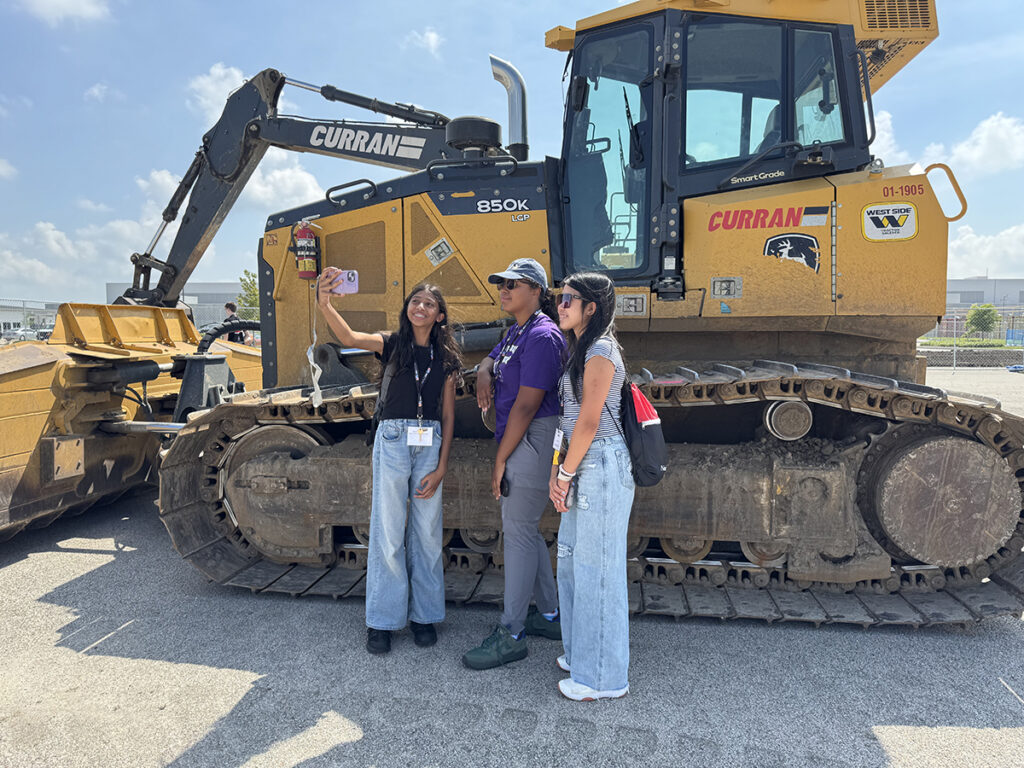
In the sustainability camps, for example, we had so many partners help us out. We got to meet with people from Mortenson, who designed and built the Meta DeKalb Data Center. We got to go and see the Meta Data Center site, the students got to climb in the back hoe and see what the construction site in person.
We also met with two employees from Meta who talked about their high school experience, what their dreams and aspirations were when they were in high school like our students, their education and career pathway, and now what they do in their jobs with the data center.
How did that career exploration relate to sustainability?
The folks from Mortenson and Meta did a great job centering the conversation around sustainability. Every one of our STEAM camps features one overarching project the students work on throughout the week. For Sustainability Camp, the students’ project was to design a community that featured five of the seven pillars of sustainability (transportation, water systems, green space, land use, community engagement, community development, and environment). The students spent the week thinking about – who were the stakeholders in their community, and which pillars of sustainability would be most important to each stakeholder?
When we met with the Mortenson and Meta folks, they talked about when they came into DeKalb, who were their stakeholders? How would the construction project and the ongoing operations of the data center affect those stakeholders? And what initiatives did they put in place to make sure everything was sustainable, not only ecologically, but also from a human (community engagement) and economic (community development) perspective, as well?
Who were some of your other community partners?
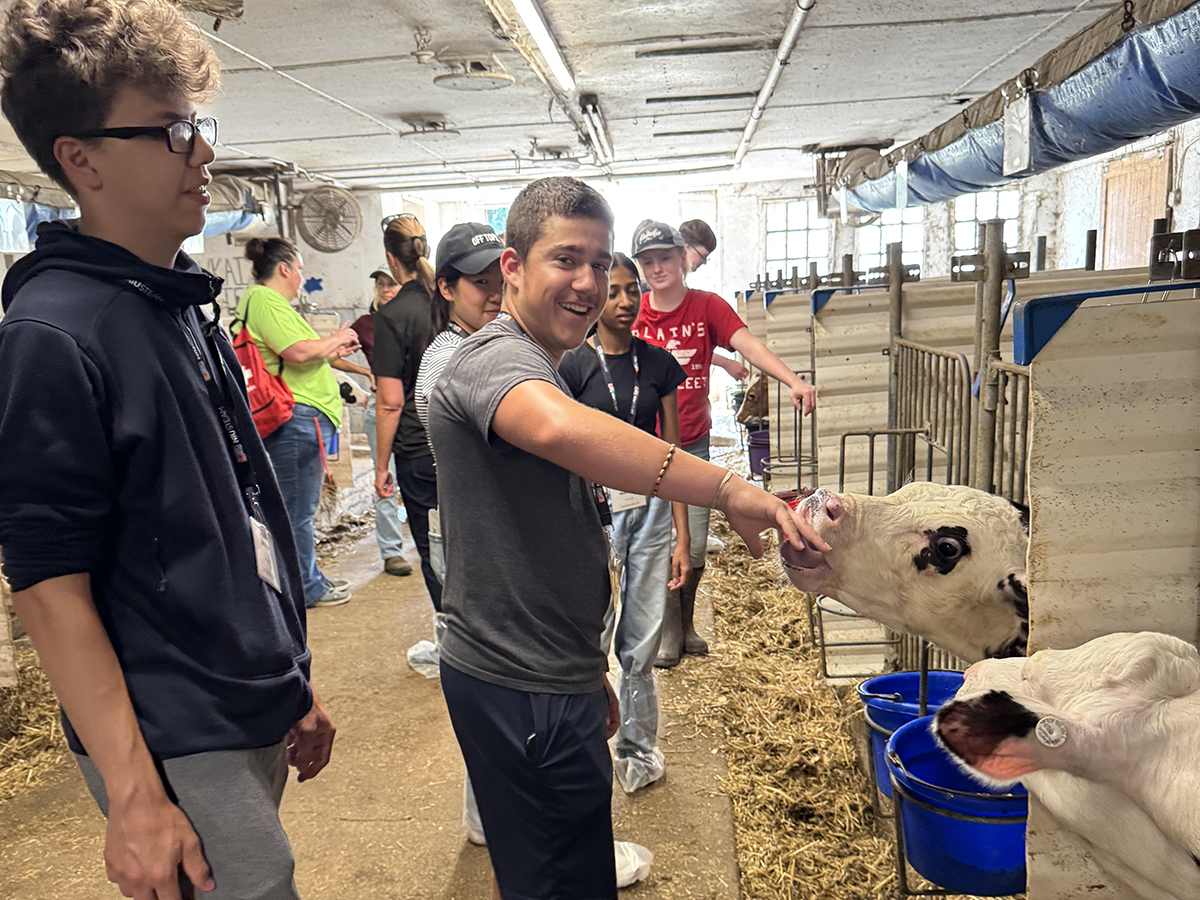
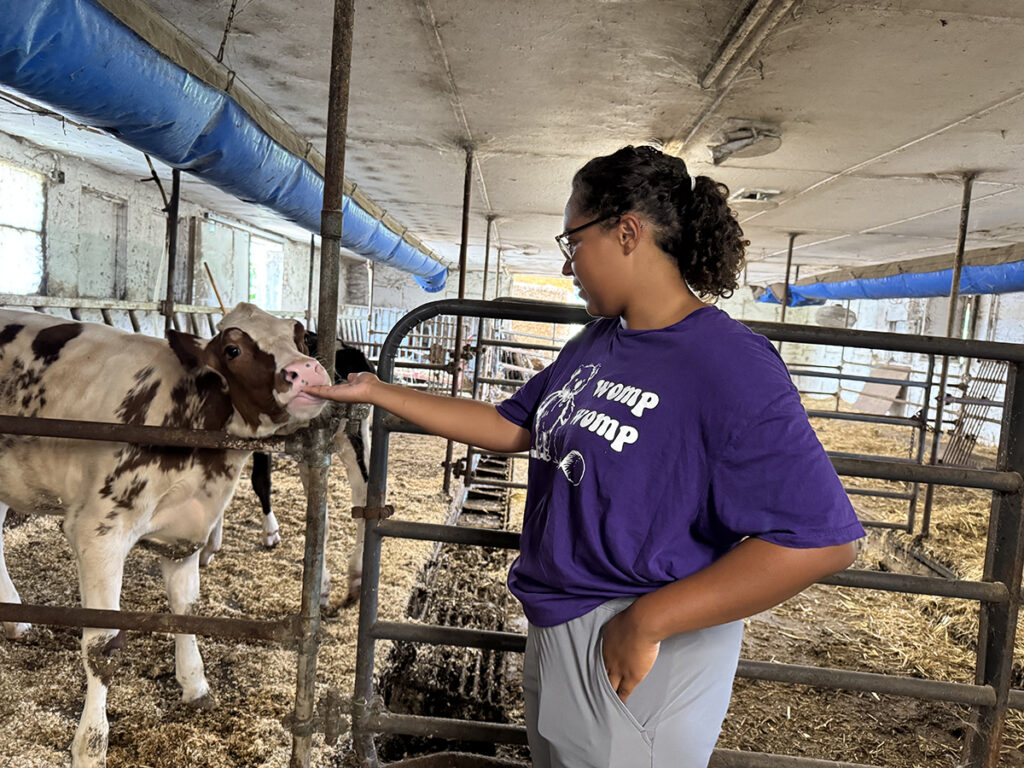
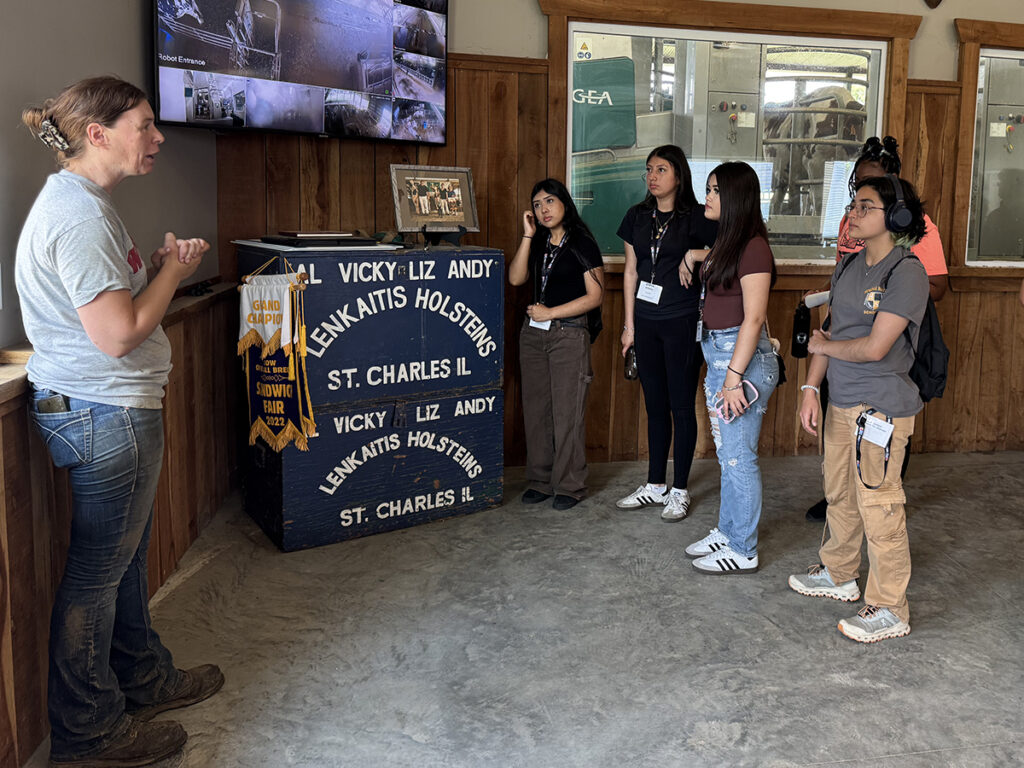
We also partnered with Midwest Dairy, who arranged and financially partnered with us to send campers to Lenkaitis Holstein Farm, in Saint Charles. The students got to physically go to a dairy farm and learn about how sustainability is implemented in that context.
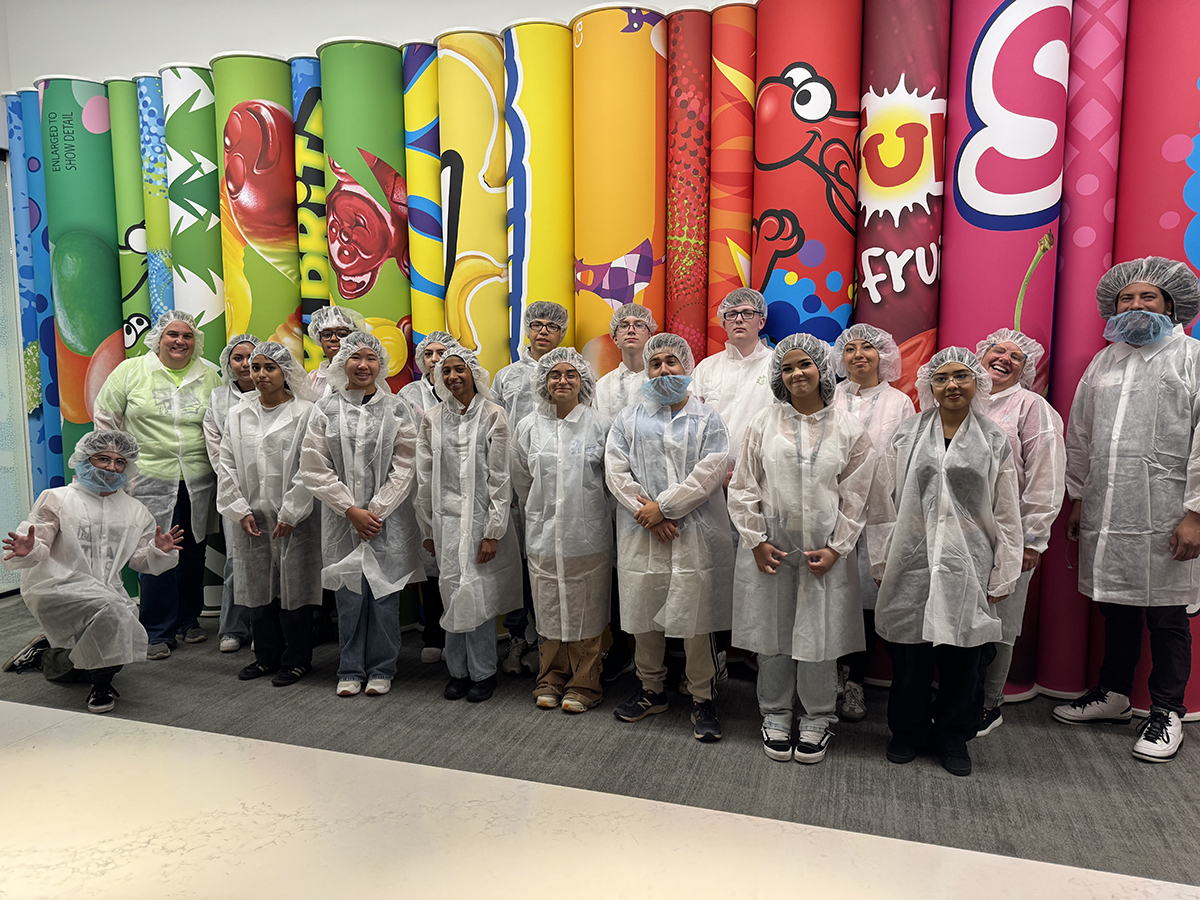
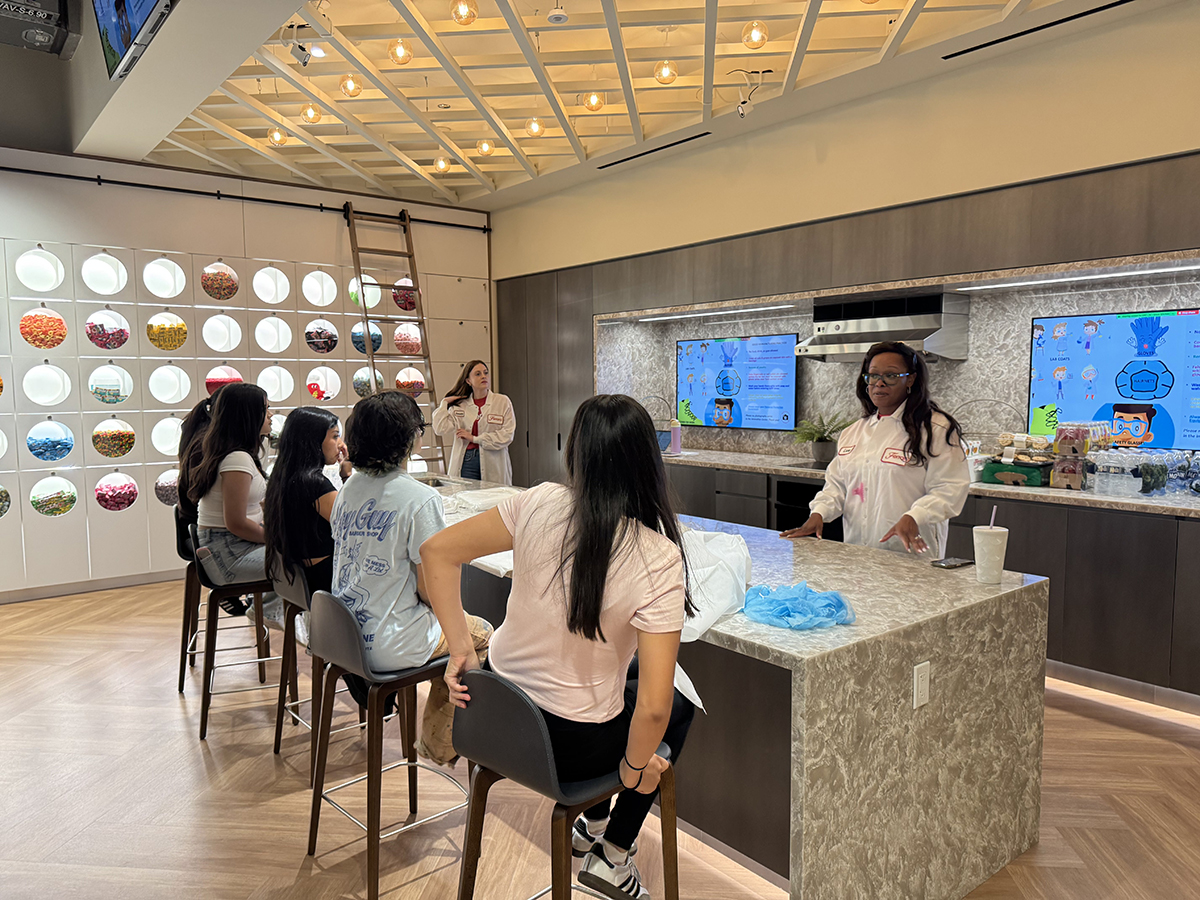
Ferrara Candy Company invited us to participate in their Annual Day of Giving, and bussed us to their offices and lab space in the old post office in downtown Chicago. We got to see how they refurbished that historic building into office space – which can be a practice in sustainability rather than building new – and we got to tour their labs and do some activities. They talked about their stakeholders as not only the consumers of their candy, but also the community and their employees. For them, sustainability involves food safety and equitable pay, equitable treatment of workers, and safe and healthy work conditions.
You mentioned virtual field trips, as well?
Yes! Another dairy farm that Midwest Dairy connected us with is Fair Oaks down in Indiana. It was too far for us to travel in person, but Brock Gorrell, Director of Museum and Tour Operations, led us on a virtual tour of their farm. The reason it was so important is that they are really pushing the envelope on new, more sustainable practices in dairy farming. In fact, they’re very close to net zero carbon emissions for their whole operation!
For the tour, they showed us their automated milking machines, how they grow corn sustainably for feed and even what they do with the manure. They’re able to capture some of the methane from cow manure through anaerobic digestion and use it to power some of the vehicles on their farm. Their goal is to create a very efficient, self-contained system where every biproduct of the operation serves a purpose and is not wasted.
Can you tell us more about the students’ week-long projects?
One of the most exciting parts of camp is the final project showcase. In the past, we’ve swapped rooms with other camps and looked at each other’s projects, so students could have a genuine audience. This year we took that even further and rented out the ballroom in the Holmes Student Center for a full showcase!
Each student or group set up their project and was there to answer questions. Their fellow campers came by, their parents and families were there, and even Representative Briel from Illinois House District 76 came by to see the projects and talk with the students.
Which NIU faculty members worked with you and the students?
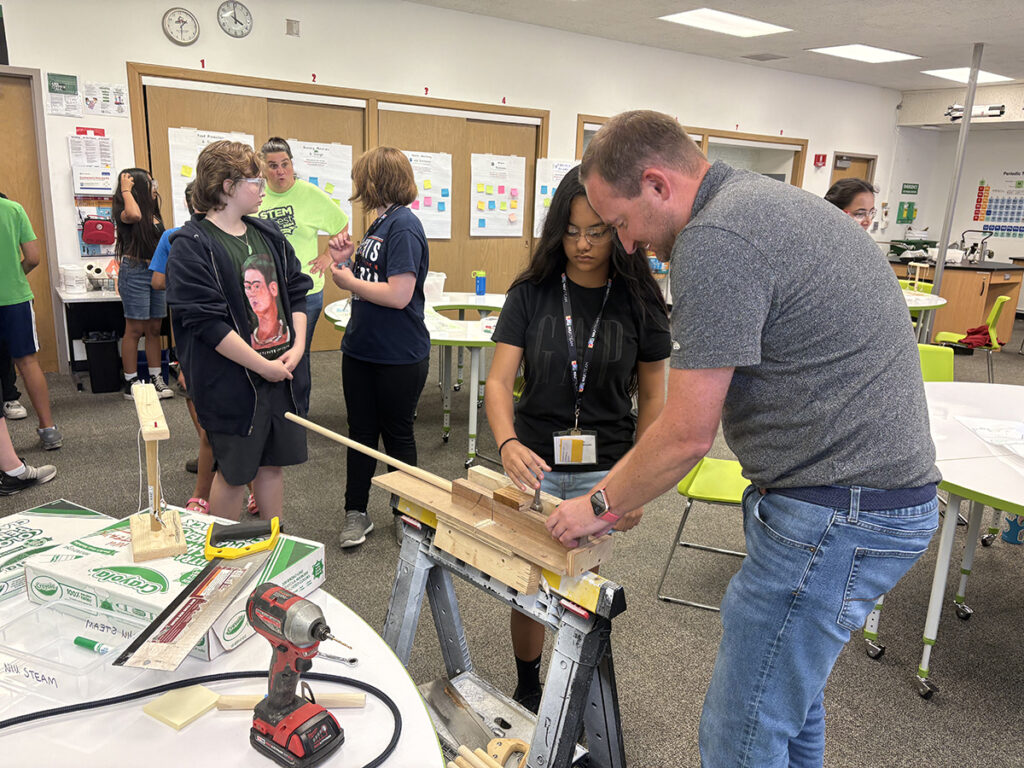
Engineering Professor Kevin Martin came out and did a wind experiment with the students where they built turbines. They had to figure out what shape to make the blades of the turbine and to what degree they needed to be tilted. The campers did an experiment to test the output of energy with the blades at different angles.
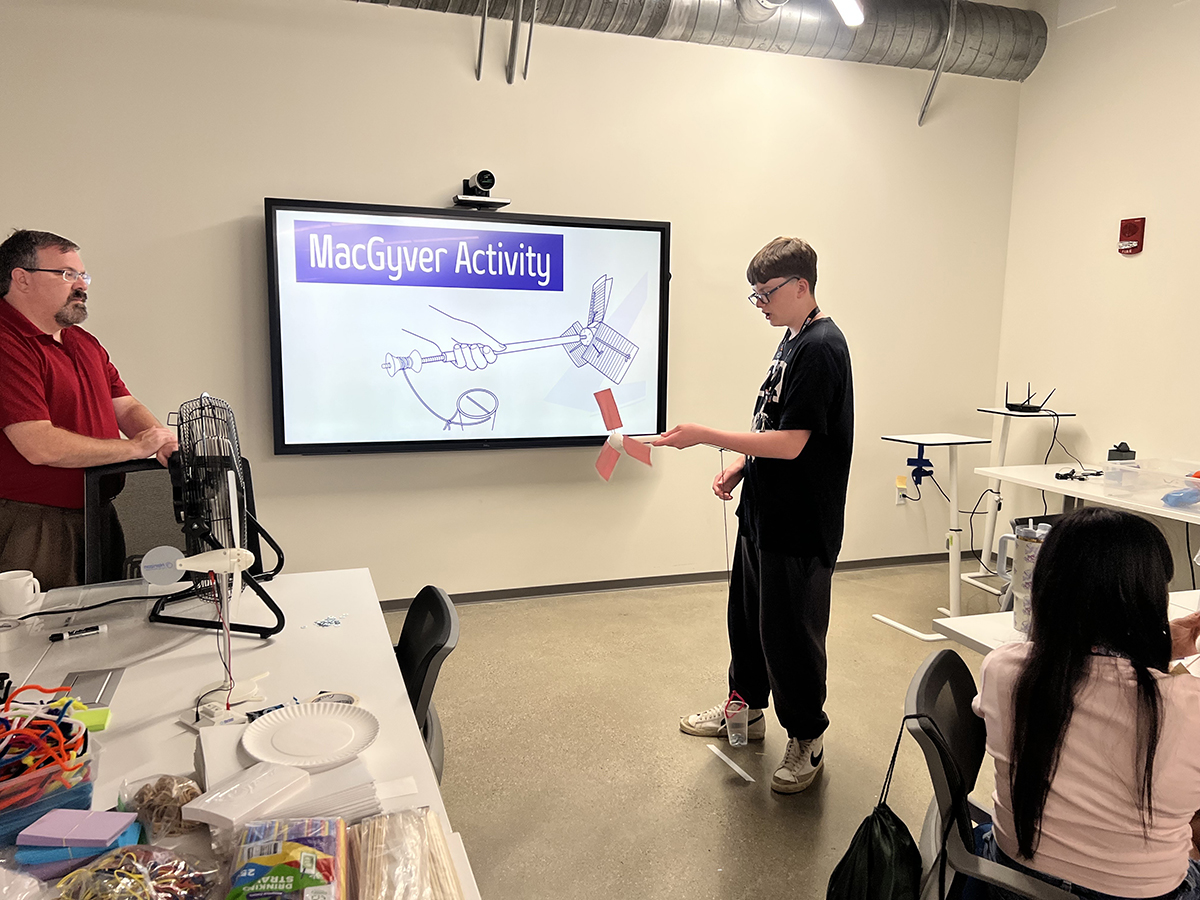
It was very cool because, not only were the kids learning about physics and engineering – they were also super competitive. One student kept falling short, and he kept going back to the drawing board, redesigning his wind turbine until it worked better. He was practicing resilience, work ethic, problem solving – so many employability skills. The students got to see the importance and the process of innovation in action.
Katie Davison, the director of State Relations for the University, also visited the campers. She empowered the high school students to become active within their communities as agents of change concerning the topics within sustainability about which they were passionate. She referred to the students as scholars, and illustrated that the common phrase, “One day, when you are older,” overlooked the fact that they are innovative and creative thinkers today who could actively identify problems and voice solutions to school, local, state and national policy makers.
What about the Food Systems Camp?
Professor Courtney Gallaher, who is director of sustainability for NIU, came out and to the students about how growing your own food can be empowering. She had the kids talk about some of their favorite foods and then trace those foods to their parent companies… and it turns out there are only a small handful of companies producing all the processed food that makes up most of our American diet. We toured the Edible Campus gardens to see what foods grow here in our area, what they look like when they’re growing, and what’s needed to help the plants thrive. This was her second trip out to the NIU Camps this summer as she visited our Middle School Sustainability camp along with Holly Hansen, assistant director of sustainability for NIU, to teach students creative ways to educate their community about sustainability topics that mattered to them.
We also visited Science On a Sphere in NIU’s Founders Memorial Library to see an animation showing how quickly the human population on earth is growing. We thought about the question – how will we be able to provide access to safe and nutritious food for such a large population?
What was something new you learned in the camps?
One of the things we talked about in Sustainability Camp is that for a community to be equitable and efficient, everything you need has to be within 15 minutes of your home. I’m working on my GIS certification, and I worked on a project last semester for one of my courses that’s very related. Together, those learning experiences changed the way I think about community and equitable access to food.
Last semester I mapped how far people are from grocery stores right here in our own region – in Cortland, Malta, and other towns near DeKalb. I learned how far away some of our neighbors are from healthy food. If it’s five, eight or 10 miles to the nearest grocery store, that might not sound like much. But what if you’re the parent of an infant, if you’re disabled, or if you don’t own a car? Especially in areas without reliable public transportation, it can take far longer than 15 minutes to access food.
Are there any other partnerships you haven’t gotten to mention yet?
One of the exciting partnerships was our work with Trane. All of us STEAM educators went through the NC3 decarbonization certification with Trane, and I used the information from that certification a lot in my middle school sustainability camp.
What I would love to do next year is extend the partnership so the campers can actually complete that certification during their week on campus. For a middle school or high school student to be able to complete an industry certification is a game-changer, both putting them ahead of their classmates on a possible career path and also helping them to see the bigger picture, to recognize themselves as career bound and understand how their education relates to real-world careers.
Why do you think meeting with NIU faculty and industry partners makes a difference for the campers?
I would say a transformation happens where the campers start to see themselves as colleagues and equals rather than students who are just passive receivers of information.
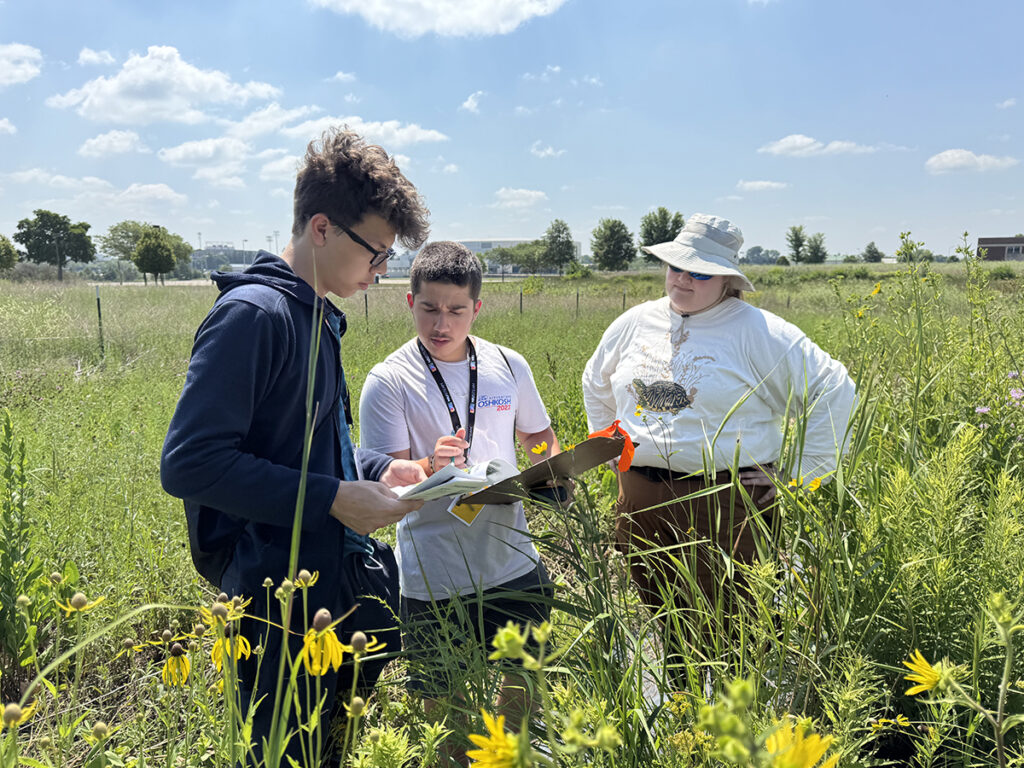
When I first started doing these camps, I wasn’t sure what the kids would find interesting. When we originally set up a visit to a prairie restoration project with NIU Biology Professor Holly Jones, for example, I was a little afraid the students might be bored in the prairie and not really engage. Instead, the students were amazed to see the prairie flowers and learn about the plants and animals. They asked great questions, and Holly and her graduate students answered the questions as though they were talking to colleagues. Our campers were also able to respond to one another’s questions and develop ongoing conversations.
There is a lot of power in “near peer” mentoring, so interacting with the NIU students who were the teaching assistants and counselors at summer camps was also really valuable for our campers. There are amazing moments of learning where the campers feel comfortable enough with the NIU students to ask their genuine questions, to not be afraid to nerd out a little bit!
Is there anything else you’d like to share that I didn’t ask about?
One of the things I often reflect on is the differences between working as an NIU STEAM educator and my previous experiences as a high school classroom teacher. Though I believed that skills were extremely important, in the K-12 classroom, we were very content driven because we wanted the students to do well on tests and be prepared for college with a solid basis of content knowledge.
Now, as a STEAM educator, I’m able to focus less on specific content and more on building skills and relationships. No matter what the content of the camp is, I get to build connections with NIU faculty and industry partners and let students get involved in conversations with experts in that area. We start with real-world application of skills, and the content knowledge follows. The campers have a good reason for wanting to find out that knowledge, so they can better understand and solve the real-world problems they’re exploring!
Showing the knowledge in action with our campus and community partners has a much bigger impact than just looking at it separately without that real-world context. The students walk away from our camps knowing that STEAM is a real thing, not just a fun after-school hobby. If you want to do anything connected to science, technology, engineering, arts or math, we’re connecting you with industry partners that can show you how to make a career out of that interest, and that’s huge.